HealthONE: Enabling ‘Care Everywhere’

April 3, 2018

UConn HealthONE logo 270x123Care Everywhere, the interoperability application within Epic (which powers UConn HealthONE), can be used to exchange patient data with other health care institutions, including Hartford Healthcare, St. Francis and Connecticut Children’s Medical Center.
Today, organizations are using Care Everywhere to exchange more than 1.25 million patient records daily with other health care providers and government agencies such as the Department of Veteran Affairs, the Social Security Administration, and the Department of Defense. Information can be exchanged directly between standards-compliant EHR systems or with the help of Health Information Exchanges (HIEs) and Health Information Service Providers (HISPs).

Care Everywhere helps ensure that clinicians have the information they need to treat patients, both for unplanned transitions of care, such as visits to the emergency department, and planned transitions of care, such as referrals.

After the patient’s information goes into HealthONE, physicians can review it and reconcile discrete allergies, medications, problems, and immunizations in Care Everywhere documents with information in the patient’s local Epic chart. Reconciled data becomes a permanent part of the patient’s chart and is used to drive clinical decision support.

—From Epic UserWeb

Watch for additional HealthONE updates in Lifeline, in the Pulse, at uconnhealthexpress.uchc.edu/HealthONE, and now on Twitter @UConnHealthONE.

Spotlight on Services: Colon Cancer Prevention Program

March 29, 2018

UConn Health started its Colon Cancer Prevention Program a decade ago. Dr. Joel Levine, one of the co-founders, describes how what started as a novel approach to the disease is becoming a mainstream concept.

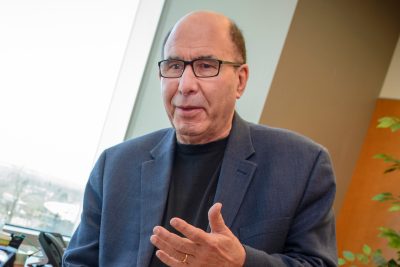
Dr. Joel Levine
Dr. Joel Levine is a co-founding director of the UConn Health Colon Cancer Prevention Program. (Photo by Janine Gelineau)

What makes the Colon Cancer Prevention Program successful?

The idea of prevention is what’s novel. There aren’t any other prevention programs that do what we do. If you Google “colon cancer prevention program,” we come out as the top listed patient centered resource.

Our process is very longitudinal. It’s not a one and done. We follow more than 6,000 people who return, at least annually, for both the latest information and for modulating their level of risk. Lowering risk is what we, the patient and Program, do. We are always learning how to do that more effectively. Indeed, we have not seen a colon cancer develop in someone who has been in the Program in about eight years. Put another way, if you come to us without colon cancer, we start by identifying risk and, then, follow you accordingly. If we reduce whatever risk level you have, we have not had a patient develop colon cancer on our watch.

The exceptions, so important to us, are patients who, on first visit, we find have colon cancer. Many patients are referred because of a positive FIT test (fecal immunochemical test). We introduced the quantitative FIT test to UConn Health and continue to study the test, over time, as an early marker for polyps or cancer. We work with the wonderful genetics group to identify those patients and families with inherited risk. Very few patients who have colon cancer in the family have actual inheritable risk (3 percent) but they are important to identify. These patients are followed closely, expecting them to develop colon cancer as a risk of their disease. We cannot as of yet prevent it in those inherited risk families, but we still can take steps to reduce risk by about half.

Prevention chose our program to feature in its “Guide to Preventing Disease” in its April issue. What do you see as the implications of that?

This is one of the largest magazine readerships in the world. The increasing recognition of a program dedicated to prevention is encouraging. Therefore we are at the tip of that spear and grateful to the Neag Comprehensive Cancer Center for supporting us from the outset.

We have a program whose purpose is to think about the disease. We are migrating from just doing colonoscopy, which is still important, to what do you do before and after the colonoscopy—how you define risk and  how you then modulate the risk—and that’s prevention. In recent conversations with Dr. Dorado Brooks, who leads the colon cancer division of the national American Cancer Society, we plan to forward this more broad-based and lifelong strategy to lower the frequency and mortality of this disease. The evidence is emerging and our approach that combines the latest in scientific thought to patient care is shaping how we see the problem and solution.

What’s happening on the academic side?

We are publishing and hoping to influence thought. I just co-wrote an editorial for a leading GI journal with Dr. Joseph Anderson [former UConn Health colleague, now at Dartmouth] in which we discuss a particular type of colon cancer pathway. The emphasis is on how long it takes for that pathway to go from one level of risk to another. Young people can have polyps in that pathway but do not commonly develop colon cancer; it is only when they are much older do you see the colon cancers appear, so you have a long period of time in which the disease evolves. There are even specific risks, because this pathway involves DNA methylation, a biologic process that can silence key genes. This occurs progressively as you get older but can be increased cigarette smoking, a behavior we really fuss about. Dr. Anderson’s study of smoking risk, begun here, is very well recognized and regarded.

How has the approach to mitigating colon cancer prevention evolved over the program’s 10 years?

It’s really colonoscopy-plus, with super-sensitive blood stool testing, better understanding of the colon’s microbiome, and an ever-growing knowledge of modifiable risk factors. In this regard, Dr. Ethan Bortniker, who directs new approaches in clinical research, studies how other lifestyle factors (cardiovascular health, metabolic fat in the liver) influence colon polyps and cancer. Our patients know this and are proactive participants in their own well-being. They fastidiously stick with the program.

Overall the colon cancer attack rate is still low. If you have a 5 percent attack rate in a disease, your anxiety says, “Show me I don’t have the disease.” We hope to focus more on those who are likely the 5 percent. Early prediction of biologic and then clinical risk is the name of the game. Dr. Dan Rosenberg, who is the director of our basic research, is a leading authority and invaluable to our clinical approach. We hope to be able to understand the biology of early cancer risk and keep it from becoming a clinical reality. So far, we are making progress.

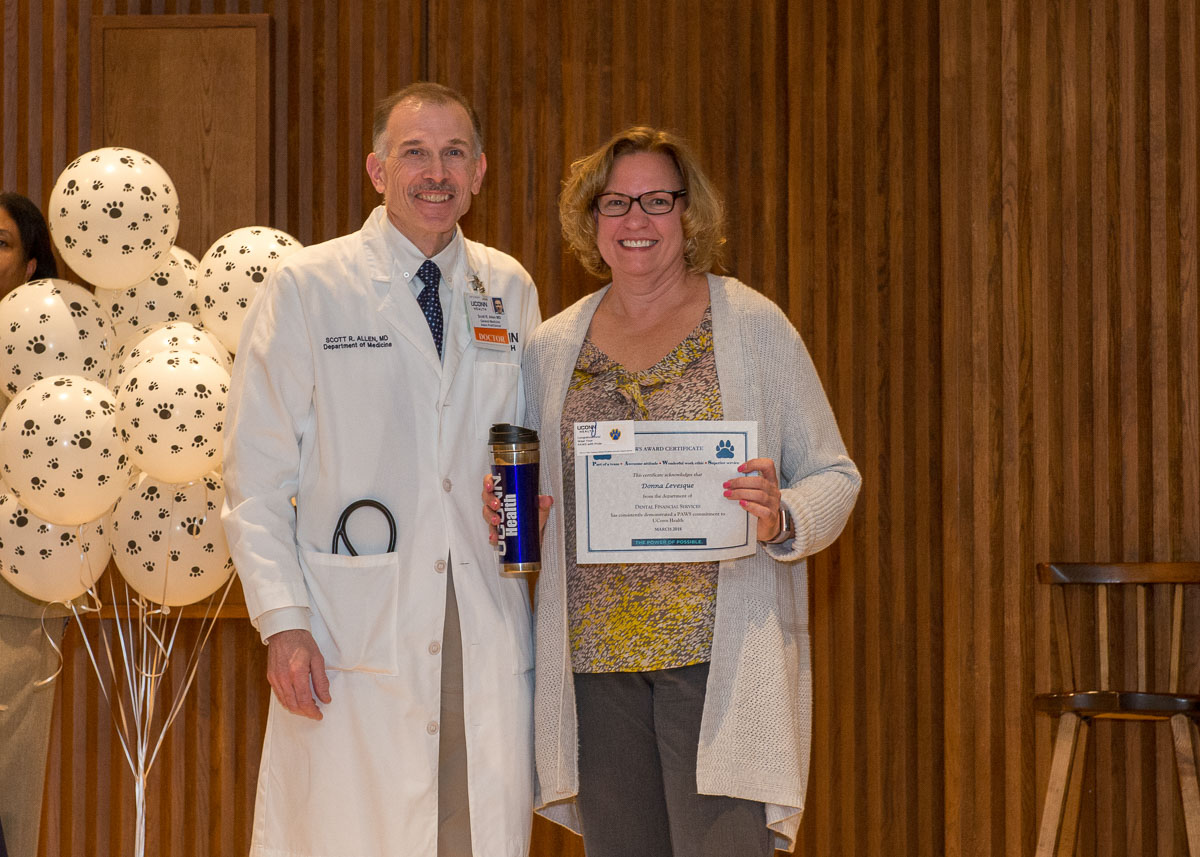
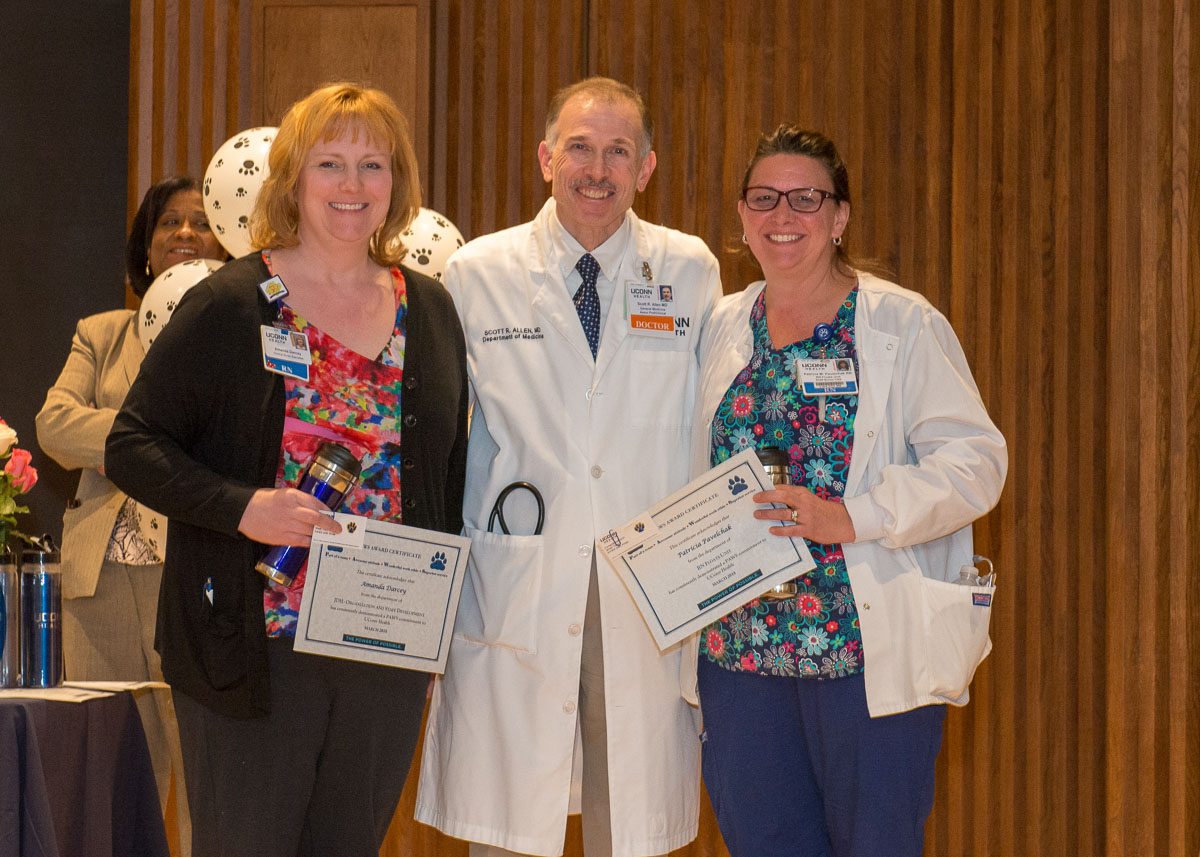
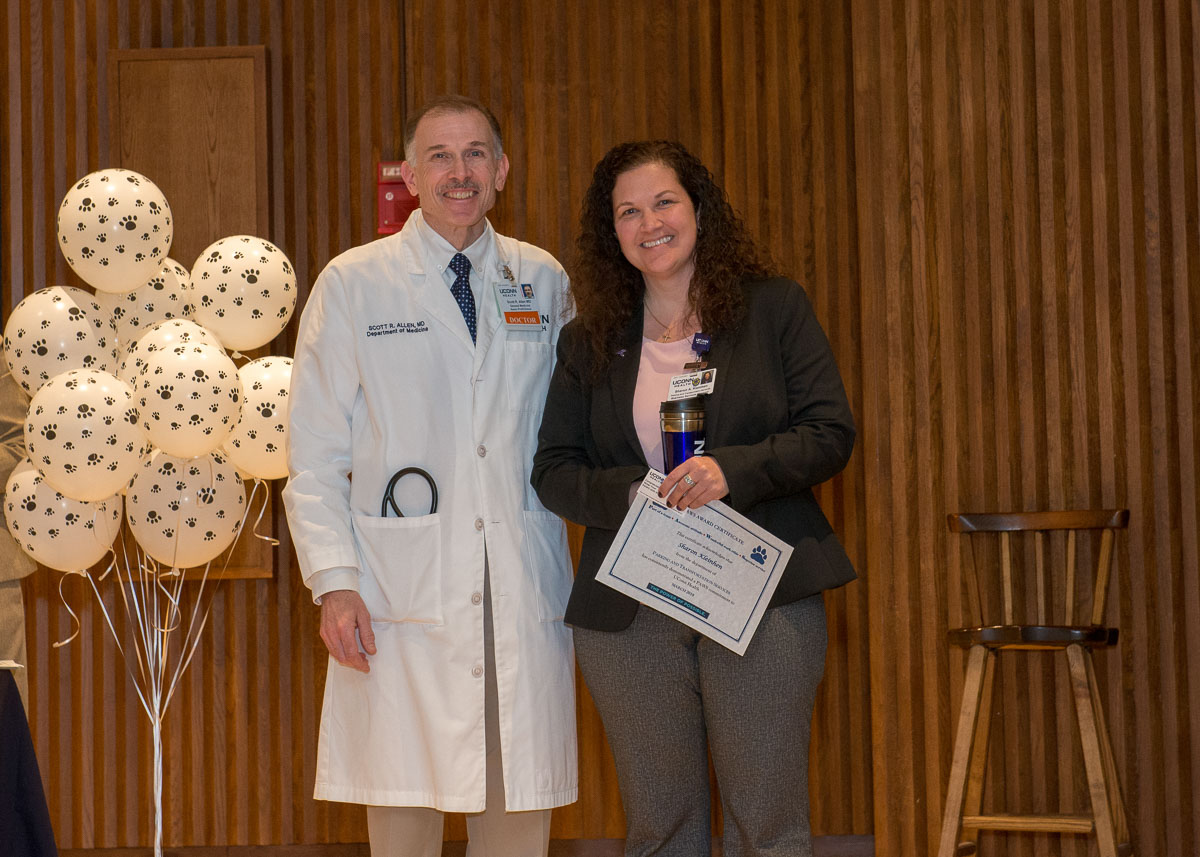
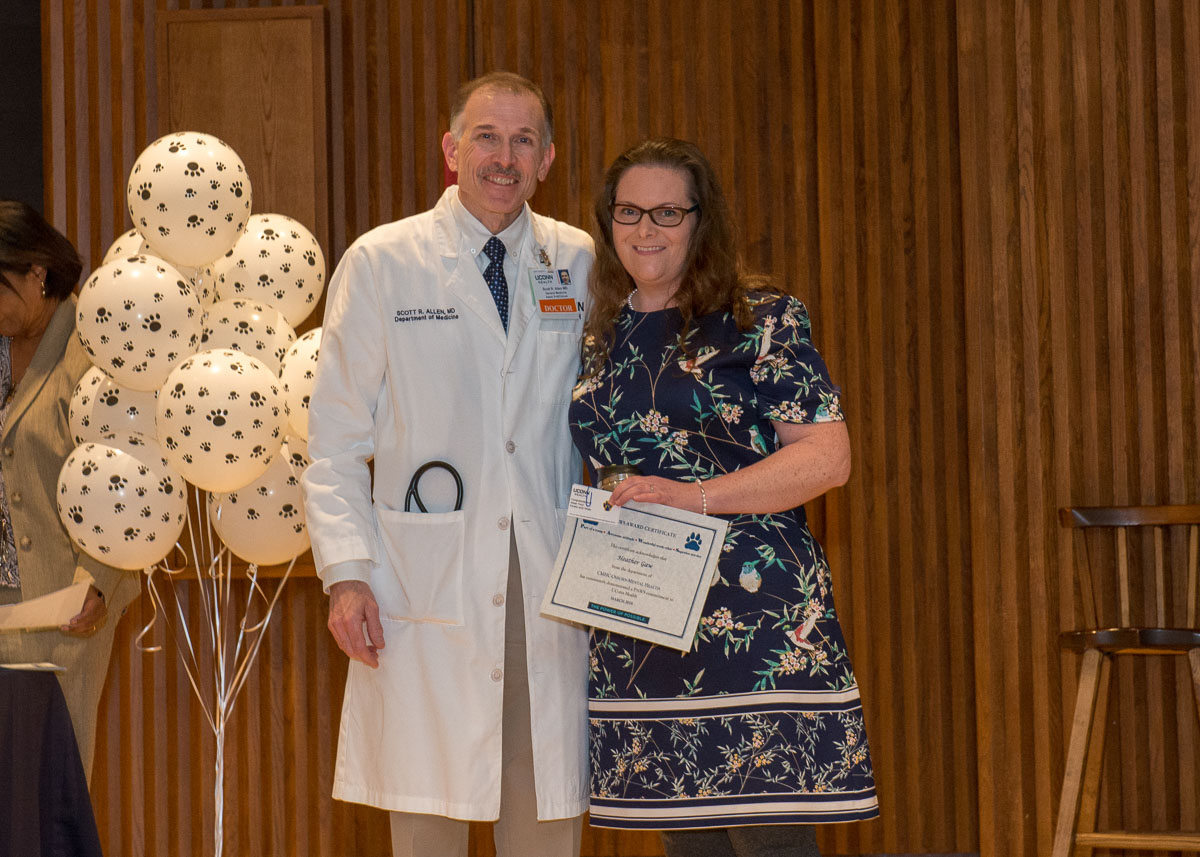
PAWS Award Winners Spring 2018

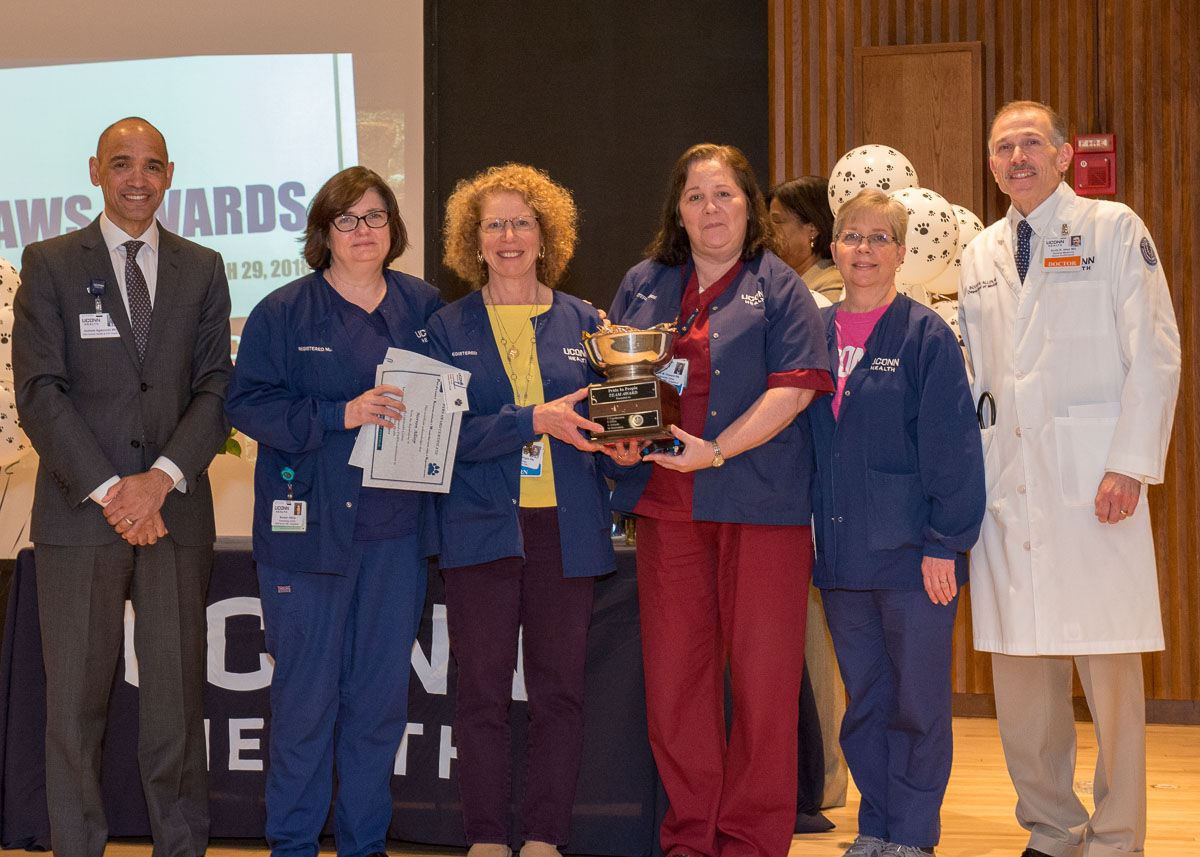
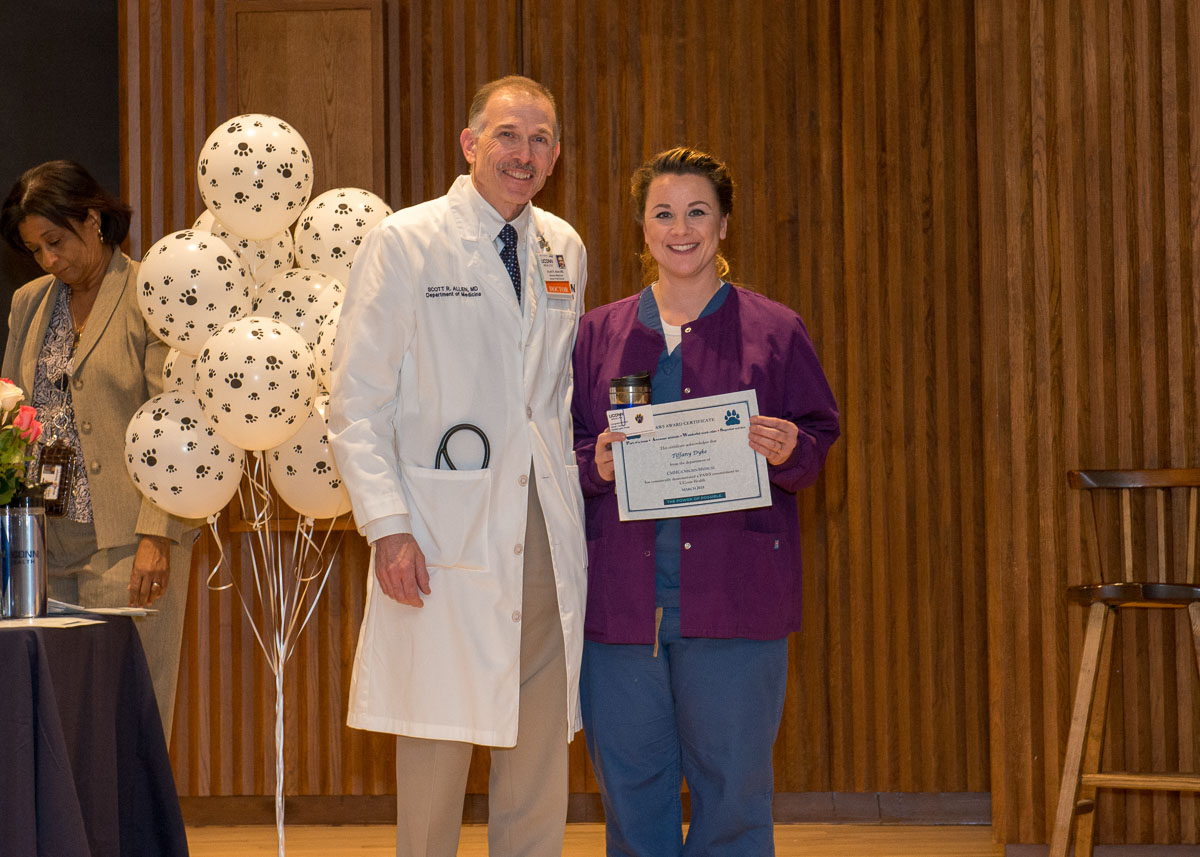
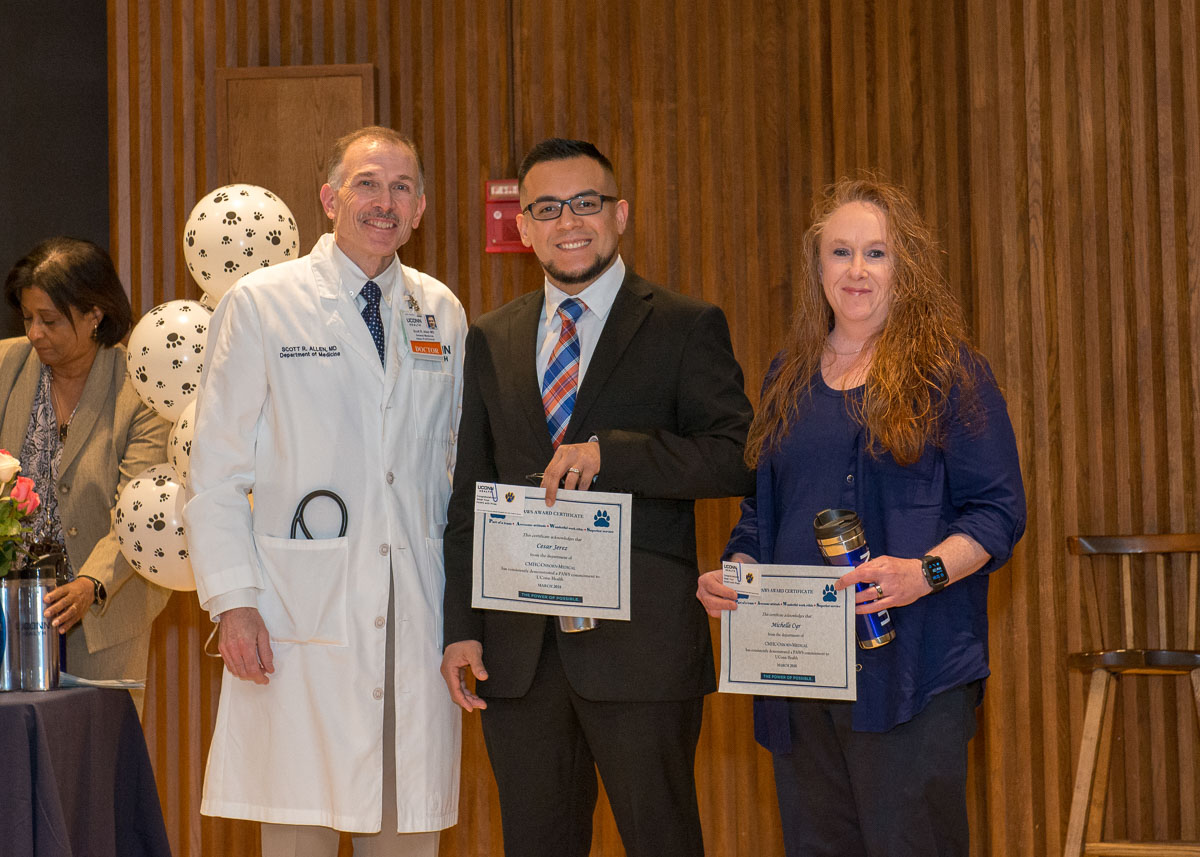
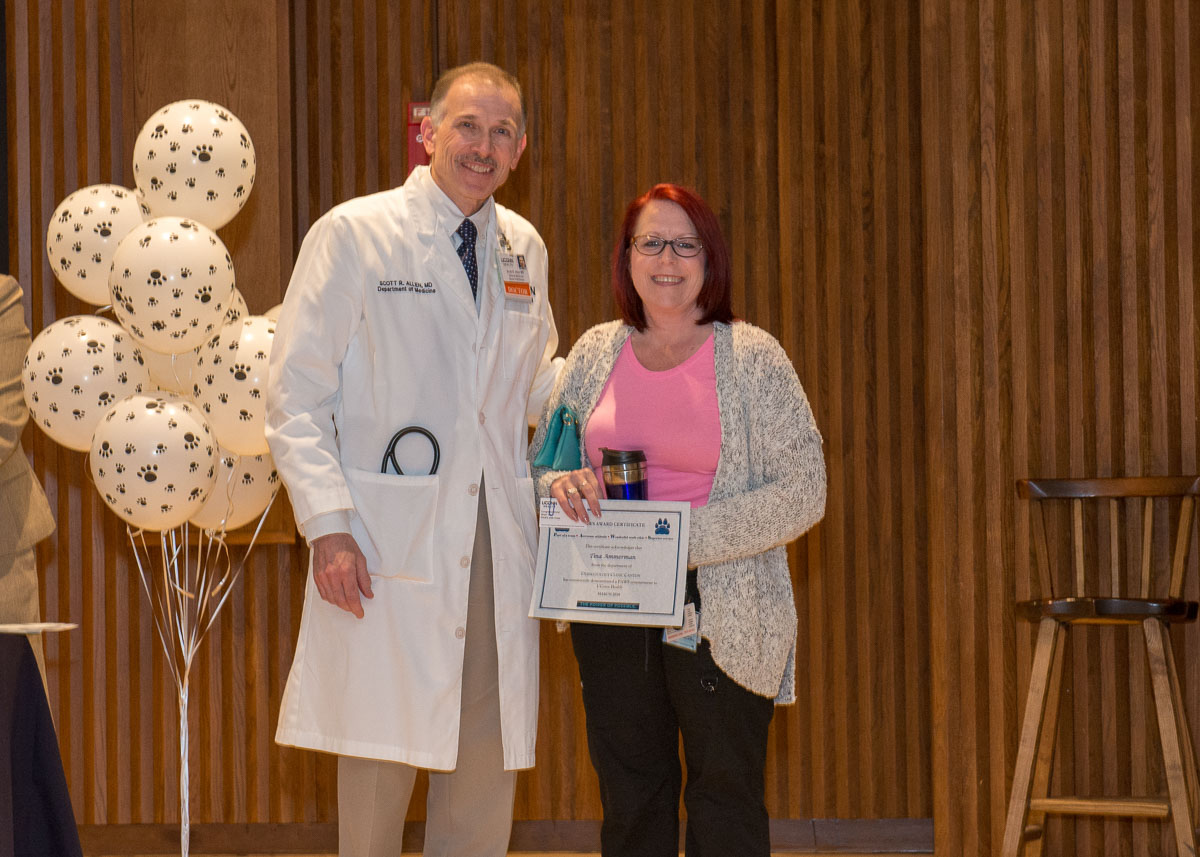
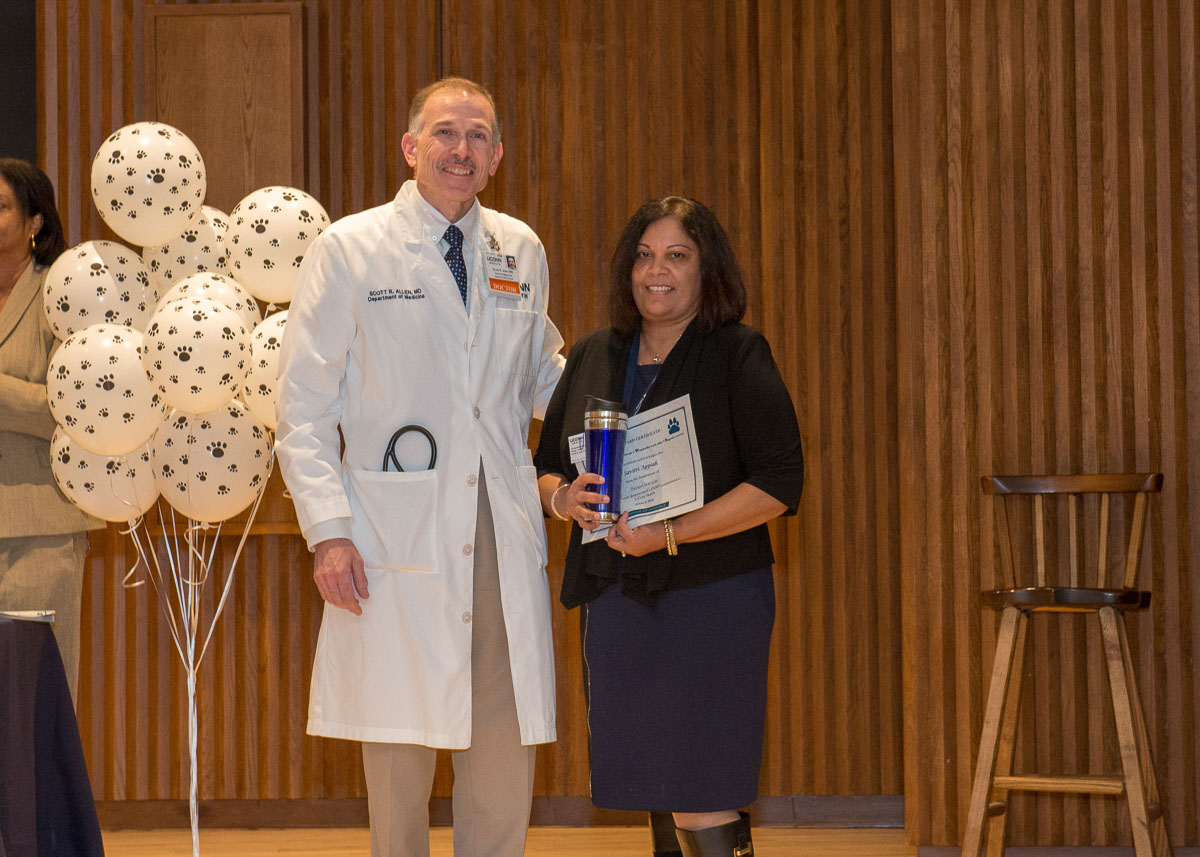
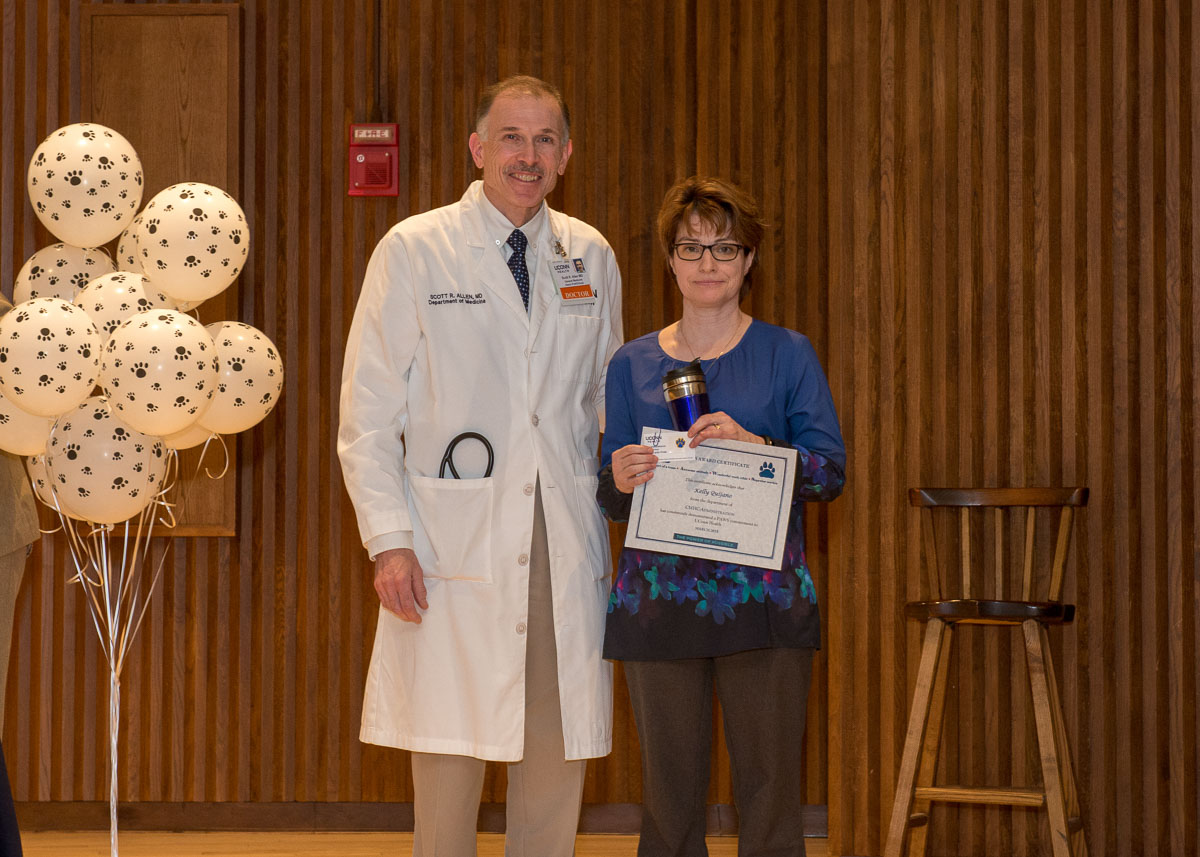
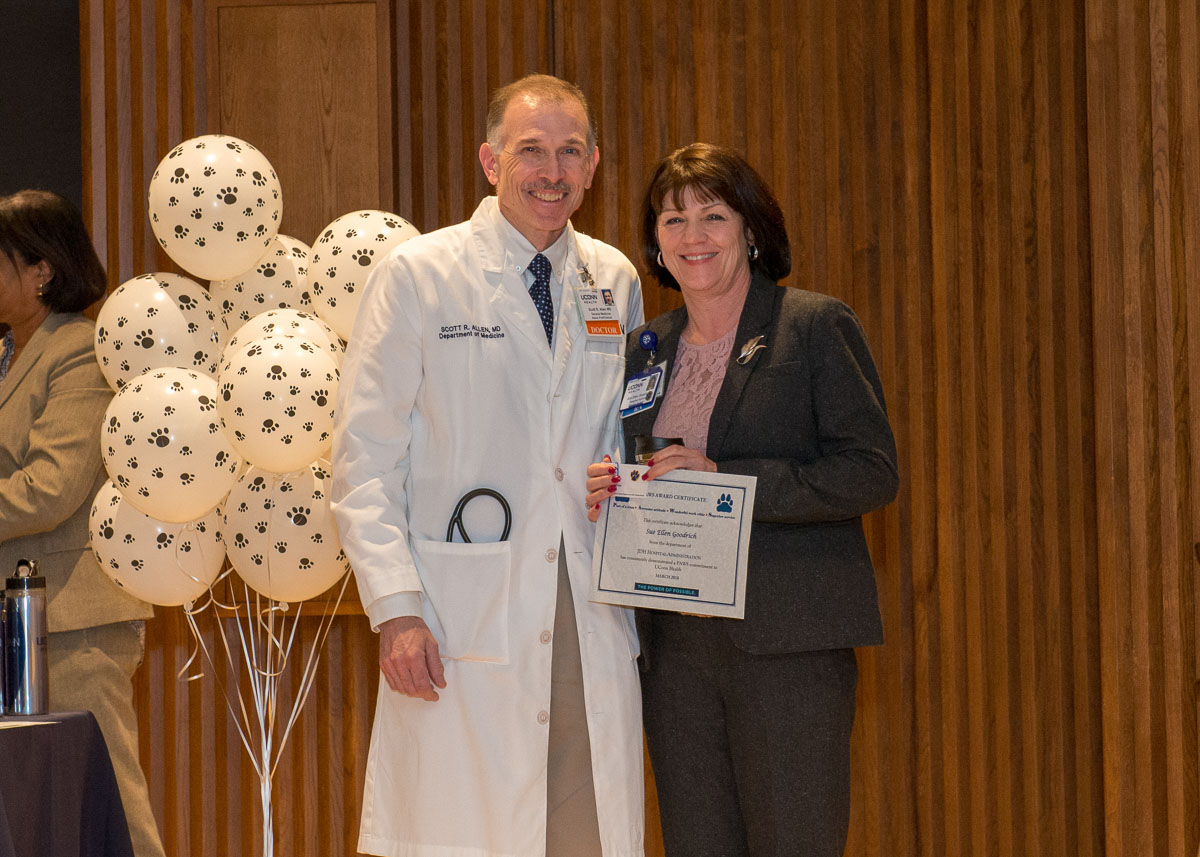
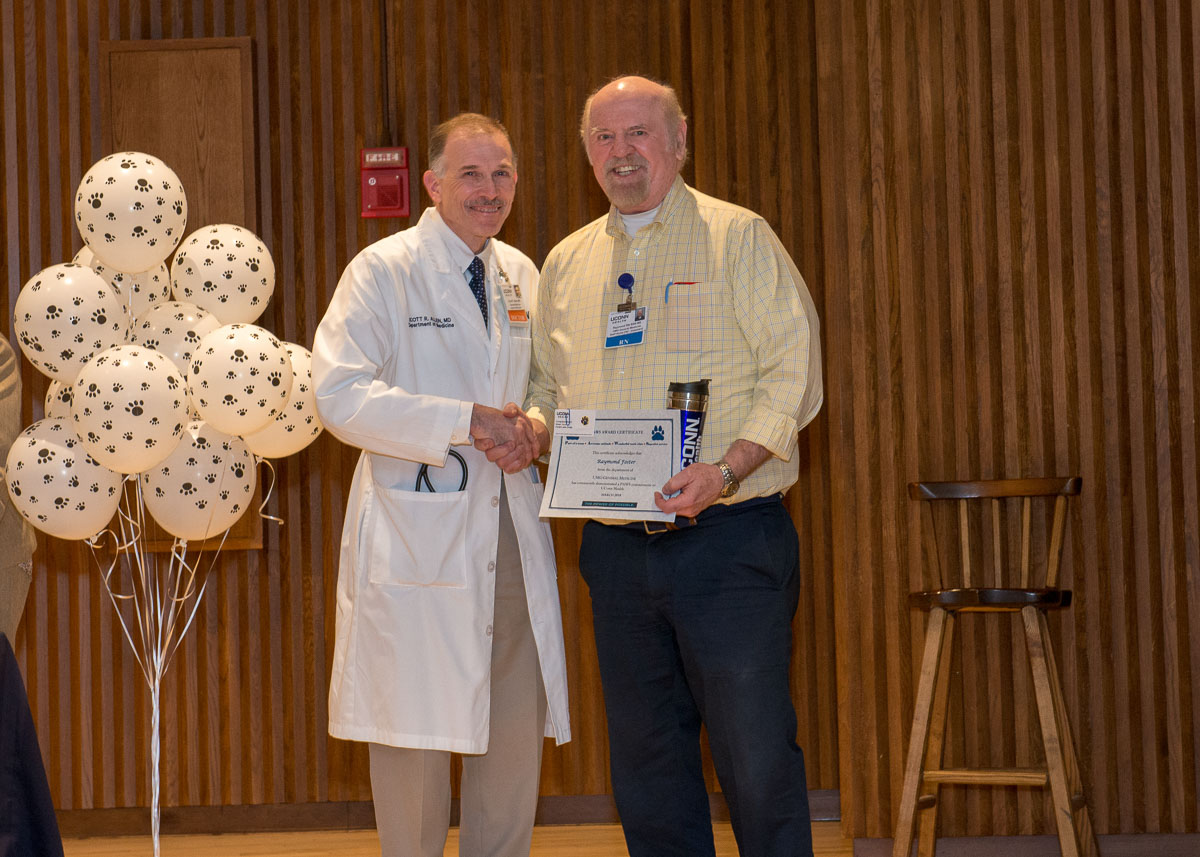
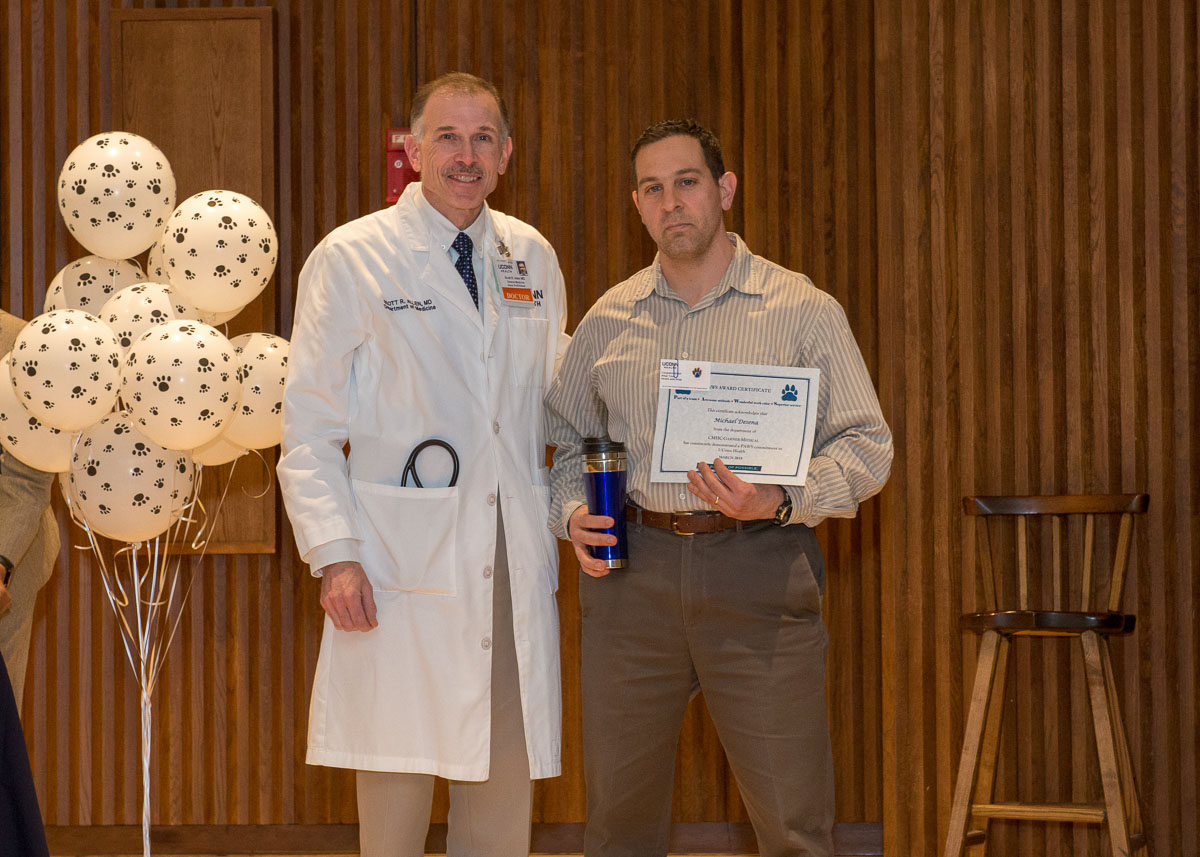
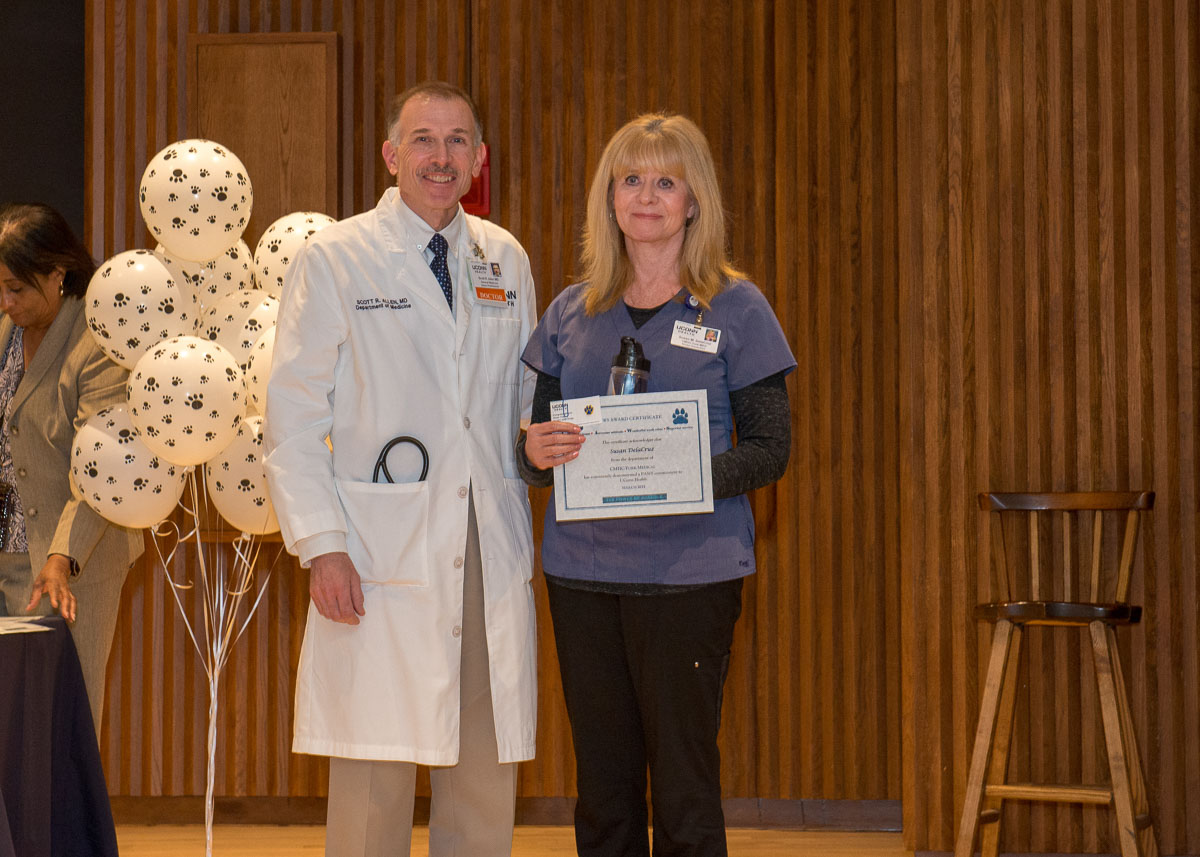
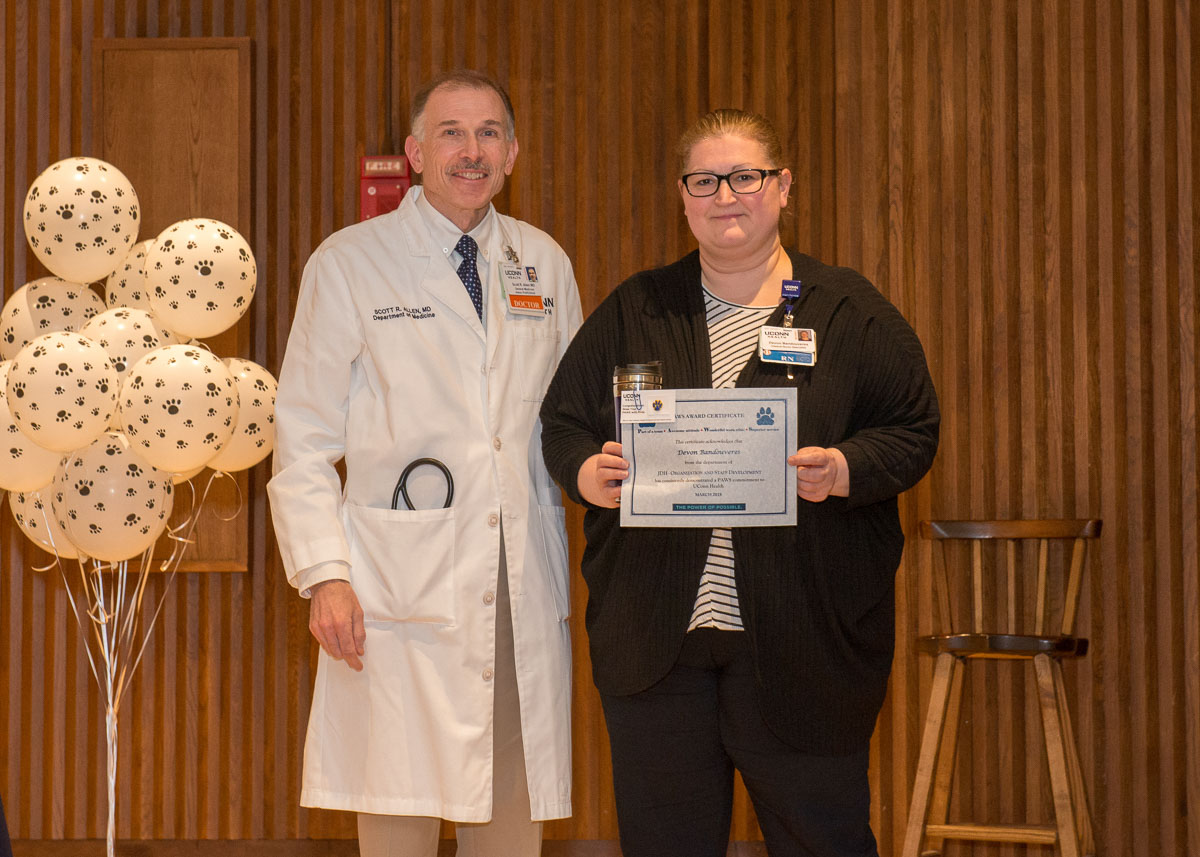
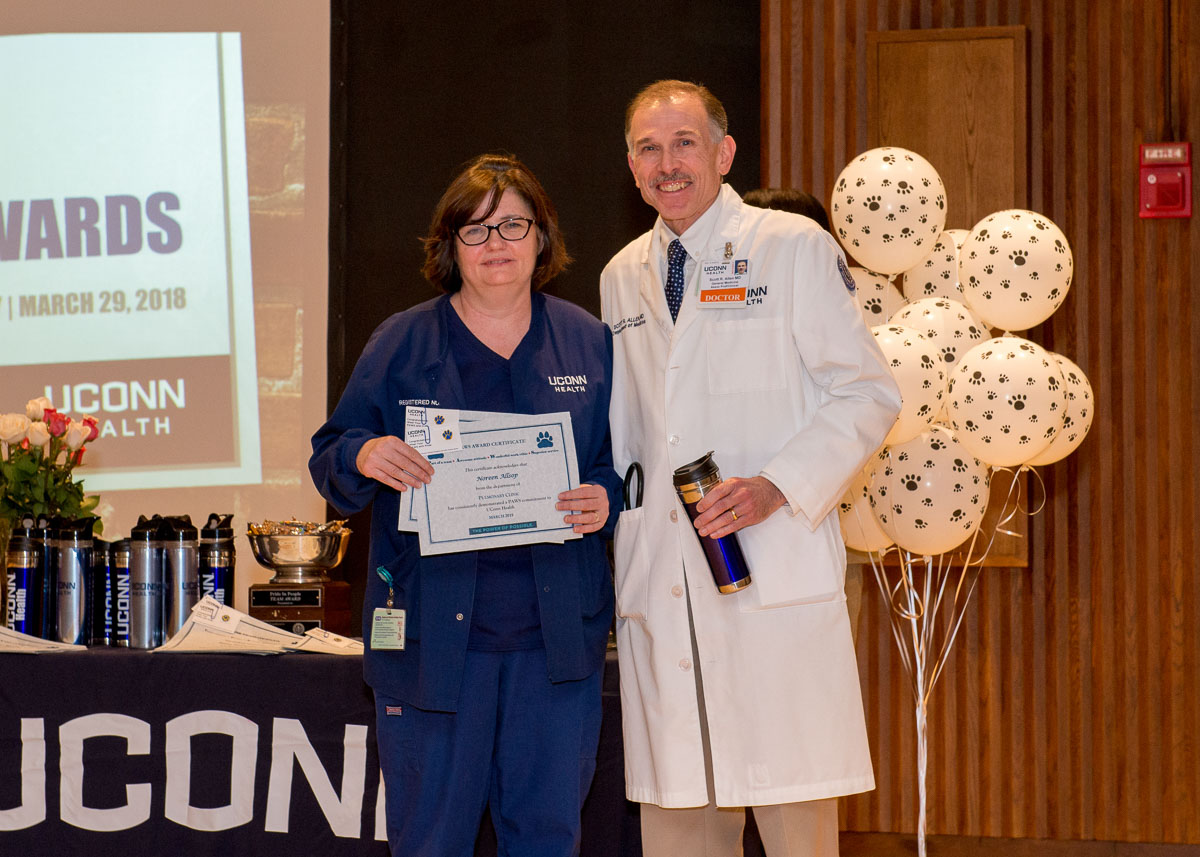
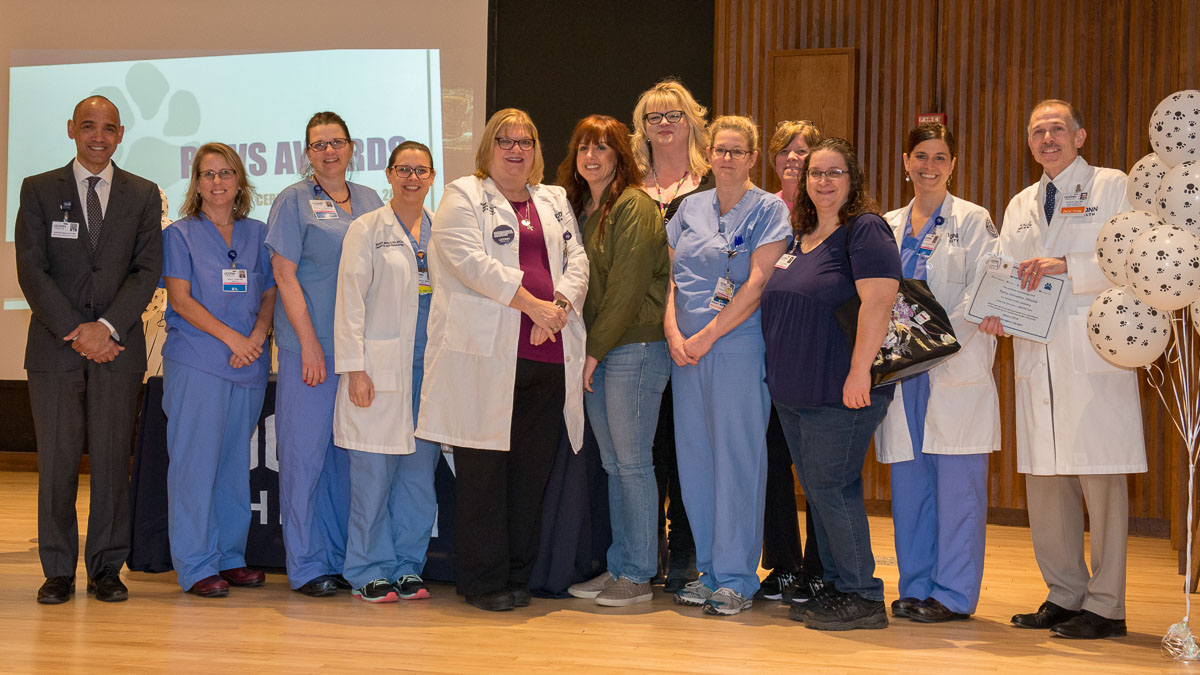
The PAWS awards celebration for the first quarter of 2018 was held on March 29, 2018The PAWS awards celebration for the first quarter of 2018 was held on March 29, 2018The PAWS awards celebration for the first quarter of 2018 was held on March 29, 2018The PAWS awards celebration for the first quarter of 2018 was held on March 29, 2018The PAWS awards celebration for the first quarter of 2018 was held on March 29, 2018The PAWS awards celebration for the first quarter of 2018 was held on March 29, 2018The PAWS awards celebration for the first quarter of 2018 was held on March 29, 2018The PAWS awards celebration for the first quarter of 2018 was held on March 29, 2018The PAWS awards celebration for the first quarter of 2018 was held on March 29, 2018The PAWS awards celebration for the first quarter of 2018 was held on March 29, 2018The PAWS awards celebration for the first quarter of 2018 was held on March 29, 2018The PAWS awards celebration for the first quarter of 2018 was held on March 29, 2018The PAWS awards celebration for the first quarter of 2018 was held on March 29, 2018The PAWS awards celebration for the first quarter of 2018 was held on March 29, 2018The PAWS awards celebration for the first quarter of 2018 was held on March 29, 2018The PAWS awards celebration for the first quarter of 2018 was held on March 29, 2018The PAWS awards celebration for the first quarter of 2018 was held on March 29, 2018The PAWS awards celebration for the first quarter of 2018 was held on March 29, 2018The PAWS awards celebration for the first quarter of 2018 was held on March 29, 2018The PAWS awards celebration for the first quarter of 2018 was held on March 29, 2018

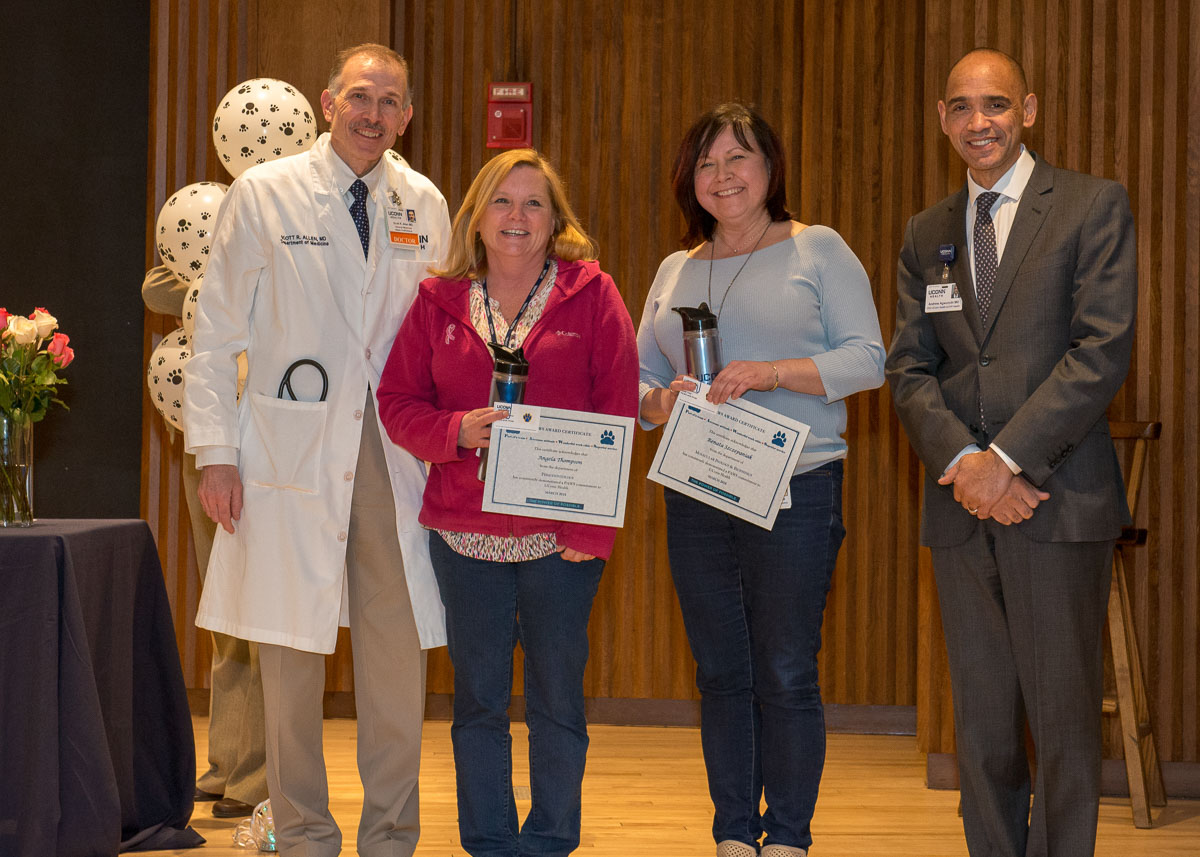
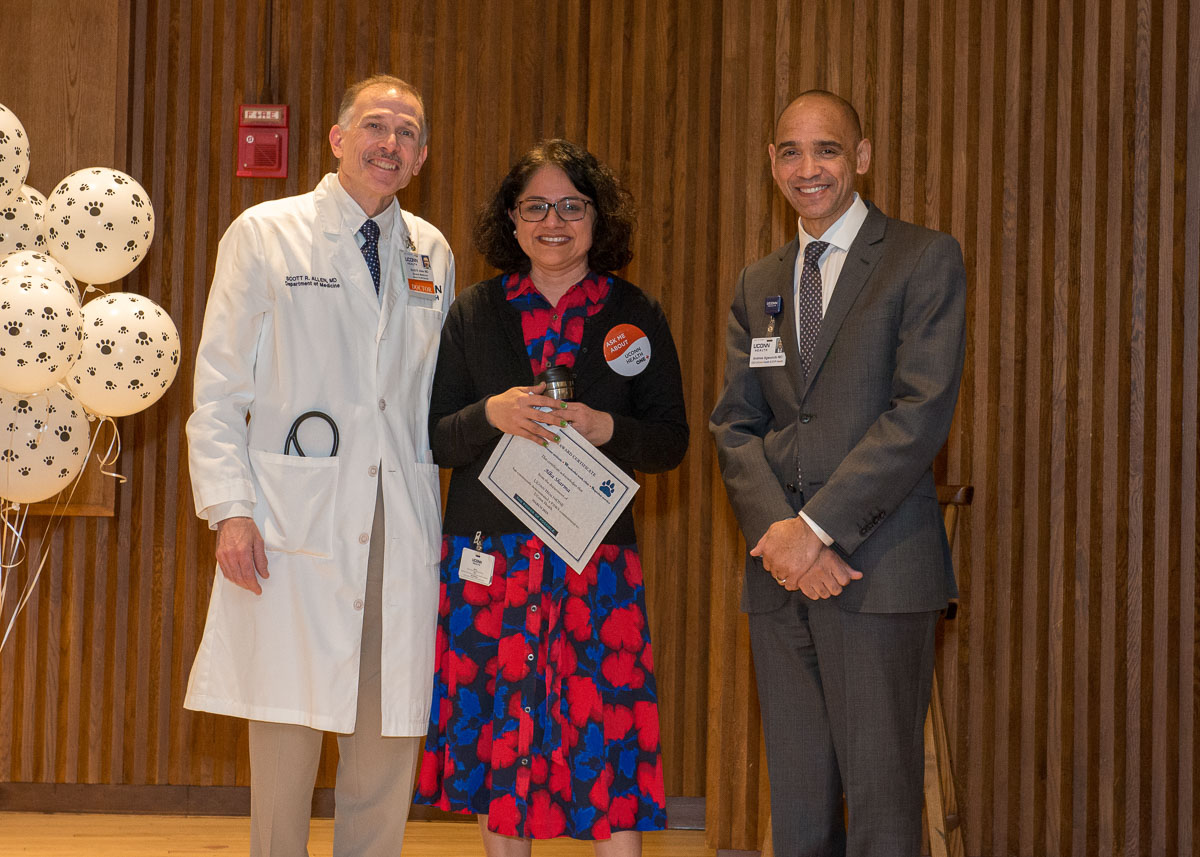
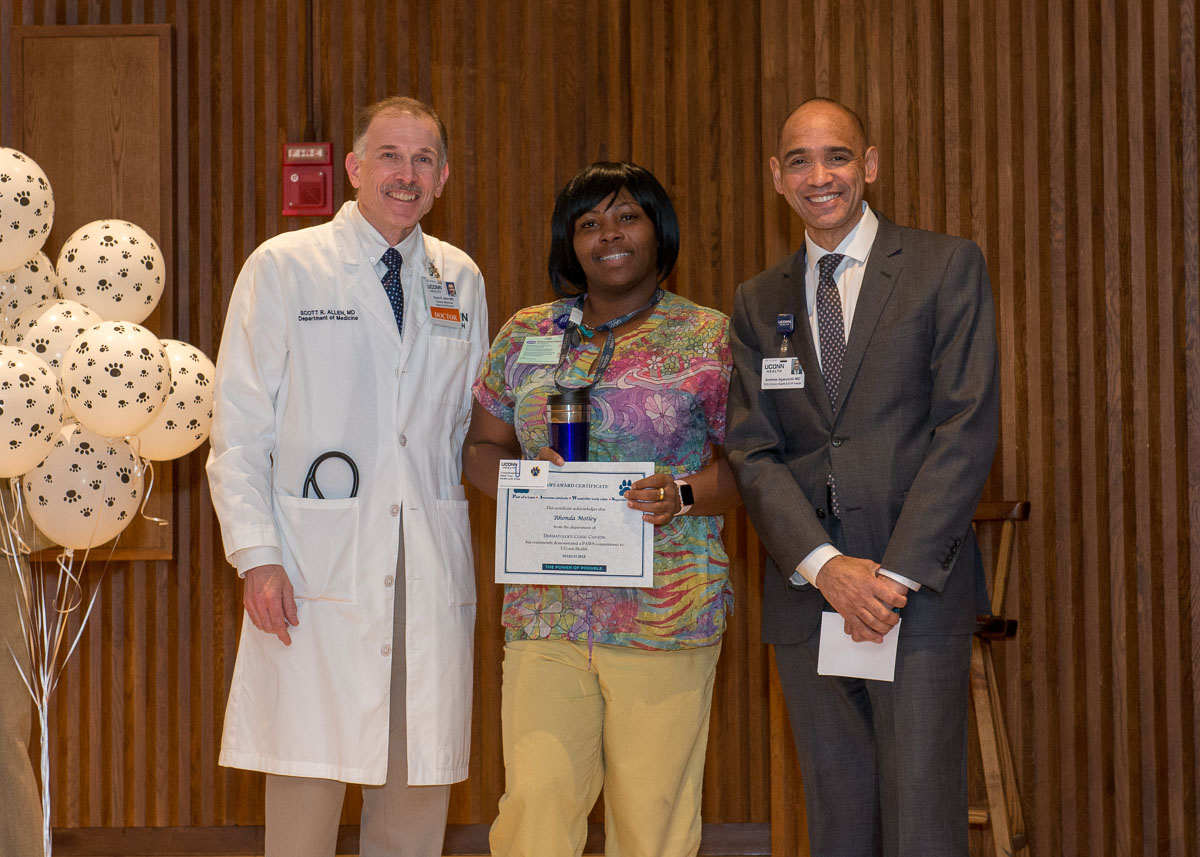
Eighty-nine exceptional UConn Health employees were honored at the spring PAWS ceremony in Keller Auditorium Thursday. The employees were recognized for exhibiting the following qualities: being Part of a team, an Awesome attitude, a Wonderful Work Ethic, and Superior Service. In addition to the individual awards, two TEAM awards were also highlighted. Prior to recognizing each of the honorees, UConn Health CEO and Executive Vice President for Health Affairs, Dr. Andy Agwunobi welcomed and thanked them for their commitment and dedication which is deeply rooted in the overall success of our organization.

Brenda Ortiz
A patient requested that Brenda Ortiz, a clinical office assistant in our General Medicine clinic, be recognized for her outstanding service. (Kristin Wallace/UConn Health photo)

Among those recognized was an unsung hero Brenda Ortiz, a clinical office assistant in our General Medicine clinic. A patient, who has been coming to UConn Health for years, requested that Brenda be recognized for her outstanding service. The patient stated that Brenda always treats him like family. Every time he comes to UConn Health, Brenda offers him a big smile and greets him by name. He went on to say that he has seen her interact with other patients in the same manner, consistently. He is sure that she must have a bad day from time to time but it never affects her relationship with her patients. Brenda’s supervisor also noted that Brenda recently has started encouraging other employees to lead healthy lives by walking and exercising with them during lunch using our gym. Every day, Brenda focuses on making someone’s life better.

Here’s a complete list of the honorees:

Savitri Appiah…………………………………………………….. Patient Services

Noreen Allsop…………………………………………………….. Pulmonary Clinic

Tina Ammerman…………………………………………………. Dermatology Clinic – Canton

Michelle Cyr……………………………………………………….. CMHC – Osborn Medical

Tiffany Dyke………………………………………………………. CMHC – Osborn Medical

Patricia Fagan…………………………………………………….. Cardiac Cath. Lab

Heather Gaw……………………………………………………… CMHC – Osborn Medical

Aaron Greenblatt………………………………………………… Customer Service Support

Cesar Jerez………………………………………………………… CMHC – Osborn Medical

Sharon Kleinhen…………………………………………………. Parking & Transportation Services

Patricia Pavelchak……………………………………………….. RN Float Unit

Amanda Darcey………………………………………………….. JDH – Organization & Staff Development

Arlene Morin………………………………………………………. JDH – Organization & Staff Development

Donna Levesque…………………………………………………. Dental Financial Services

Rhonda Motley…………………………………………………… Dermatology Clinic – Canton

Brenda Ortiz………………………………………………………. UMG – General Medicine

Jessica Santos-Martinez……………………………………….. Neag Cancer Center Unit

Alka Sharma………………………………………………………. UConn HealthONE

Renata Szczepaniak…………………………………………….. Molecular Biology & Biophysics

Angela Thompson………………………………………………. Periodontology

NIGHTINGALES

Noreen Allsop…………………………………………………….. Pulmonary Clinic

Devon Bandouveres……………………………………………. JDH – Organization and Staff Development

Diana Campbell………………………………………………….. CMHC-Hartford-MED

Susan M. DelaCruz………………………………………………. CMHC-York-MED

Michael C. Desena………………………………………………. CMHC-Garner-MED

Diane Flanigan……………………………………………………. Clinical Nursing Units

Raymond Foster…………………………………………………. UMG-General Medicine

Sue Ellen Goodrich………………………………………………. Hospital-Admin

Kelly A. Quijano………………………………………………….. CMHC-Administration

TEAMS

Pulmonary Medicine Outpatient Nurse Team

Noreen Allsop                    Jilly Kelly                  Annette Wright
Grace Howard                    Joan Sellek               Mary-Margaret Taylor

Labor & Delivery, OB/GYN Team

Patty DosSantos Almeida   Carrie Ferrindino      Jessica Pena
Robin Anderson                Diane Fillion            Jessica Perkins
Michelle Baker                  Lina Godfrey            Karen Piazza
Christine Biolo                  Rocio Goyzueta        Lauren Piro
Irene Bonati                     Sarah Hill                Jacki Pond
Patricia Bowen                  Laura Jaggon           Millicent Reynolds
Maryanne Calderoni          Deb Junkins             Doreen Rinaldo
Karen Callahan                 Suzanne Karelus      Lauren Rocco
Jenny Caroon                    Danielle Kinney        Jenny Serrambama
Marianne Chapman           Joanna Kuszaj          Danielle Shweky
Jen Charette                     Toni Leers               Valerie Sokoloski
Melanie Cherubino             Eileen Lopez            Deb Stelick
Joann Cipriano                  Susan MacDonell      Teri Stratton
Crose. Amy                       AnnMarie Marolda     Courtney Tobin
Tara Distasio                     Karin McCormick       Kimberly Tripputi
Mia DiTamasso                  Marisa A. Merlo         Kathy Whitehead
Becky Fang                       Heather Messier        Nicole Worrell
Kristen Festa                     Diane Morgan

UConn Health Hosts State Contest for Junior Scientists

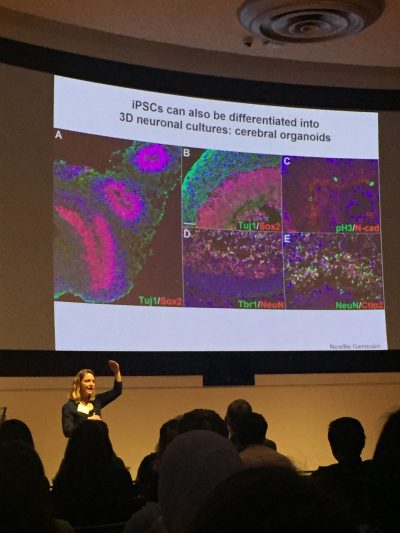
Genetics researcher Stormy Chamberlain giving the keynote talk during the JSHS event held March 24, 2018. (Photo by Brittany Knight)

By Biomedical Sciences Ph.D. candidate Brittany Knight and JSHS  event organizer

For the second year in a row, UConn Health hosted the statewide competition of the Junior Science and Humanities Symposium (JSHS).  This year around 200 students, teachers, and parents representing 40 schools took part in the all-day conference. It’s designed to provide high schools students with a forum to share ideas about how to solve real world problems with STEM education. STEM stands for science, technology, engineering, and mathematics which are all essential to the future of our technology-driven world.

In preparation for the competition, students submitted research proposals several months in advance that recognized a significant problem pertaining to human affairs. About 80 proposals were then rated by a panel of professionals in STEM science to be presented as oral or poster presentations. Needless to say, the scientific merit and rigor that went into these projects exceeded expectations and it was challenging to decide which projects were to be a part of the competition.

The symposium included a keynote presentation by Stormy Chamberlain, an associate professor in genetics and associate director of the Genetics and Developmental Biology Graduate Program at UConn Health. Her talk focused on her research using induced pluripotent stem cells (iPSCs) from patients with Angelman syndrome, Prader-willi syndrome, and 15q duplication syndrome.

Following the keynote, students were divided into groups to present or attend the poster and oral presentations. Students were also given the opportunity to attend a career panel session with young professionals in social work, nursing, pharmaceutical science, medical science, research, public health, and dentistry. Students asked the panel questions pertaining to career motivations, challenges with career decisions, college or high school course preparation, internships, college planning, loans, etc.

Another option for students was touring some of our research labs, including the virtual anatomy lab, to participate in hands-on activities and learn about the exciting research being done here. Graduate students in the Biomedical Sciences Ph.D. program, including Matthew Sticco (Neuroscience), Nicholas Wasko (Immunology), Rajamani Selvam (Neuroscience), and Shubham Khetan (Genetics) led the tours. They each created a short module that consisted of hands-on activities as well as career advice for students interested in pursuing a career in research.

At the end of the event, top presentations were announced. The effort and scientific merit that went into this year’s projects was nothing short of amazing. It’s important to note that last year’s first place national winner was one of Connecticut’s JSHS winners last March.

JSHS is nationally organized by the Academy of Applied Sciences with sponsorship from the U.S. Army, Naval, and Air Force. Connecticut’s program would not have been made possible without the dedication of Connecticut Area Health Education Center Network (AHEC) and the staff at UConn Health. We wish the best of luck to the five Connecticut representatives at the national competition in May.

HealthONE: What Do We Mean by ‘Activation’?

March 27, 2018

During the last six to nine months, the HealthONE team has been concentrating on the build and testing of the HealthONE system. In January, the HealthONE training program for credentialed trainers, super users and UConn Health staff got underway.

Behind the scenes a small group of HealthONE CORe Team (Clinical Operational Readiness) members, along with consultant partners from CSI Healthcare IT, have been working on a HealthONE “activation” plan. Sometimes called a “go-live” plan, it includes four main pillars:

  • TDR (Technical Dress Rehearsal): Testing of the functionality of every work station that will use HealthONE, including inpatient, outpatient, and off-campus locations. The goal is to ensure compatibility and proper execution of printers, barcode scanners, badge readers, and other devices.
  • Cutover: A very detailed and technical process with hundreds of steps to turn on HealthONE, connect other IT systems to Epic, activate end user security accounts, etc.
  • ATE (“At the Elbow”): Planning and coordination of several hundred support staff from Epic and external contractors
  • Command Center Support: Up to 200 go-live support staff in three or four strategic areas manning help desk phones and working/resolving issues.

Watch for additional HealthONE updates in Lifeline, in the Pulse, at uconnhealthexpress.uchc.edu/HealthONE, and now on Twitter @UConnHealthONE.

HealthONE Rolling out Single Sign On

Imprivata Reader
Users will be able to log in to HealthONE by tapping their badge and entering a password that enables them to tap in and out for four hours and 15 minutes without having to provide a password again. (Image provided by Imprivata)

(Updated April 9)

With “OneSign”–commonly referred to as “Single Sign On”–successfully deployed on Floors 1 through 6 of the Outpatient Pavilion, the UConn HealthONE team is moving ahead with deployment of this badge-tap technology for the rest of the campus and community locations.

UConn HealthONE is the new electronic health record system UConn Health is debuting in one month. Single Sign On enables physicians, nurses, and other providers to quickly and securely access patient records simply by tapping their badge and entering a password. Single Sign On will allow users to tap in and out for four hours and 15 minutes without having to provide a password again.

Additional information from IT:

  • Please leave your computer on at night to receive critical HealthONE updates, including Single Sign On.
  • If your badge is not enrolled and/or you are having difficulty enrolling your badge after deployment, you can always log onto the PC with your normal network ID and password.
  • IT staff will be coordinating deployments with the managers of each area and will be providing managers with Single Sign On cheat sheets to be distributed to their staff prior to enrollment. All documentation for Single Sign On can also be found in the UConn Health Applications folder located on the desktop of each PC.
  • The entire University Tower is scheduled for deployment Monday, April 16.
  • All areas, with the exception of the Emergency Department and Farmington Surgery Center will be deployed prior to April 28. The Emergency Department and Farmington Surgery Center will go live on April 28 with the rest of HealthONE.
  • Providers who prescribe controlled substances will be able to use the Imprivata ID feature for ePrescribe feature once HealthONE is live on April 28.

Watch for additional HealthONE updates in Lifeline, in the Pulse, at uconnhealthexpress.uchc.edu/HealthONE, and now on Twitter @UConnHealthONE.

Q&A Corner: Dr. Suzanne Doyon, Medical Director, Poison Control

March 22, 2018

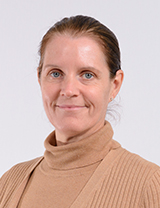
Dr. Suzanne Doyon, medical director, Connecticut Poison Control Center (Photo by Tina Encarnacion)

National Poison Prevention Week is March 18-24. Dr. Suzanne Doyon, who joined UConn Health as the medical director of the Connecticut Poison Control Center in November, shares her expertise as a medical toxicologist.

What’s trending in toxicology?

The teenager laundry pod challenge occupied the airwaves in January. Local media helped us get the word out about this trend and the Connecticut Poison Control Center was featured in many stories. Carbon monoxide poisonings have kept us busy recently following the nor’easters and bomb cyclones.

What are the most avoidable poison hazards?

Unsecured household products and unsecured medications are still the number one avoidable poison hazard in the home. Other sources of calls are medication errors in the elderly, especially if they do not use pill dispensers. As a result, the Connecticut Poison Control Center supports child-resistant packaging and poison prevention practices and the use of pill dispensers by the elderly.

What’s most asked about on calls to the poison control center hotline?

The most common types of call remain unsupervised ingestions in children, usually involving personal care products (shampoos, creams, etc.) or household products (detergents, cleaners, etc.)

What makes the Connecticut Poison Control Center successful in its mission?

The Connecticut Poison Control Center is staffed 24/7 by nurses and pharmacists with extensive training and knowledge of poisons and poisonings. Collectively, the poison specialists have over 100 years of experience in poisonings. The person answering the phone is an expert. The hotline is a service is free to the caller.

What brought you to UConn Health?

I am a medical toxicologist interested in public health, especially opioid use disorder. My previous position was assistant professor in the Department of Emergency Medicine at Johns Hopkins University School of Medicine, and prior to that I was medical director of the Maryland Poison Control Center. I missed doing poison center work. The position of medical director of the Connecticut Poison Control Center opened up and the rest is history.

The Poison Control Center Hotline is 800.222.1222, offering free and confidential information around the clock.

Smartphone Apps Interoperable With HealthONE

March 20, 2018

(Getty Images)

Did you know, some of the features of HealthONE will be accessible via smartphone? Two we’d like to mention here are Haiku and Imprivata ID.

Haiku is available to iPhone users who might like to take advantage of Patient Management, InBasket, Review and Ordering and ePrescribing functions on the go.

This is an optional package available to you should you find it helpful.

When you attend your provider training session, your will see a poster inviting you to send a registration/communication to HealthONEMobileApps@uchc.edu with your department and cell phone number if you have interest in accessing Haiku. This will go to the HealthONE team to initiate your access.

After that we will push the mobile app via MobileIron to your phone and, voila, with a few keystrokes you will be ready to go.

The push thru MobileIron makes it simple for us to ensure your configuration to our production server is accurate. Along with this push, you will receive a packet of information via email that will include some tip sheets to help you get jump-started. Once you have your Epic training, you will find it quite intuitive to use the app. No training classes will be needed!

Imprivata ID is a phone app that will enable you to receive a dual authentication factor code text message, required by state law beginning this year to support ePrescribing of controlled substances. The application will allow you to receive a text message and automatically with a single keystroke send that code into HealthONE, satisfying the elements needed to prescribe controlled substances.

You will be registered for this during your training class; however, the registration process could be shortened if you take a moment to download the iOS or Android application referred to as “Imprivata ID” prior to attending class. Please be sure to bring your phone with you to training.

Imprivata ID will work on iPhone or on Android and requires no MobileIron and no data fees. Easy peasy and convenient!

–Kathy Noel, Director, Ambulatory Applications, UConn HealthONE

Watch for additional HealthONE updates in Lifeline, in the Pulse, at uconnhealthexpress.uchc.edu/emr, and now on Twitter @UConnHealthONE.

UConn Health April 2018 Programs, Events

March 16, 2018

Here is a list of UConn Health programs scheduled for April and early May 2018. This information will be updated with any additions or other schedule changes. (Updated 3/16)

Living Well With Epilepsy: A Support Group for Young Adults
Saturday, April 7, noon to 1:30 p.m.
, UConn Health Outpatient Pavilion, 3rd floor, large conference Room S3301

The Epilepsy Foundation of Connecticut, in partnership with the UConn Health Department of Neurology, offers a support group for young adults who live with epilepsy. This group is open to those aged 18 to 30 who would like to join others to share experience, gain peer support, and learn together about epilepsy and overcoming its challenges to live well. The group generally meets on the first Saturday of the month. Please call 860-346-1924 or email manzelone.efct@sbcglobal.net for more information.

Bladder Cancer Support Group
Saturday, April 7, 2 to 3 p.m.
, UConn Health, Onyiuke Dining Room
Patients, family members and caregivers (not limited to UConn Health patients) are invited to join others whose lives have been touched by bladder cancer. This support group, established in partnership with the Bladder Cancer Advocacy Network, usually meets on the first Saturday of the month and is the only group of its kind in New England. Call 888-901-BCAN for more information.

Free Cosmetology Services for Cancer Survivors
Monday, April 9, 1 to 3 p.m.
, UConn Health Outpatient Pavilion, 4th floor

“Look Good…Feel Better” is a free program to help improve the self-image and self-esteem of women experiencing appearance-related side effects from cancer treatment. During this hands-on workshop, a trained volunteer certified cosmetologist will teach women how to cope with skin changes and hair loss using cosmetic and skin care products donated by the cosmetic industry. Classes are offered every other month and are not limited to UConn Health patients. Please call 860-679-7820 to register (required).

New 6-week “Ready to Lose” Weight Management Program Starts
Tuesday, April 10, 5 to 6 p.m.
, UConn Health Outpatient Pavilion, 2nd floor east, patient lobby
The introductory session is followed by five weekly sessions through Tuesday, May 15, that include a weigh-in, discussion of progress, and a timely nutrition topic such as eating out strategies, cooking light and right, emotional eating, exercise and activity, and smart shopping. Registration fee is $70, $50 for past participants. Call 800-535-6232 or 860-679-7692 for more information.

Breast-feeding Class
Wednesday, April 11, 6 to 8 p.m.
, UConn Health Outpatient Pavilion, 1st floor conference room S1501
A certified lactation consultant leads a discussion of topics including the benefits of breast-feeding, how to get started, and how the rest of the family can help the breast-feeding mother as well as how to continue breast-feeding and working. Fee is $25 per couple. Call 800-535-6232 to register or for more information.

Breast Cancer Support Group
Thursday, April 19, 7 to 8 p.m.
, UConn Health, Onyiuke Dining Room
This is a support group intended for women under the age of 45 who’ve been diagnosed with non-metastatic breast cancer. Women at any point in their cancer survivorship journey are welcome. Meetings are the third Thursday of the month. To register or more information, call 860-679-7820 or email tillinghast@uchc.edu.

Infertility Peer Support Group
Thursday, April 19, 7 to 8:30 p.m.
, Center for Advanced Reproductive Services, 2 Batterson Park Road, Farmington.

The Greater Hartford chapter of RESOLVE, a national nonprofit resource for those facing the challenges of infertility, offers support, information and confidential, informal, peer-led discussions on the third Thursday of the month. To learn more or to check for weather-related cancellation, call 860-523-8337.

Living With Heart Disease Meeting
Thursday, April 19, 11 a.m. to noon
, UConn Health, University Tower, 2nd floor conference room

Men and women affected by heart disease meet on the third Thursday of every other month to discuss post-diagnosis topics such as prevention and wellness, social and emotional support, heart-healthy recipes, coping strategies and resources. Significant others and caregivers are also welcome to attend. Please call Sue at 860-679-3633 for more information.

Free Hospital Maternity Tours
Saturday, April 21, 2 p.m.
, UConn Health, University Tower lobby
A representative will guide you through labor and delivery, postpartum, and the nursery at the UConn John Dempsey Hospital. Children and grandparents are welcome. Call 800-535-6232 to register or for more information.

Stroke Survivor Group
Wednesday, April 25, noon to 1 p.m.
, UConn Health Outpatient Pavilion, 3rd floor
The UConn Health Stroke Center invites stroke survivors, families and caregivers to a monthly group meeting to discuss topics such as prevention, coping methods, support systems, rehabilitation tips, resources, and promoting independence. The Stroke Survivor Group generally meets on the fourth Wednesday of the month. Call 860-679-4846 for more information.

Childbirth Preparation Class
Wednesday, April 25, 6 to 10 p.m.
, UConn Health Outpatient Pavilion, 3rd floor large conference room S3301
This one-day class covers anatomy and physiology of pregnancy and labor, emotions of pregnancy, nutrition, fetal growth and development, comfort measures for labor, working with unexpected events in labor, cesarean delivery, and practice of relaxation and breathing techniques for labor. Class size is limited to eight couples. Remember to bring two pillows and wear comfortable clothing. Light snack is provided. Fee is $100. Call 800-535-6232 or 860-679-7692 to register or for more information.

(Added 3/16)
UConn Health Auxiliary’s Spring Market
Friday, April 27, 9 a.m. to 4 p.m.
, UConn Health, Main Building
The UConn Health Auxiliary’s annual spring shopping event features vendors in the main and Keller lobbies. Money raised goes toward the Auxiliary’s free mammogram programs, its patient assistance program, and its patient education program in the Outpatient Pavilion. For more information please call 860-679-2963.

Free Workshop: “Things to Consider Before Joining a Research Study”
Monday, April 30, 5 p.m.
, UConn Health, Onyiuke Dining Room
The UConn Health Human Subjects Protection Office offers an educational session about the rights and responsibilities of participants in research projects on the last Monday of the month. Registration is required: 860-679-8802 or cagganello@uchc.edu.

Living Well With Epilepsy: A Support Group for Young Adults
Saturday, May 5, noon to 1:30 p.m.
, UConn Health Outpatient Pavilion, 3rd floor, large conference Room S3301
The Epilepsy Foundation of Connecticut, in partnership with the UConn Health Department of Neurology, offers a support group for young adults who live with epilepsy. This group is open to those aged 18 to 30 who would like to join others to share experience, gain peer support, and learn together about epilepsy and overcoming its challenges to live well. The group generally meets on the first Saturday of the month. Please call 860-346-1924 or email manzelone.efct@sbcglobal.net for more information.

Bladder Cancer Support Group
Saturday, May 5, 2 to 3 p.m.
, UConn Health, Onyiuke Dining Room
Patients, family members and caregivers (not limited to UConn Health patients) are invited to join others whose lives have been touched by bladder cancer. This support group, established in partnership with the Bladder Cancer Advocacy Network, usually meets on the first Saturday of the month and is the only group of its kind in New England. Call 888-901-BCAN for more information.

Breast-feeding Class
Wednesday, May 9, 6 to 8 p.m.
, UConn Health Outpatient Pavilion, 1st floor conference room S1501
A certified lactation consultant leads a discussion of topics including the benefits of breast-feeding, how to get started, and how the rest of the family can help the breast-feeding mother as well as how to continue breast-feeding and working. Fee is $25 per couple. Call 800-535-6232 to register or for more information.

Directions to UConn Health are available at health.uconn.edu/locations.