Keeping Things Running During Winter Weather

March 15, 2018

Even when UConn Health has an emergency closing, it’s not really closed.

Inpatient care must go on, as do some laboratory experiments, and other 24/7 operations such as public safety, housekeeping, dietary, information technology, the telephone operators, and the Connecticut Poison Control Center.

Making that possible is the work of Facilities Management and Operations, whose staff ensures those who do need to come to work (or to the hospital) can do so safely.

“They tackle their job with a real positive attitude, and they’re definitely engaged in the work that they do,” says Cliff Ashton, associate vice president of Facilities Management and Operations. “They work around the clock. They do take breaks for safety purposes, but it’s not an easy job.”

For this week’s nor’easter, that included six groundsmen operating four plow trucks and two skid steer machines, plus contractor support including six plow trucks and drivers, a bucket loader and operator, and 15 laborers shoveling around the entrances and fire exits.

“There’s a certain order of priority,” Ashton says. “When it’s snowing real hard, the focus is on keeping the roads open. We obviously want to keep access to the ambulance bays clear.”

Part of what makes the storm response effective is the preparation work that takes place in between storms.

“We check all the equipment, make repairs when needed, and we flush all the equipment after a storm because of all the salt,” Ashton says. “There’s always freezing and thawing, and our guys are out there first thing in the morning, going around all the sidewalks to put the ice melt material down.”

What can the rest of us do to help with the snow removal effort? Observe parking bans, for starters.

“When we have a parking ban, there’s not supposed to be anyone parking roadside or in uncovered areas, and that does get to be a problem,” Ashton says. “The other important thing is being attentive to their own personal safety. People should wear the right footwear to get from their car to the building to reduce the risk of falls.”

Logistics Management also has storm-preparation protocol, which includes fully stocking all hospital departments, shifting schedules to minimize staff traveling in dangerous conditions, and coordinating with different areas to determine their needs.

"We'll provide cots to the operators, the help desk, and Correctional Managed Health Care pharmacy, and reach out to the nursing supervisor to make sure we have enough cots for hospital staff," says Logistics Management Director Jeff Boyko. "For the hospital, we're always servicing every facet. The outpatient clinical areas are often closed, but the urgent care offices may stay open, and we also make sure lab medicine and the pharmacy can continue to serve all the correctional facilities."


Three skid steer machines (left) and three plow trucks are among the equipment Facilities Management and Operations crews use for snow removal. (Photo by Joe Caron)

Heroism and Good Fortune

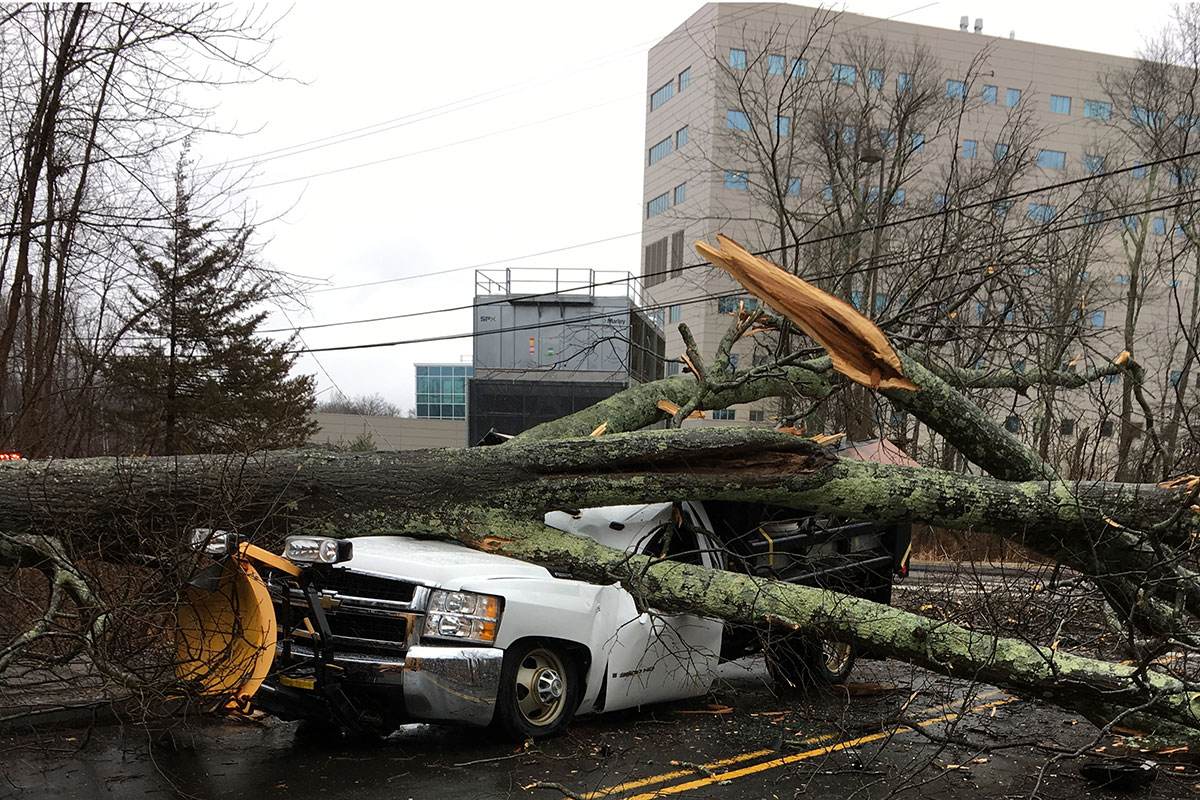
A member of the UConn Health grounds crew is being called a hero after a close call following the March 7 nor’easter. Mark Koziol and fellow groundsman William “Toby” Berry were in a grounds truck on lower campus when they stopped to pick up a sign. With Berry still in the driver’s seat, a tree fell on the truck. Koziol, who hadn’t returned to the truck yet, realized the danger and, risking his own safety, pulled his coworker out of the truck. Thankfully, both escaped serious injury. (Photo by Joe Caron)

HealthONE Training Required for Access

UConn Health One badgeHealthONE training is roaring and we appreciate the flexibility and patience of everyone involved. It is a lot of people doing a lot of training in a very tight window. And of course the weather hasn’t helped. So why the rush, why must this be done? There are a lot of reasons: patient safety, familiarity with new processes, we could have a long list. But at the top of  this list is the simple fact: no training, no access.

When we go live April 28, all those not listed as trained—including not passing the end user proficiency assessment—will not be able to access the system to do their job.

Single sign-on doesn’t happen until the training is done so we create a safe, well-trained team to care for our patients. So, in the coming weeks when you have to cover for a co-worker, train off shift or just wonder why, keep in mind every good thing the system will do starts with your ability on April 28 to log in to HealthONE.

See your leader or a training coordinator for questions, enrollment problems, and to make sure on the 28th you are not someone asking ‘why won’t this system let me in?’

—HealthONE leadership

Watch for additional HealthONE updates in Lifeline, in the Pulse, at uconnhealthexpress.uchc.edu/HealthONE, and now on Twitter @UConnHealthONE.

Progressive Approach to Campus Safety

March 9, 2018

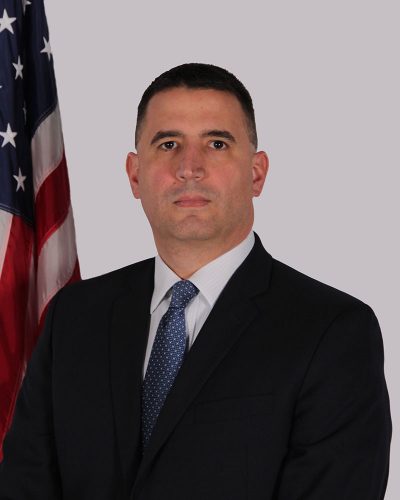
UConn Police Chief Hans Rhynhart is the director of the UConn Division of Public Safety. (Photo provided by Hans Rhynhart)

It’s natural that campus safety, while always a priority, would be even more top of mind following a mass shooting like what took place in Parkland, Florida, last month.

Within the last two years, UConn has shifted to a progressive model, folding police, fire, emergency management, communications centers, and the fire marshal’s office into a single Division of Public Safety. The resources span all campuses, including UConn Health.

Division Director Hans Rhynhart, who is also chief of the UConn Police Department, says the key to readiness for an active threat situation on any campus is preparation and prevention.

“We’ve accomplished and standardized combined training with all division personnel, with police, fire, communications and emergency management, to understand roles and responsibilities to enhance our unified response,” Rhynhart says. “We have threat assessment teams in place which are on the leading edge of trying to prevent a tragedy from happening.”

Part of that prevention component is intelligence gathering. UConn Police have a detective assigned to an FBI Joint Terrorism Task Force, which provides direct access to real-time information on a threat or activity of interest.

“There is almost no better resource than the task force that we have to call upon should we need enhanced, immediate intelligence gathering,” Rhynhart says.

Another Detective works with the U.S. Attorney’s Office on cyber crimes. Social media monitoring is also one of the tools police use to stay aware and gather intelligence. Monitoring can be done on a specific incident or event as well as through the creation of a geo fence to alert investigators to certain phrases and words being used, all with the goal of intercepting and preventing a critical incident from occurring.

Meantime, a general sense of awareness and vigilance in the community can also help with prevention.

“There exists a ‘see something, say something’ philosophy,” Rhynhart says. “If you think that there’s something ‘off’, if you think that an employee or student is acting in a way that is concerning to you, let one of the police officers assigned to your campus know as soon as you can, so we may work with our partners at the University to try to understand what is going on. Most reports we receive are not threatening in nature and do not rise to the level of a criminal violation, but the information gives us an opportunity to talk with and most of the time develop a solution or positive path for an individual. We want to assist in creating a positive and safe environment for all involved.”

An additional component to campus safety is an extensive network of surveillance cameras and blue emergency phones.

The UConn Division of Public Safety offers resources for the public to take an active role in its own safety on its Office of Emergency Management and Community Outreach Unit websites.

“Part of it is being familiar with the information that we put out,” Rhynhart says. “Accessing these websites provides a wide array of tools that will aid in not only your own personal response to hazards, but what you can expect from the University as well. There are fliers and guides, including a campaign we started called ‘Seconds for Safety.’ We break information out into different types of incidents. They’re very quick to consume, you can look at it in seconds, and understand what you should do at any specific moment to ensure a better chance of survival.”

March is National Nutrition Month

March 1, 2018

Sodexo staff pose for National Nutrition Month (Tina Encarnacion/UConn Health photo)Sodexo staff pose for National Nutrition Month (Tina Encarnacion/UConn Health photo)Sodexo staff pose for National Nutrition Month (Tina Encarnacion/UConn Health photo)Sodexo staff pose for National Nutrition Month (Tina Encarnacion/UConn Health photo)Sodexo staff pose for National Nutrition Month (Tina Encarnacion/UConn Health photo)Sodexo staff pose for National Nutrition Month (Tina Encarnacion/UConn Health photo)

March is National Nutrition Month – a good time to say “thank you” to all of our hard-working friends at Sodexo for dishing out delicious and nutritious meals to thousands of people each and every day.

Finding the HealthONE Training Rooms

HealthONE training is underway. Have you signed up yet? Check the training page for schedule and catalog, and email the training coordinators for help.

How to find the training rooms:

  • The ARB Small Conference Room (EG052) is on the ground floor of what’s also known as the E Building. Look for the sign the near the ARB elevator on Level G.
  • The C2021 Lab Conference Room is on the 2nd floor of the main building. Take the main lobby elevator to Level 2 and look for the sign.
  • OR 2 and OR 9 in the Connecticut Tower are in the former operating room space in the Connecticut Tower. Take the Connecticut Tower elevator (near the food court) to Level B and look for the sign.
  • Rooms 4023-4040 in the Connecticut Tower are on the fourth floor of the Connecticut Tower. Take the Connecticut Tower elevator (near the food court) to Level 4 and look for the sign.
  • The Munson Road locations are at 16 Munson Road, a building separate from the main building. Look for signs in the main lobby.
  • The Outpatient Pavilion is on lower campus. Take the elevator to either Level 2, Level 7, or Level 8 and look for the sign.
  • The L5079 Small Conference Room is on the 5th floor of the Laboratory Building.
Scheduled Class Facility Room Name
Academic Research Building (ARB) ARB Small Conference Room
C Building C2021 – Lab Conference Room
Connecticut Tower OR 2
Connecticut Tower OR 9
Connecticut Tower RM 4023
Connecticut Tower RM 4024
Connecticut Tower RM 4025
Connecticut Tower RM 4026
Connecticut Tower RM 4028
Connecticut Tower RM 4029
Connecticut Tower RM 4030
Connecticut Tower RM 4031
Connecticut Tower RM 4032
Connecticut Tower RM 4033
Connecticut Tower RM 4035
Connecticut Tower RM 4036
Connecticut Tower RM 4037
Connecticut Tower RM 4038
Connecticut Tower RM 4040
L Building L5079 Small Conference Room
Munson Road P4020
Munson Road Accounting Conference Room
Munson Road Sunset
Outpatient Pavilion S2010 Large Conference Room
Outpatient Pavilion S2030 Medium Conference Room
Outpatient Pavilion S7103 A/B Conference Room
Outpatient Pavilion 8th Floor Training Room

Watch for additional HealthONE updates in Lifeline, in the Pulse, at uconnhealthexpress.uchc.edu/emr, and now on Twitter @UConnHealthONE.

HealthONE: EHR the Core Hub of Interoperability

February 27, 2018

Change Control is one of the spokes in wheel that makes up HealthONE, with the electronic health record being the hub, says Giselle Funchion, assistant director of clinical informatics. (Photo by Chris DeFrancesco)

When UConn Health unveils HealthONE in two months, it will be a modern electronic health record system standing not alone, but at the center of a hub of new technology, new roles, new services, and new workflows designed to work together to make the health care experience better for both provider and patient.

Giselle Funchion, assistant director of clinical informatics, breaks it down:

  • OneSign (Imprivata) badge-tap sign-in: “It’s our secure and fast way for our providers to use their badge to access patient records, sort of like a fast lane or fast pass,” Funchion says.
  • Dragon dictation, already in place in outpatient areas, expanding to include inpatient areas: “We are upgrading our dictation system to integrate with the cloud, which will allow for faster transcription throughout the house.”
  • Intellispace obstetrics monitoring for labor and delivery patients: “That will then feed into HealthONE as well for both the monitoring and documentation of those patients.”
  • GI Provation procedural documentation system: “We already have gone live with this. All of this procedural information will feed downward into HealthONE.”
  • Scribes to facilitate provider documentation and entry into the system: “Over the last 6 months we have introduced scribes on the outpatient side. This new role has helped our physicians move patients along more efficiently with timelier completion of their charts. While the scribes do not enter orders or prescriptions, they enter the documentation based on what the provider’s assessing. This allows the providers to be truly present and in the moment with the patient, hearing and understanding their concerns, while the scribe is taking care of that documentation piece.”
  • Epilepsy Monitoring Unit: “We also already have gone live with the EMU, located on the first floor of the University Tower within the intensive care unit. This was a collaboration with our outpatient neurology practice bringing patients in house for controlled seizure monitoring for those patients where traditional regimens might have been unsuccessful.”
  • Intake and Change Control to establish a methodical and stringent process for implementing improvements both before and after go-live. “With such a large system as HealthONE and all of these ancillary systems, the change control process will start from the ONErequest (as we’re saying HealthONE), and there’ll be one click for the end user so they can report an issue or request a change. There will be a tightly controlled method to which we prioritize and make those changes to ensure the intended change is made and items aren’t broken along the way.”

And just as the electronic medical record is just one—albeit major—component of HealthONE, the April 28 go-live date is just one—albeit major—milestone in HealthONE’s implementation.

“I don’t see it as the finish line,” Funchion says. Once you reach go-live, you’re now in an optimization phase. It’s the start of a new beginning… many new beginnings. It’s going to need lots of nourishment, lots of maintenance for its lifetime.”

Watch for additional HealthONE updates in Lifeline, in the Pulse, at uconnhealthexpress.uchc.edu/emr, and now on Twitter @UConnHealthONE.

New Developments in Stroke Research

February 22, 2018

As we near the end of heart disease and stroke awareness month, Biomedical Sciences Ph.D. candidate Brittany Knight offers some insights into the exciting developments in stroke research at UConn Health. She met with Rajkumar Verma, Ph.D., an assistant professor in the Department of Neuroscience at the Pat and Jim Calhoun Cardiology Center to discuss a recent conference he attended and his research studying potential therapeutic targets for protecting the brain following stroke.

To understand the exciting new discoveries in stroke research, we first need to know what stroke is and what happens to the body following stroke. Stroke is an incidental disease that affects the entire body (systemic disorder) when blood supply is prevented from reaching the brain. Lack of blood supply decreases the amount of oxygen and nutrients required to keep brain cells healthy and functioning properly. Other areas of the body beyond the brain are also affected by stroke, for instance pneumonia and urinary tract infections are the most common complications following stroke. Recently, the effect of stroke on gut microbiota axis has drawn serious attention. The microbes that inhabit your gastrointestinal system can transport toxic substances and exacerbate the inflammatory response following stroke. When a stroke occurs or if you see someone having a stroke you may notice some odd things that occur as a result of this blood/oxygen loss. These symptoms are important to know and are easily remembered by memorizing the acronym F.A.S.T. –  Facial drooping; Arm weakness; Speech difficulties; and Time. If you notice any of these symptoms in another person or yourself – call 911!

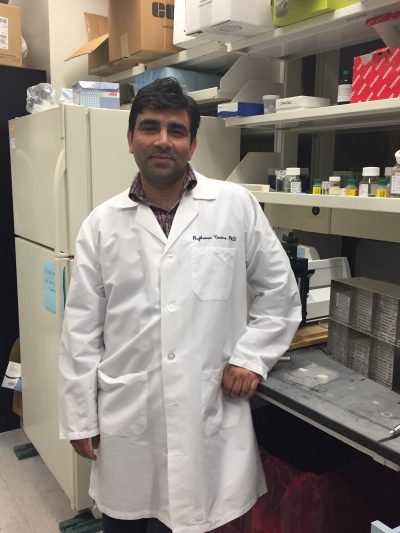
Rajkumar Verma Ph.D., an assistant professor in the Department of Neuroscience, in his research lab. (Brittany Knight/UConn Health)

Within the first 5 minutes  of discontinued blood supply, brain cells start to die. This rapid cell death results in inflammation and increases the risk of additional brain damage in surrounding regions. Damage increases progressively in the absence of reestablished blood flow or drug treatment. Currently, tPA (tissue plasminogen activator) and thrombectomy, the removal of a blood clot, are the only FDA-approved available treatment for stroke. TPA treatment works by breaking down blood clots and is beneficial if administered within a narrow 4-5 hours following a stroke, similar to thrombectomy. This time frame emphasizes the importance of T in the F.A.S.T. acronym. However, sometimes individuals that have a stroke do not seek immediate medical attention and wait until the following day to see their physician or go to the emergency room. This unfortunately can result in more brain damage and impede the recovery process.

However, exciting new developments in the field of stroke research show new promise for individuals who do not receive immediate treatment. This January, Dr. Verma attended the world’s largest conference for cerebrovascular disease: the 2018 International Stroke Conference in Los Angeles. More than 4,500 individuals in the field of stroke and some 1,500 presentations were given on the pathophysiology and potential treatments for cerebrovascular diseases, including stroke. Attendees consisted of researchers, clinicians, nurses, and therapists as well as other professionals from around the world. During the International Stroke Conference, it was revealed that the time that thrombectomy is beneficial is now extended to 16-24 hours following a stroke in an eligible patient. Time is still important, but this means surgical intervention can be administered later thus, more people can receive medical attention.

In the clinic, doctors seek to reach several goals: increase the amount of oxygen and nutrients to the brain to preserve tissue that may become damaged during the inflammatory process as well as rehabilitate patients post-stroke to improve and maintain both physical and mental health. The conference also discussed that starting rehabilitation more than 2 months and even as late as 6 months following a stroke can still provide benefit to the recovery process. In other words, if you or someone you know suffered from a stroke in the last 6 months and has not been physically active, the benefits of starting physical therapy are still warranted.

The National Institute of Health funds a variety of research aimed at providing more effective therapies for stroke. One method thought to help decrease the amount of damage that occurs following stroke, during the inflammatory process, is by decreasing core body temperature. Researchers have shown that during hibernation, reptiles (as well as other animals) can decrease their core body temperature which slows cellular metabolism. Essentially, this method slows down the speed of reactions inside the body to protect the brain from additional damage post-stroke.

Similarly, Dr. Verma is interested in finding a candidate target that can be pharmacologically inhibited following stroke to decrease brain damage. Excessive ATP release, which occurs during mass cell death or when oxygen is cut off from part of the brain, can increase the activity of brain cells and the release of inflammatory mediators causing further damage. He has found a candidate, called P2X purinoceptor 4 (P2X4). P2X4 binds ATP which is released by stressed or dying cells and leads to the inflammatory process. This vicious cycle of cell death and inflammation can cause significant detriments to physical and mental function if untreated. By targeting P2X4, Dr. Verma hopes to disrupt this pathway and potentially improve outcomes following stroke.

UConn Health March 2018 Programs, Events

February 14, 2018

Here is a list of UConn Health programs scheduled for March and early April 2018. This information will be updated with any additions or other schedule changes. (Updated 3/6)

Living Well With Epilepsy: A Support Group for Young Adults
Saturday, March 3, noon to 1:30 p.m.
, UConn Health Outpatient Pavilion, 3rd floor, large conference Room S3301

The Epilepsy Foundation of Connecticut, in partnership with the UConn Health Department of Neurology, offers a support group for young adults who live with epilepsy. This group is open to those aged 18 to 30 who would like to join others to share experience, gain peer support, and learn together about epilepsy and overcoming its challenges to live well. The group generally meets on the first Saturday of the month. Please call 860-346-1924 or email manzelone.efct@sbcglobal.net for more information.

Bladder Cancer Support Group
Saturday, March 3, 2 to 3 p.m.
, UConn Health, Onyiuke Dining Room
Patients, family members and caregivers (not limited to UConn Health patients) are invited to join others whose lives have been touched by bladder cancer. This support group, established in partnership with the Bladder Cancer Advocacy Network, usually meets on the first Saturday of the month and is the only group of its kind in New England. Call 888-901-BCAN for more information.

(Rescheduled 3/6)
Breast-feeding Class
Wednesday, March 7
Thursday, March 15, 6 to 8 p.m.
, UConn Health Outpatient Pavilion, 1st floor conference room S1501
A certified lactation consultant leads a discussion of topics including the benefits of breast-feeding, how to get started, and how the rest of the family can help the breast-feeding mother as well as how to continue breast-feeding and working. Fee is $25 per couple. Call 800-535-6232 to register or for more information.

Breast Cancer Support Group
Thursday, March 15, 7 to 8 p.m.
, UConn Health, Onyiuke Dining Room
This is a support group intended for women under the age of 45 who’ve been diagnosed with non-metastatic breast cancer. Women at any point in their cancer survivorship journey are welcome. Meetings are the third Thursday of the month. To register or more information, call 860-679-7820 or email tillinghast@uchc.edu.

Infertility Peer Support Group
Thursday, March 15, 7 to 8:30 p.m.
, Center for Advanced Reproductive Services, 2 Batterson Park Road, Farmington.

The Greater Hartford chapter of RESOLVE, a national nonprofit resource for those facing the challenges of infertility, offers support, information and confidential, informal, peer-led discussions on the third Thursday of the month. To learn more or to check for weather-related cancellation, call 860-523-8337.

Free Hospital Maternity Tours
Saturday, March 17, 2 p.m.
, UConn Health, University Tower lobby
A representative will guide you through labor and delivery, postpartum, and the nursery at the UConn John Dempsey Hospital. Children and grandparents are welcome. Call 800-535-6232 to register or for more information.

Free Workshop: “Things to Consider Before Joining a Research Study”
Monday, March 26, 5 p.m.
, UConn Health, Onyiuke Dining Room

The UConn Health Human Subjects Protection Office offers an educational session about the rights and responsibilities of participants in research projects on the last Monday of the month. Registration is required: 860-679-8802 or cagganello@uchc.edu.

Stroke Survivor Group
Wednesday, March 28, noon to 1 p.m.
, UConn Health Outpatient Pavilion, 3rd floor
The UConn Health Stroke Center invites stroke survivors, families and caregivers to a monthly group meeting to discuss topics such as prevention, coping methods, support systems, rehabilitation tips, resources, and promoting independence. The Stroke Survivor Group generally meets on the fourth Wednesday of the month. Call 860-679-4846 for more information.

Living Well With Epilepsy: A Support Group for Young Adults
Saturday, April 7, noon to 1:30 p.m.
, UConn Health Outpatient Pavilion, 3rd floor, large conference Room S3301
The Epilepsy Foundation of Connecticut, in partnership with the UConn Health Department of Neurology, offers a support group for young adults who live with epilepsy. This group is open to those aged 18 to 30 who would like to join others to share experience, gain peer support, and learn together about epilepsy and overcoming its challenges to live well. The group generally meets on the first Saturday of the month. Please call 860-346-1924 or email manzelone.efct@sbcglobal.net for more information.

Bladder Cancer Support Group
Saturday, April 7, 2 to 3 p.m.
, UConn Health, Onyiuke Dining Room
Patients, family members and caregivers (not limited to UConn Health patients) are invited to join others whose lives have been touched by bladder cancer. This support group, established in partnership with the Bladder Cancer Advocacy Network, usually meets on the first Saturday of the month and is the only group of its kind in New England. Call 888-901-BCAN for more information.

Free Cosmetology Services for Cancer Survivors
Monday, April 9, 1 to 3 p.m.
, UConn Health Outpatient Pavilion, 4th floor
“Look Good…Feel Better” is a free program to help improve the self-image and self-esteem of women experiencing appearance-related side effects from cancer treatment. During this hands-on workshop, a trained volunteer certified cosmetologist will teach women how to cope with skin changes and hair loss using cosmetic and skin care products donated by the cosmetic industry. Classes are offered every other month and are not limited to UConn Health patients. Please call 860-679-7820 to register (required).

New 6-week “Ready to Lose” Weight Management Program Starts
Tuesday, April 10, 5 to 6 p.m.
, UConn Health Outpatient Pavilion, 2nd floor east
The introductory session is followed by five weekly sessions through Tuesday, May 15, that include a weigh-in, discussion of progress, and a timely nutrition topic such as eating out strategies, cooking light and right, emotional eating, exercise and activity, and smart shopping. Registration fee is $70, $50 for past participants. Call 800-535-6232 or 860-679-7692 for more information.

Breast-feeding Class
Wednesday, April 11, 6 to 8 p.m.
, UConn Health Outpatient Pavilion, 1st floor conference room S1501
A certified lactation consultant leads a discussion of topics including the benefits of breast-feeding, how to get started, and how the rest of the family can help the breast-feeding mother as well as how to continue breast-feeding and working. Fee is $25 per couple. Call 800-535-6232 to register or for more information.

Directions to UConn Health are available at bit.ly/GetToUCH.

Brent Graveley Named Chair of Genetics and Genome Sciences

February 5, 2018

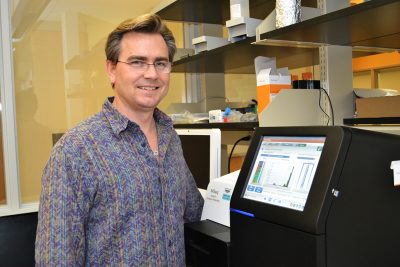
Professor Brenton R. Graveley, Ph.D., is the new chair of the Department of Genetics and Genome Sciences in the UConn School of Medicine. (Tina Encarnacion/UConn Health Photo)

I am pleased to announce that Professor Brenton R. Graveley, Ph.D., has accepted the position of chair of the Department of Genetics and Genome Sciences, in the School of Medicine. Brent will begin in his new leadership position effective February 2, 2018.

Since the inception of his School of Medicine faculty appointment in 1999, Brent has enjoyed a distinguished career. He is the current associate director of the Institute for Systems Genomics, director of the UConn Stem Cell Institute, and John and Donna Krenicki Professor in Genomics and Personalized Healthcare. He has attained national and international recognition for his work on RNA biology, a notable example of which is his accomplishment in developing a comprehensive map of functional human protein-RNA interactions. Among a number of other scientific achievements, Brent has authored over 100 research articles, 16 of which have appeared in Cell, Science or Nature. As a further recognition, he is also a member of the National Institute of Health’s (NIH) National Advisory Council for Human Genome Research. This has enabled Brent to have a keen insight into and steer the genomic funding priorities of the NIH. Brent has been funded by multiple NIH R01, R21, U54, U41 and R35 grants, representing both individual and large multi-investigator, multidisciplinary consortium projects. In fact, he has just received a large project grant from NIH titled, “A Comprehensive Functional Map of Human Protein-RNA Interactions” with a total cost of about $10M.

I would also like to take this opportunity to extend my sincere thanks to the entire search committee for its excellent work during the search and selection process. Led by its chair Dr. George Kuchel, the committee included Drs. Stormy Chamberlain, Rachel O’Neill, Travis Hinson, Kimberly Dodge, Christopher Heinen and Andrew Winokur.

Please join me in extending an enthusiastic welcome to Brent as he assumes his new role in the School of Medicine.

Bruce T. Liang, MD, FACC
Dean, School of Medicine

Ask the Counselor: Q & A with Chief Counsel Brian White

January 31, 2018

Brian White
Brian White
Chief Counsel

It’s been a little over a year since Brian White joined UConn Health as its chief counsel. We thought it was an opportune time to ask the head of our legal team some questions about the new General Counsel’s Office and its potential benefits for employees and the institution as a whole.

First of all, please describe your role here and how the UConn Health legal team has changed over the past year or so?
General Counsel’s Office at UConn Health has just turned 1-year-old.  I was brought in to formally start the office that was previously supported by the Attorney General’s Office (AGO).  The office is now fully staffed and positioned to provide in-house legal expertise on a proactive basis. Much of the funding for the office is coming from the offset reduction in utilization of outside counsel.

What are your office’s prime responsibilities?
The office is responsible for the coordination and management of all legal issues affecting UConn Health. The office advises the UConn Health Board of Directors along with UConn Health senior leadership and administrative units regarding a wide range of issues, including transaction matters, regulatory compliance, employment law, intellectual property, faculty, staff and student conduct, and governance issues. The office also works with the Connecticut Attorney General’s Office on litigation and other matters.

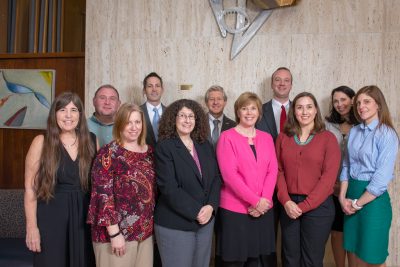
Team members of the Office of General Counsel at UConn Health. From left, Judy Wilcox, Steve Gagne, Deb Kaufman, Brian White, Berri Gerjuoy, Jeff Blumenthal, Lori Gizzi, Scott Simpson, Danielle Ives, Lynn Wittenbrink, Alyssa Cunningham.(Tina Encarnacion/UConn Health photo)

How are you connected (or not) to the AG’s office?
We work intimately with the AGO on multiple matters, but mostly on those matters that involve litigation against the health system.  We value our close relationship and are grateful to have an embedded AAG, Lynn Wittenbrink, located in our office.

How does this new legal team “configuration” benefit UConn Health as a whole?
The shift from exclusively relying on outside attorneys to having an established in-house legal counsel is one that takes time to fully appreciate, but is significant in its benefits.  For UConn Health, it means having advisors at your fingertip that are not charging you hourly to provide counsel.  Additionally, embedding in-house attorneys in planning and operations allows the organization to think and react proactively to potential legal and regulatory matters as it moves forward with implementing its strategic initiatives.  Leaders and frontline staff now have immediate access to prompt, reliable, and effective legal services.

You’ve been here almost a year now, what have you found to be the most challenging issue you’ve faced so far?
The most challenging issue that I’ve faced in this first year is shifting the culture around the proper use of legal services.  Upon my arrival, the health system tended to use legal services only after something went wrong – which is expected when only using costly outside counsel.  As we have taken on these issues over the past year, we have begun shifting the culture to engage our office early on rather than waiting for the issues to arise.  This proactive approach not only limits the legal and financial risk to the institution before any action is taken, but it also gives assurance to leadership in the decisions that they make.

How can the UConn Health community access your expertise?
Our offices are located on the ground floor in the Academic Building.  Our main number is x1114.  Reached 24/7 through the hospital operator.