VIDEO: Lifestyle Medicine Patient Loses 160 Pounds

October 23, 2015

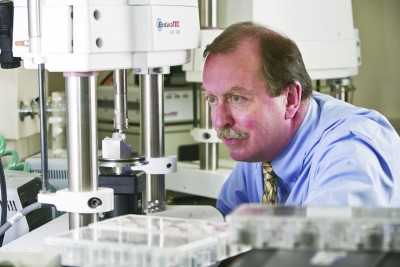
Melissa Dzierlatka was tired of feeling invisible. Weighing more than 365 pounds, people would rarely look her in the eye when they passed her on the street. Along with her mental health, Melissa’s physical health was suffering. When she was diagnosed as borderline diabetic, she knew things had to change. That’s when she went to see physician assistant Bradley Biskup with Calhoun Cardiology’s Lifestyle Medicine Program. He helped Melissa lose weight, improve her health, and feel like herself again.

–Video produced by Carolyn Pennington

UConn Health November 2015 Programs, Events

October 21, 2015

Here is a list of UConn Health programs scheduled for November and early December 2015. This information will be updated with any additions or other schedule changes. (Updated 11/24)

Free IVF Information Session
Thursday, Nov. 5, 6 to 8:30 p.m., Cell and Genome Sciences Building, 400 Farmington Ave.
Specialists with the Center for Advanced Reproductive Services lead an informational session about current treatments for infertility, specifically in vitro fertilization (IVF). Each program includes an in-depth explanation of the IVF process, discussion of some of the emotional issues surrounding IVF, and discussion of options for financial planning. Registration is required: 860-679-4580 or www.uconnfertility.com.

Bladder Cancer Support Group
Saturday, Nov. 7, 2 to 3 p.m.
, UConn Health, Onyiuke Dining Room
Patients, family members and caregivers (not limited to UConn Health patients) are invited to join others whose lives have been touched by bladder cancer. This support group, established in partnership with the Bladder Cancer Advocacy Network, usually meets on the first Saturday of the month and is the only group of its kind in New England. Call 888-901-BCAN for more information.

Free Hospital Maternity Tours
Saturday, Nov. 7, 2:30 to 3:30 p.m.
, UConn Health, Main Lobby
A representative will guide you through labor and delivery, postpartum, and the nursery at John Dempsey Hospital. Children and grandparents are welcome. Call 800-535-6232 to register or for more information.

Free Discovery Series: “Exploring Memory Disorders”
Tuesday, Nov. 10, 7 to 9 p.m.
, UConn Health, Keller Auditorium

Drs. Patrick Coll and Karina Berg from the UConn Center on Aging, along with Drs. Neha Jain and Kevin Manning from the UConn Department of Psychiatry, will discuss memory disorders. Register online, for free, at http://discoveryseries.uchc.edu or call 800-535-6232.

Nutrition for a Healthy Heart
Wednesday, Nov. 11, 2 to 4 p.m., UConn Health Outpatient Pavilion
The UConn Health’s Healthy Nutrition program invites you on a journey to a lower blood pressure, reduced cholesterol and healthier weight. (This workshop usually is offered on the first Wednesday of the month.) Registration fee is $30. Call 800-535-6232 to register or for more information.

Celiac Disease Nutrition Class
Monday, Nov. 16, 8 to 9 a.m., UConn Health Outpatient Pavilion
A registered dietitian leads a discussion for those with celiac disease or non-celiac gluten sensitivity. This program now is scheduled to meet the third Monday of the month. Fee is $20. Call 800-535-6232 or 860-679-7692 to register or for more information.

Free Cosmetology Services for Cancer Survivors
Monday, Nov. 16, 1 to 3 p.m.
, UConn Health, Outpatient Pavilion, 4th floor

“Look Good…Feel Better” is a free program to help improve the self-image and self-esteem of women experiencing appearance-related side effects from cancer treatment. During this hands-on workshop, a trained volunteer certified cosmetologist will offer self-help instruction and education on hairstyling and coping with hair loss, skin care, makeup and nail care. Wigs, turbans and scarves will also be discussed. Classes are offered monthly and are not limited to UConn Health patients. Registration is required: call 800-227-2345 with your name, program date, phone number, and skin color. Kits are available in Light, Medium, Dark and Extra Dark.

(Added 10/30)
Special Panel Discussion: “EMS, Veterans and Post Traumatic Stress Disorder”
Wednesday, Nov. 18, 8:30 to 11:30 a.m., UConn Health, Keller Auditorium
UConn Emergency Medical Services presents a continuing education discussion on post-traumatic stress disorder for EMS responders and members of the public. EMS providers who attend are eligible for three CME credit hours. There is no charge to attend and registration is not necessary. For more information call 860-679-3485.

(Added 10/28)
Stroke Survivor Group
Wednesday, Nov. 18, noon to 1 p.m.
, UConn Health Outpatient Pavilion, 3rd floor
The UConn Health Stroke Center invites stroke survivors, families and caregivers to a monthly group meeting to discuss topics such as prevention, coping methods, support systems, rehabilitation tips, resources, and promoting independence. The Stroke Survivor Group usually meets on the fourth Wednesday of the month. Call 860-679-4846 for more information.

Free Lifestyle Medicine Program: “Stress and Your Health”
Wednesday, Nov. 18, 7 to 8:30 p.m.
, UConn Health, Keller Auditorium

Physician assistant Bradley Biskup from UConn Health’s Lifestyle Medicine Program explains how to recognize common stress triggers and how stress affects our health, and offers coping strategies and relaxation techniques. Call 800-535-6232 or 860-679-7692 to register or for more information.

Free IVF Information Session
Thursday, Nov. 19, 6 to 8:30 p.m., Cell and Genome Sciences Building, 400 Farmington Ave.
Specialists with the Center for Advanced Reproductive Services lead an informational session about current treatments for infertility, specifically in vitro fertilization (IVF). Each program includes an in-depth explanation of the IVF process, discussion of some of the emotional issues surrounding IVF, and discussion of options for financial planning. Registration is required: 860-679-4580 or www.uconnfertility.com.

Infertility Peer Support Group
Thursday, Nov. 19, 7 p.m.
, Center for Advanced Reproductive Services, 2 Batterson Park Road, Farmington.

The Greater Hartford chapter of RESOLVE, a national nonprofit resource for those facing the challenges of infertility, offers support, information and confidential, informal, peer-led discussions on the third Thursday of the month. To learn more or to check for weather-related cancellation, call 860-523-8337.

Childbirth Preparation Class
Saturday, Nov. 28, 8:30 a.m. to 5 p.m.
, UConn Health, Onyiuke Dining Room
This one-day class covers anatomy and physiology of pregnancy and labor, emotions of pregnancy, nutrition, fetal growth and development, comfort measures for labor, working with unexpected events in labor, cesarean delivery, and practice of relaxation and breathing techniques for labor. Class size is limited to eight couples. Remember to bring two pillows and wear comfortable clothing. Light snack is provided. Fee is $100. Call 800-535-6232 or 860-679-7692 to register or for more information.

Free Workshop: “Things to Consider Before Joining a Research Study”
Monday, Nov. 30, 5 p.m.
, UConn Health, Onyiuke Dining Room
The UConn Health Human Subjects Protection Office offers an educational session about the rights and responsibilities of participants in research projects on the last Monday of the month. Registration is required: 860-679-8802 or cagganello@uchc.edu.

Nutrition for a Healthy Heart
Wednesday, Dec. 2, 2 to 4 p.m., UConn Health Outpatient Pavilion
The UConn Health’s Healthy Nutrition program invites you on a journey to a lower blood pressure, reduced cholesterol and healthier weight. This workshop usually is offered on the first Wednesday of the month. Registration fee is $30. Call 800-535-6232 to register or for more information.

Free IVF Information Session
Thursday, Dec. 3, 6 to 8:30 p.m., Cell and Genome Sciences Building, 400 Farmington Ave.
Specialists with the Center for Advanced Reproductive Services lead an informational session about current treatments for infertility, specifically in vitro fertilization (IVF). Each program includes an in-depth explanation of the IVF process, discussion of some of the emotional issues surrounding IVF, and discussion of options for financial planning. Registration is required: 860-679-4580 or www.uconnfertility.com.

Holiday Bazaar and Basket Raffle
Friday, Dec. 4, 9 a.m. to 4 p.m.
, UConn Health, Main Lobby
The UConn Health Auxiliary’s annual winter holiday shopping event includes vendors in the main lobby and mezzanine and the Auxiliary’s popular raffle of gift baskets created and donated by UConn Health employees. Drawing is at 3:30. For more information please call 860-679-2963.

Bladder Cancer Support Group
Saturday, Dec. 5, 2 to 3 p.m.
, UConn Health, Onyiuke Dining Room
Patients, family members and caregivers (not limited to UConn Health patients) are invited to join others whose lives have been touched by bladder cancer. This support group, established in partnership with the Bladder Cancer Advocacy Network, usually meets on the first Saturday of the month and is the only group of its kind in New England. Call 888-901-BCAN for more information.

(added 11/24)
Free Discovery Series: “Recognizing the Signs of Stroke”
Tuesday, Dec. 8, 7 to 9 p.m.
, UConn Health, Keller Auditorium
Each year, nearly 800,000 people in the U.S. experience a stroke. It can happen to anyone at any age and any time. UConn Health stroke experts Dr. Sanjay Mittal and Dr. Ryan Zengou will discuss the warning signs and preventive measures. Register online, for free, at http://discoveryseries.uchc.edu or call 800-535-6232.

Childbirth Preparation Class
Saturday, Dec. 12, 8:30 a.m. to 5 p.m.
, UConn Health, Onyiuke Dining Room
This one-day class covers anatomy and physiology of pregnancy and labor, emotions of pregnancy, nutrition, fetal growth and development, comfort measures for labor, working with unexpected events in labor, cesarean delivery, and practice of relaxation and breathing techniques for labor. Class size is limited to eight couples. Remember to bring two pillows and wear comfortable clothing. Light snack is provided. Fee is $100. Call 800-535-6232 or 860-679-7692 to register or for more information.

Directions to UConn Health are available at www.uchc.edu/directions/index.html.
New England Sickle Cell Institute News

October 19, 2015

Dr. Biree Andemariam

UConn Health’s Dr. Biree Andemariam Honored as Outstanding Role Model

Dr. Biree Andemariam, director of UConn Health’s New England Sickle Cell Institute was honored at the 100 Women of Color Gala recently held in Hartford. The 100 Women of Color award recognizes women who are leaders in their community and are a positive role model for young women. A portion of the proceeds from this annual event supports scholarships for young women who graduate from high school and plan on attending college, leadership and mentorship programs.


New England Sickle Cell Institute Nurses Present at National Meeting

Photo of Nayre Greene, RN, BSN (J. Gelineau/UConn Health
Nayre Greene, RN, BSN

Nayre Greene, RN, BSN, and Elizabeth Brookshire, MSN, BSN, RN, recently represented UConn Health’s New England Sickle Cell Institute at the Sickle Cell Disease Association of America, Inc.’s 43rd Anniversary Convention in Maryland. Greene, NESCI nurse coordinator, was the moderator for the meeting’s nursing symposium that highlighted five peer-reviewed oral abstracts presented by leaders in sickle cell disease nursing care and research from around the country. Greene’s talk highlighted multidisciplinary efforts at UConn Health in coordinating safe maternal-fetal outcomes among pregnant women living with sickle cell disease.

Elizabeth Brookshire, MSN, BSN, RN (Janine. Gelineau/UConn Health)
Elizabeth Brookshire, MSN, BSN, RN

Brookshire delivered a powerful talk titled, “The Nurse’s Role in Caring for the Patient with Sickle Cell Disease: Utilizing Katherine Kolcaba’s Theory of Comfort as a Guide.” Brookshire is the assistant nurse manager of John Dempsey Hospital’s oncology unit.

“NESCI is proud of the role that UConn Health nurses play on a daily basis in providing evidence-based and compassionate care to our patients living with sickle cell disease,” says NESCI director Dr. Biree Andemariam, “and now this work is known across the country.”


Get Flu Shot, Contribute to Science

October 16, 2015

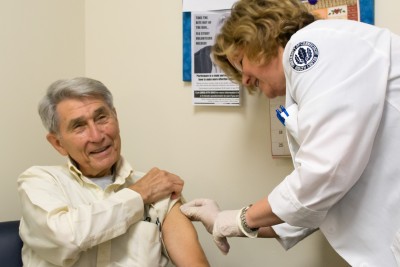
Study nurse Carlene Bartolotta applies a bandage after giving the flu shot to Nick Cesaro, who regularly has participated in the UConn Center on Aging's flu vaccine research for a decade. "We're really dependent on one another, it's as simple as that," Cesaro says. "I've lived long enough to have the opportunity to help, and it's nice to be able to help." (Tina Encarnacion/UConn Health)
Study nurse Carlene Bartolotta applies a bandage after giving the flu shot to Nick Cesaro, who regularly has participated in the UConn Center on Aging’s flu vaccine research for a decade. “We’re really dependent on one another, it’s as simple as that,” Cesaro says. “I’ve lived long enough to have the opportunity to help, and it’s nice to be able to help.” (Tina Encarnacion/UConn Health)

Now is the time to get the flu vaccine, especially if you’re older.

UConn Health researchers urge those who haven’t gotten this year’s flu vaccine yet to consider coming to the UConn Center on Aging to receive the vaccine as a participant in a flu shot study.

“Every older person should be getting the vaccine,” says Dr. George Kuchel, director of the UConn Center on Aging. “By volunteering for one of these studies, you do what’s good for you anyway, it doesn’t cost you anything, and at the same time you contribute to helping us develop vaccines that are going to work better in future years.”

Kuchel says most flu-related deaths in the U.S. each year are among the elderly. He and professor of immunology Laura Haynes, also an investigator in the Center on Aging, are leading two studies. One focuses on the differences in the way younger people and older people respond to the traditional flu vaccine. The other compares the traditional flu vaccine to the high-dose vaccine, which has four times the antigen. Both vaccines are proven effective, but the degree of their effectiveness varies by individual.

Dr. George Kuchel is director of the UConn Center on Aging. (Janine Gelineau/UConn Health)

“The purpose of that study is to identify—using very innovative blood tests, some of which were first developed here, and also frailty measurements—the older adults who require the high-dose vaccine, as opposed to those who’d do better with the regular vaccine,” Kuchel says. “As we age, we get more and more different from each other, with some people remaining very robust and highly functional, other people becoming frail and even disabled, and everything in between. We know that on average, the high-dose vaccine may be better for the elderly. What we don’t know is, who are the people who get that greater benefit?”

Influenza manifests itself differently in older patients than in younger ones. Although the symptoms in older patients usually are actually milder, that brings other problems.

Laura Haynes studies the efficacy of the flu vaccine in older patients at the UConn Center on Aging. (Janine Gelineau/UConn Health)

“When older people get the flu, it’s much more serious,” Haynes says. “Since the symptoms are less severe, people may not go to the doctor, they may not take the care that they need to when they get sick. This is even more problematic with the older population because they’re going to have more co-morbidities. They’re going to have more secondary infections that would then develop, which is really what the issue is, especially secondary pneumonia after flu. And that’s really what leads to death.”

“Dr. Haynes’ work is the first to show that a type of blood cell called T-lymphocyte plays a role in the declining ability of the aging body to respond to flu infection,” Kuchel says. “Because of that, we still need to give the vaccine to the elderly. If we want to make more progress, prevent more death, and prevent more hospitalization, we need to get even better vaccines.”

While the researchers don’t expect their studies to lead to the perfect vaccine for everyone immediately, participants at least can expect an immediate benefit this flu season.

“Even though the flu vaccine doesn’t work as well in older people as it does in younger people, using it becomes even more important in the elderly as a way helping to stay out of the hospital,” Haynes says.

The UConn Center on Aging flu vaccine studies are not limited to older patients. Researchers are seeking study volunteers as young as 20 years old. All participants receive an FDA-approved flu shot at no cost to them, nominal compensation for their time, and free, convenient parking for study visits. To learn more about the studies, call 860-679-3043.

UConn Health Marks Opening of Canton Medical Facility

October 14, 2015

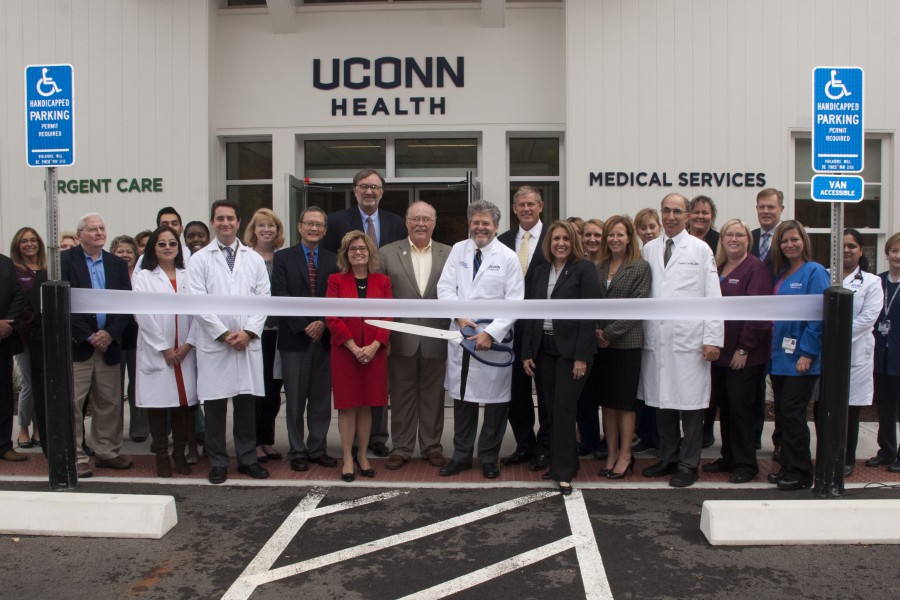
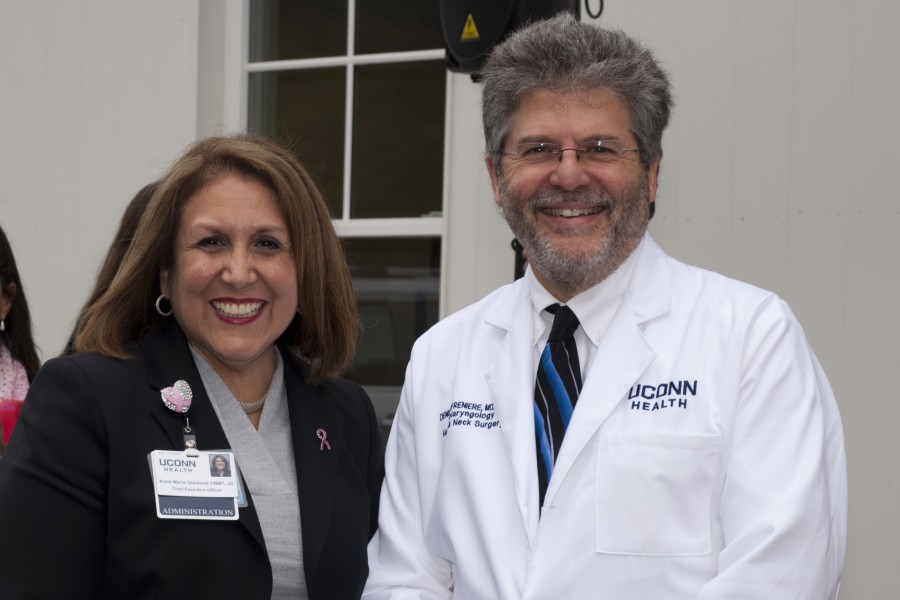
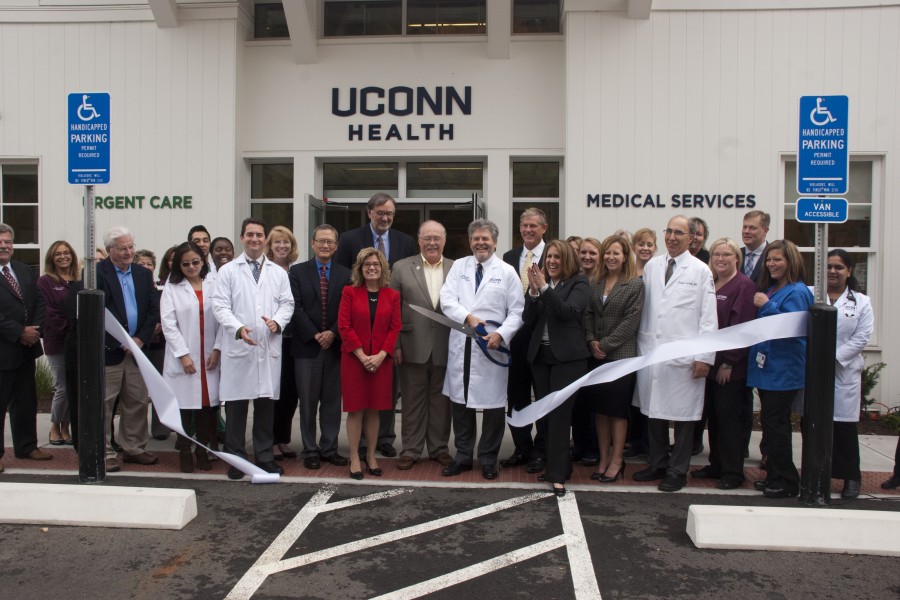
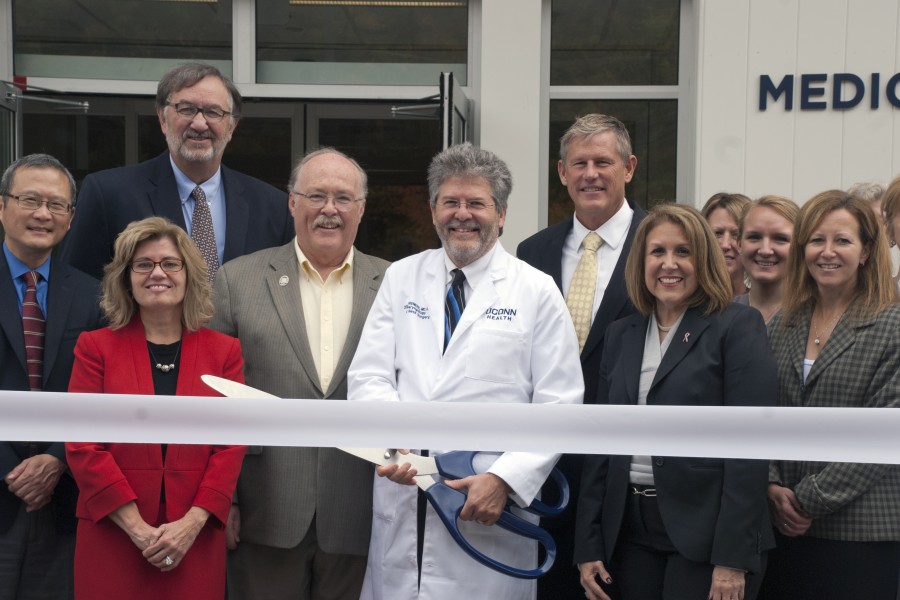
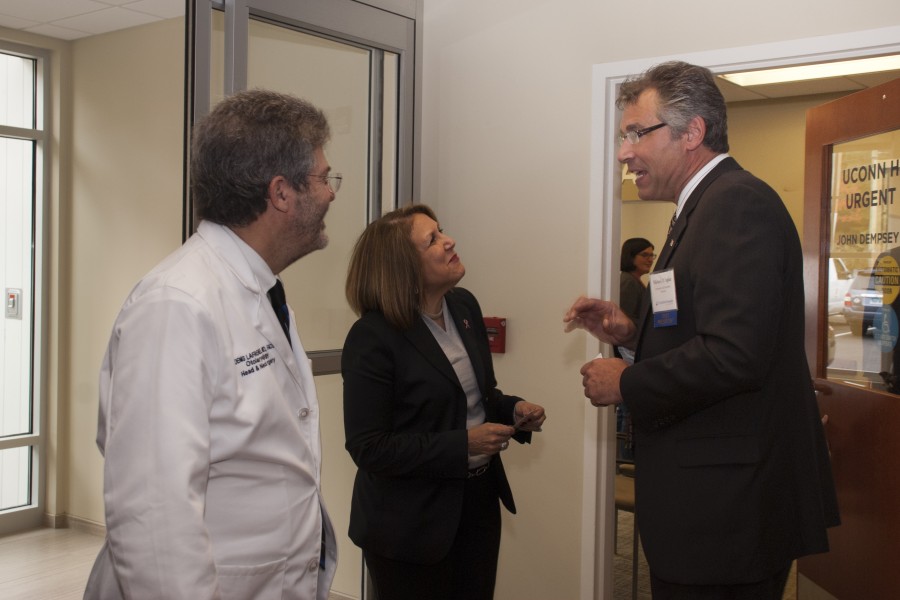
  • Dr. Denis Lafreniere is joined by several lawmakers, UConn Health faculty and staff, and guests at the Canton medical facility ribbon-cutting ceremony. (Janine Gelineau/UConn Health)
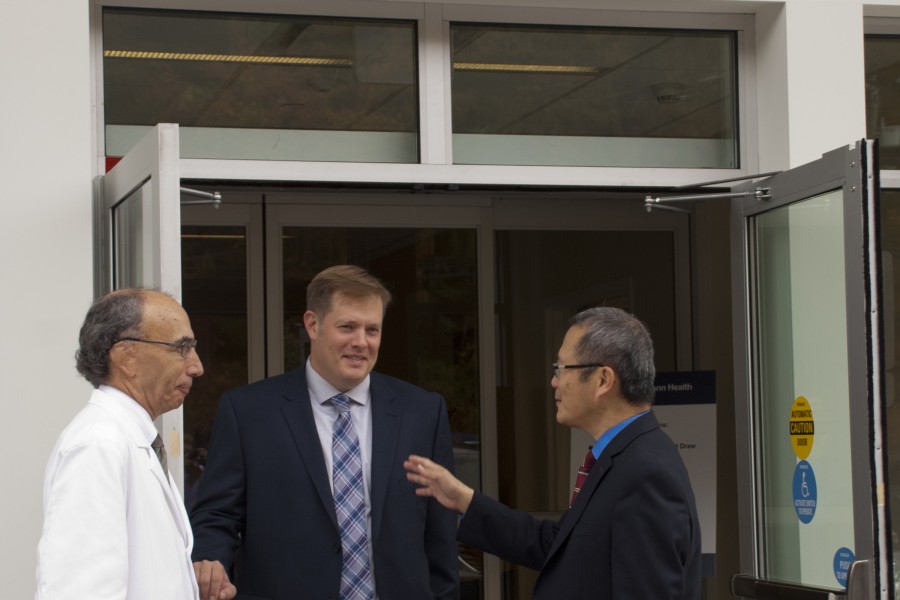
UConn Health held a ribbon-cutting ceremony to celebrate the opening of its new medical facility and Urgent Care Center at 117 Albany Turnpike in Canton on Tuesday.

“Our mission at UConn is to take care of the citizens of the state of Connecticut and we are very proud and happy to be here,” said Dr. Denis Lafreniere, medical director of outpatient services and associate dean for clinical affairs. “This expands access to quality health care for the citizens of Canton and the surrounding towns,” added Lafreniere.

Patients from over 100 towns and communities have been seen at UConn Health Canton since it opened in the spring, with the majority of patients coming from Canton, Avon, New Hartford, Simsbury, Torrington and Winsted. Located at the corner of Lawton Road and Route 44, the two-story building consists of 17,000 sq. ft. and 27 employees. Services offered at the Canton location include internal medicine, primary care, cardiology, dermatology, MOHs surgery, a blood draw station, and X-ray services.

The Urgent Care Center, open seven days a week, is staffed by certified advanced practitioners and board-certified emergency medicine or family practice physicians that can treat a range of health issues that are not life threatening, but need prompt attention.

Several lawmakers attended the ceremony including Canton First Selectman Richard Barlow who said the new facility is a welcome addition to the town of Canton and “provides valuable services that the town desperately needs.”

State Sen. Kevin Witkos (R-Canton), also welcomed the new UConn Health facility located at the gateway to northwest Connecticut. “UConn has been such a great partner in everything we do at the state level, from the facility up at Storrs, to the John Dempsey Hospital in Farmington, and now the facility here in Canton,” said Witkos.

“It’s quite appropriate as we open this facility to remember other residents on this spot who engaged in the same practice,” said State Rep. Tim LeGeyt (R-Avon, Canton) who also attended the ceremony. UConn Health’s new facility is located where a house once stood that was built in 1796 by a well-regarded Revolutionary War physician and surgeon Dr. Solomon Everest. Everest provided health care to the community for almost 30 years.

UConn Health has a 15-year lease with a private development company, Sard Realty, LLC in Avon.

Med Students Hold Leadership Week, With AMA Support

October 13, 2015

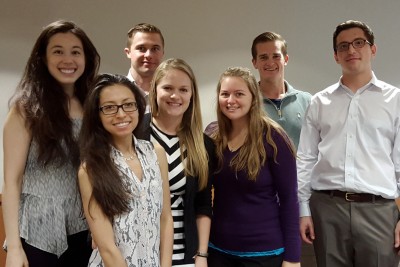
Members of the UConn American Medical Association chapter's executive board.
Members of the UConn American Medical Association chapter’s executive board. Left to right, back: Alyssa Ettinger, Jonathan Lis, Chris Hampton, and Andrew Glick. Front: Elise Mester, Sarah Mattessich, and Christina Klecker. Not pictured: Victoria Greenwood. (Eric Swanson/UConn Health Photo)

It’s Leadership Week at the UConn School of Medicine, a series of events to provide a chance for students who envision themselves as leaders in medicine to share ideas with those who already are—in this case, members of the UConn Health faculty.

The annual tradition of UConn’s American Medical Association student section runs through Thursday. Among the participating faculty are Dr. Bruce Liang, medical school dean, as well as Drs. Paul Dworkin, Anton Alerte, Jane Grant-Kels and Rob Fuller.

“Leadership Week promotes AMA’s core value of leadership by providing an interactive forum for physicians and medical students to discuss pathways to leadership roles and professional development,” says Sarah Mattessich, one of the student organizers. “Last year this event was extremely successful. We had 80 students attend, and we are expecting similar numbers this year.”

Mattessich, a second-year medical student, serves as treasurer of the UConn chapter of the AMA. In that capacity she was able to secure a Section Involvement Grant from the AMA to help offset the costs of holding Leadership Week.

“Our grant will allow us to provide food for our series of events: one dinner and two lunch-and-learns,” Mattessich says. “Success of this event has been possible through the efforts of our entire executive board of second-year medical students. Jonathan Lis and Andrew Glick, the co-chairs of our AMA chapter, have been instrumental in executing this event, including recruiting physician speakers and advertising among the student body.”

Psychiatry professor Mary Casey Jacob, the chapter’s academic adviser, praises Mattessich for her efforts to coordinate this year’s event, by working closely with Lis and Glick and by obtaining the grant.

“This tells us Sarah wishes to provide this important service to her peers, that she is highly organized, and that she know she wants to be a leader within medicine,” Jacob says. “UConn is proud of students like Sarah, who will not only be excellent doctors but also people who nurture their roles within communities as leaders.”

Last year, the UConn chapter hosted the regional student AMA meeting. The year before, UConn’s was a finalist for Chapter of the Year.

“This is a very active and accomplished group,” Jacob says. “That they manage to achieve so much on top of medical studies is quite an achievement.”

UConn Health’s Hennig to Compete in World Fencing Championships

October 12, 2015

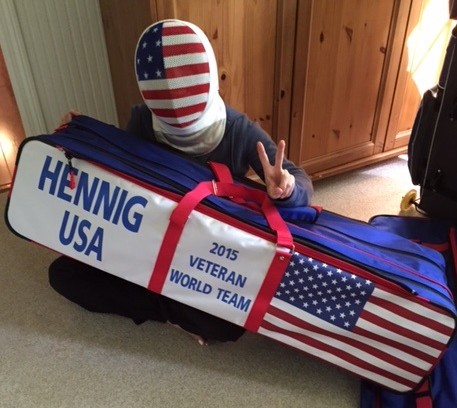
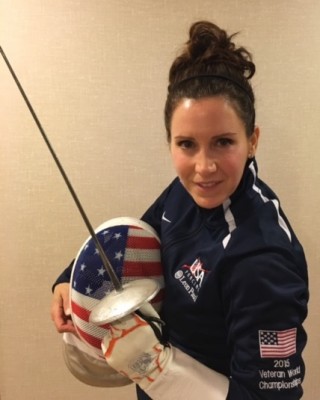
Bonnie Hennig is packing her bags for Paris, not to represent UConn Health at a conference, but to represent the United States at the 2015 Veterans Fencing World Championships.

Bonnie Hennig is gearing up for the Veterans Fencing World Championships in France.
Bonnie Hennig is gearing up for the Veterans Fencing World Championships in France. (Photo by Bob Trestman)

Hennig, the associate director of UConn Health’s Huntington’s Disease Program, shares the No. 2 ranking in the U.S. in her category, which is women age 50 to 59 who compete with a sword called a foil.

“To me it’s the ultimate sport,” Hennig says. “Fencing is considered ‘physical chess.’ It’s aerobic with an anaerobic piece to it. It’s one of those sports that has team comradery but is also very individual.”

Hennig first dabbled in fencing in college but hadn’t picked up a foil for two decades when a local club opened 10 years ago and she got back into it. Recreational fencing became competitive fencing, locally, then regionally, then in national tournaments.

“This is the first time I’ve met the age requirement for an international veteran tournament. For international competition, you’re not considered a ‘veteran’ until age 50,” Hennig says. “For a veteran fencer, the World Veteran Fencing Championship is the highest level you can reach.”

The world championship events take place in Limoges, France, Oct. 20-25.

Bonnie Hennig in her national team uniform (Photo by Madison Hennig)

“While I would love to be a world champion, my first goal is to enjoy the journey,” Hennig says. “It’s not just about a medal around my neck. If I can go to France and fence my best, then I’ve met my goal. I want to fence ‘in the zone’—I’ve been there before and it’s an awesome place. My first plan is to arrive at the venue, do a 360 degree turn, take it all in, and say, ‘I am here!’”

Hennig trains at the Connecticut Fencers Club in Middletown twice a week. She also competes on weekends.

“What’s great about this sport is that anyone can fence,” Hennig says. “There is a lot of technique to it, but people can do it recreationally or competitively. You can go anywhere in the world to fence. It really brings people together.”

In her case, it helped bring husband and wife together. Hennig and Dr. Robert Trestman, executive director of Correctional Managed Health Care and interim director of the Center for Public Health and Health Policy at UConn Health, have fencing in common. While they initially met at UConn years ago, it was fencing that brought them together. They were reintroduced through fencing in 2010 and married in 2012.

UConn Health Helps Smokers Quit With Personalized, Multifaceted Approach

October 8, 2015

A recently started smoking cessation program at UConn Health offers individualized treatment as it seeks to treat both the physical and psychological aspects of tobacco addiction.

“Physical dependence plays an important role in smoking cessation, but I think a lot of the difficulty is also related to psychological issues that come up when one tries to quit” says Dr. Jayesh Kamath, psychiatrist and medical director for the Wellness and Smoking Cessation Program.

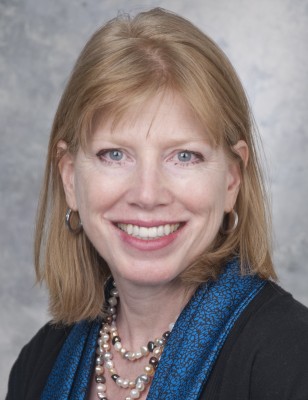
“It’s important to try to quit, because smoking cessation is one of the most important changes you can make to improve your health,” says Dr. Cheryl Oncken, an internist and scientific director of the program. Oncken is an internationally recognized tobacco researcher who holds several leadership positions at UConn Health including interim chair of the Department of Medicine.

Dr. Cheryl Oncken
Dr. Cheryl Oncken

The program is part of a grant from the Department of Public Health to the Carole and Ray Neag Comprehensive Cancer Center, but anyone who smokes is a candidate to join, either individually or by referral.

Patients begin treatment with pulmonary medicine nurse practitioner Diahann Wilcox, who has specialized training in smoking cessation through the American Lung Association. Kamath provides mental health care when appropriate.

“We start with a very comprehensive assessment to determine the physical and psychological issues related to smoking,” Kamath says. “That will be our guide to determine the course of treatment, including what types of interventions we use and how often the patient needs to come in. We will spend the necessary time with each patient, as the treatment is individualized. We use evidenced-based treatments, but it’s also personalized to the patient depending on co-occurring medical and psychological conditions.”

Diahann Wilcox
Diahann Wilcox

The program does not cover the costs of medications that may be prescribed, but participants will be directed to resources that may help cover their costs if not covered by their insurance plans. There is no out-of-pocket expense to patients for office visits.

Participation also can contribute to a greater understanding of tobacco addiction and how to beat it.

“There’s a significant research component to this,” Kamath says. “Patients will be offered to participate in a research project, a data repository. The repository will gather clinical data, genetic samples and certain biomarkers on patients participating in the project. This data will help us investigate which patients respond well to treatment, and for those who have difficulty, what are the reasons?”

To learn more about UConn Health’s Wellness and Smoking Cessation Program or to register, call 860-679-2100.

(Photos by Janine Gelineau)

Accelerate UConn Welcomes 1st Class of Entrepreneurs

October 7, 2015

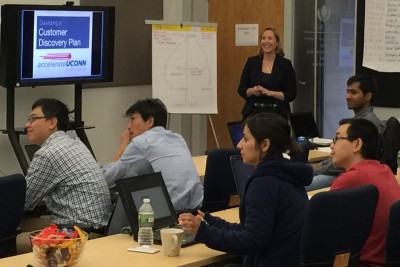
The first class of Accelerate UConn entrepreneurs learns about customer discovery at their kickoff session Oct. 2. (Photo provided by Jessica McBride)
The first class of Accelerate UConn entrepreneurs learns about customer discovery at their kickoff session Oct. 2. (Matt Dunn for UConn)

Accelerate UConn, a National Science Foundation (NSF) entrepreneurship program at UConn, has selected 10 faculty-student teams to receive seed grants and business training aimed at more quickly and successfully commercializing early-stage technologies developed at the University.

Accelerate UConn is one of the NSF’s I-Corps sites, which are housed at academic institutions around the country. I-Corps is a key initiative established in 2011 to increase the volume of commercially viable technologies coming out of academic labs. The program provides a framework for entrepreneurial faculty, staff, and students to join with industry mentors and participate in special NSF-endorsed curriculum. Participants learn to assess the market potential of their technologies, and win funds to support early customer contact to validate concepts and market strategies.

“There is a wealth of technologies coming out of UConn labs that could be commercialized with the right set of tools,” says UConn Vice President for Research Jeff Seemann. “Accelerate UConn allows early-stage ideas to move beyond the lab and join the ranks of other successful Connecticut startups.”

Despite being a new initiative, many faculty and students with diverse backgrounds recently applied to be part of the program’s first class in order to improve their chances of success, according to UConn business professor Timothy Folta, director of the Connecticut Center for Entrepreneurship and Innovation (CCEI).

“We are thrilled with the quality of both the applicants and their technologies,” Folta says. “We’re confident that the positive response to Accelerate UConn’s initial application round attests to the program’s value and a desire within the UConn community for additional entrepreneurial support.”

The winning technologies are at varying degrees of development in several different industries. Some of the teams have already formed startup companies based on their technologies, while others may seek to develop licensing opportunities with existing industry. Among the winning teams:

Dr. Robert Kelly, developed the artificial salivary gland that is being commercialized under the Acclerate UConn entrepreneurship program. (Lanny Nagler for UConn Health)
Dr. Robert Kelly of the UConn School of Dental Medicine developed an artificial salivary gland that is being commercialized under the Accelerate UConn entrepreneurship program. (Lanny Nagler for UConn Health)
  • Oral Fluid Dynamics is commercializing an artificial salivary gland that provides a solution for patients suffering from a lack of salivary flow, and was developed by Dr. Robert Kelly, professor of reconstructive sciences at the UConn School of Dental Medicine.
  • 3D Array Technology will leverage the program’s educational component and seed funding to continue to develop a high performance, low cost catalytic converter based on nano-structured materials. This technology was developed in the lab of Puxian Gao, associate professor of materials science and engineering.
  • ParrotMD, a student startup developed through the University’s Innovation Quest competition, is aimed at providing a solution for medication adherence in developing countries.

Other teams are still at the very initial stages of development, including those seeking to explore commercialization of innovations for:

  • composite materials
  • carbon nanotubes
  • scientific slide imaging
  • environmentally friendly flame retardants
  • topical skin treatment
  • surface sanitation

Each has the potential to become a successful startup according to the panel of industry experts who reviewed the applications. The program aims to make the road to successful commercialization a little less bumpy for all of the teams in Accelerate UConn’s first class.

Accelerate UConn launched in May 2015, and is the only NSF I-Corps site in Connecticut. The program serves all of the UConn campuses, including UConn Health, and is jointly operated by the Office of the Vice President for Research and the Connecticut Center for Entrepreneurship and Innovation housed in the School of Business. Accelerate UConn supplements many other initiatives at UConn focused on commercialization, like the Technology Incubation Program, the CCEI Summer Fellowship Program, the construction of the UConn Tech Park at Storrs, and the growing relationship with The Jackson Laboratory for Genomic Medicine.

More information about Accelerate UConn is available at www.accelerate.uconn.edu.

–Jessica McBride

UConn Lands 3 Obesity Prevention Grants

Projects Focus on Preventing Obesity in Children Birth to 2

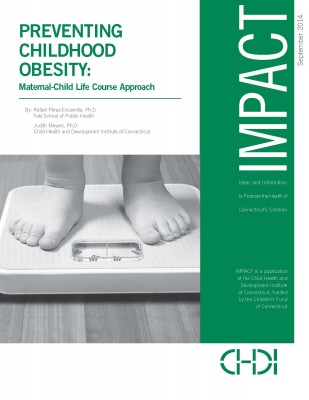
CHDI's report on preventing early-childhood obesity. (Click image to view report.)
CHDI’s report on preventing early-childhood obesity. (Click image to view report.)

The Children’s Fund of Connecticut (CFC) awarded $230,560 to fund four obesity prevention projects in Connecticut, three of which have ties to UConn.

The work will inform and advance efforts to prevent and reduce early childhood obesity by addressing risk factors in the first two years of life.

Four projects were selected from a competitive application process.

  • Health Messaging: UConn, Department of Nutritional Sciences
  • Data Development: UConn Health, Center for Public Health and Health Policy
  • Policy Development: UConn Rudd Center for Food Policy
  • Baby Friendly Hospitals: The Connecticut Breastfeeding Coalition

The grants were inspired by the Child Health and Development Institute’s (CHDI) IMPACT “Preventing Childhood Obesity: Maternal-Child Life Course Approach.” The IMPACT reviewed scientific research on the causes of obesity and explored implications for prevention and early intervention. Risk factors for early childhood obesity include: maternal pre-pregnancy weight and weight gain during pregnancy, infant feeding practices, weight gain during infancy, and eating habits during toddlerhood and preschool.

“Childhood obesity is a serious epidemic affecting one-third of children in Connecticut and nationwide,” says Judith Meyers, IMPACT co-author and president and CEO of the Children’s Fund of Connecticut and its non-profit subsidiary CHDI. “Research shows that that obesity may be very difficult to reverse if children are obese by 5 years of age. The grant projects funded today will help us get ahead of the curve by preventing the onset of obesity.”

Grant Awards

Health Messaging: $75,700, UConn, Department of Nutritional Sciences

Currently, there is minimal and varying outreach to parents regarding early optimal feeding practices, and the messages that are conveyed are often inconsistent. Effective messages will equip parents and caregivers and providers with the information they need to promote a healthy weight in young children. Principal investigator Amy Mobley, assistant professor nutritional sciences, and her staff will develop and test a set of obesity prevention messages for children birth to 24 months that are parent and caregiver focused, culturally appropriate, at appropriate literacy levels and evidence based, along with information for providers about strategies to disseminate these key messages.

Data Development: $80,000, UConn Health, Center for Public Health and Health Policy

The goal of this project is to establish a single, integrated longitudinal database containing child weight and other relevant data, beginning with the 2009 and 2010 birth cohorts, as a means of demonstrating the possibility of tracking population data for all children in Connecticut. Under the direction of Dr. Robert Trestman and Ann Ferris, this project creates a childhood obesity surveillance database using PATH (a HIPAA-compliant data matching software application) to link birth records from the Connecticut Department of Public Health with electronic health records at Community Health Center, Inc., with 12 sites across the state. Data will be analyzed to identify factors that increase the risk of being overweight at age 5 and to model the development trajectories to determine the probability of being overweight by age 5 based on a variety of factors, broken down by sex and ethnicity/race.

Policy Development: $14,990, UConn Rudd Center for Food Policy

The Rudd Center’s Director of Public Policy, Roberta R. Friedman, will conduct a review of relevant federal and state policies and regulations (Connecticut and elsewhere) to prevent obesity in children birth to 2 years of age. The results will be a database of policy, legislation, and regulation and the development of a Connecticut policy agenda on childhood obesity for children ages birth to 2. The proposed policy agenda will assist academics, practitioners, program staff, community coalitions and advocates committed to preventing and reducing early childhood obesity in Connecticut.

Baby-Friendly Hospitals: $59,870, The Connecticut Breastfeeding Coalition

The Baby-Friendly Hospital Initiative is an international movement launched by the World Health Organization and UNICEF to increase rates of breastfeeding through policy changes in birthing hospitals. Eight of 28 birthing hospitals in Connecticut have achieved this designation. The project goals include: 1) assist Connecticut hospitals already in the process to complete their work and achieve the baby-friendly designation; 2) recruit one or more Connecticut hospital to start the baby-friendly hospital designation process; 3) strengthen the infrastructure to support hospitals moving from start to finish including developing partnerships with physicians, community providers, mothers and families; and 4) report on the sustainability and maintenance of the Baby-Friendly Hospital Initiative.

Learn more about CHDI’s work to prevent obesity in early childhood at www.chdi.org. For further information about the “Preventing Obesity in Early Childhood Grants, please visit www.childrensfundofct.org.

–Julie Tacinelli