Dentist, Physicians, APRN Seeing Patients at UConn Health

October 5, 2015

UConn Health continues to grow its volume of practitioners in both Farmington and Storrs Center. Here are some of those who’ve recently started seeing patients.


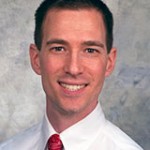
Dr. Hsung Lin
, a graduate of the UConn School of Dental Medicine, is back with UConn. She practices family dentistry, including pediatric dentistry, in Storrs Center, where she is the director of dental services. One day a week she sees patients in the dental clinics in Farmington. In addition to general dentistry, she offers services including wisdom teeth extractions, root canals and dental implants. Lin completed her general practice residency at Saint Francis Hospital and Medical Center. She is fluent in Chinese.

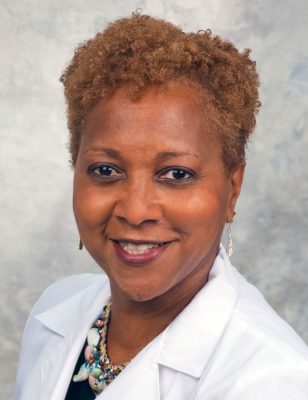
Dr. Lenora Williams, Ob/gyn (Janine Gelineau/UConn Health)
Dr. Lenora Williams joins UConn Health at Storrs Center after more than 25 years providing comprehensive individualized ob/gyn care to a diverse population of patients at her private practice in Ellington. Williams’s clinical interests include menopause, reproductive needs, pap abnormalities and HPV, adolescent reproductive health, preconception counseling, PMS and premenstrual dysphoric disorder, and minimally invasive in-office and outpatient procedures. Williams is a graduate of the UConn School of Medicine and the UConn Obstetrics and Gynecology Residency Program, and is a fellow of the American College of Ob/Gyn. She is board certified in obstetrics and gynecology and is accredited in ob/gyn ultrasound by the American Institute of Ultrasound in Medicine.
Dr. Philip Blumenshine, psychiatry (Janine Gelineau/UConn Health)
Dr. Philip Blumenshine, psychiatry


Dr. Philip Blumenshine
is a psychiatrist specialty trained in psychotherapy, including psychodynamic, brief dynamic, and supportive psychotherapy. He sees patients in Farmington, at both the new Mood and Anxiety Clinic in the main building and at Adult Psychiatric Outpatient Services office, 10 Talcott Notch Road. He also is medical director of psychiatry emergency services. Blumenshine’s training includes a psychiatry residency at New York Presbyterian Hospital-Columbia University Medical Center and an M.D. from Weill Cornell Medical College.

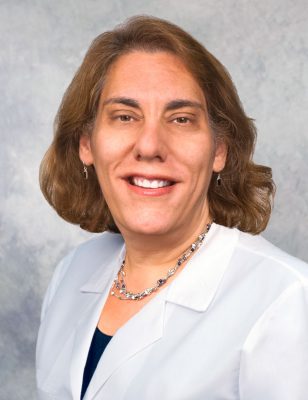
Dr. Janice Oliveri, primary care (Janine Gelineau/UConn Health)

Dr. Janice Oliveri
, a member of the UConn School of Medicine faculty since 2000, is now part of the UConn Health primary care practice, seeing patients in the Outpatient Pavilion. Her clinical interests include preventive care, diabetes, metabolic syndrome and common dermatologic problems, and she offers office-based procedures such as joint injections and skin biopsies. She completed an internal medicine residency at UConn Health after earning her M.D. from the University of North Carolina.

Vivan Huynh
is nurse practitioner, also in the primary care practice in the Outpatient Pavilion. She sees general medicine patients for chronic conditions, sick visits, urgent care, and preventive health. Huynh is an advanced practice registered nurse in adult gerontology primary care and is licensed to prescribe medications. She holds a bachelor’s degree in nursing from Fairfield University and a doctorate of nursing practice from Quinnipiac University. She is fluent in Vietnamese.

 Photos by Janine Gelineau/UConn Health


Firefighter Breach Exercise a Smash

LEFT: When possible, removing a window is preferable to smashing it. RIGHT: But that’s not always possible. (Chris DeFrancesco/UConn Health)

As construction of the new hospital building gets closer to completion, UConn Health firefighters are putting some of their focus on how to take the building apart.

With a two-story mock-up created by the contractor to showcase a portion of the tower no longer needed, the UConn Health Fire Department used it as an important training opportunity.

Firefighters Michael Alger and Brian Little breach a wall to find metal studs. (Chris DeFrancesco/UConn Health)

“It’s almost identical in construction to the new hospital,” says Capt. John Kowalski. “It gives us a chance to go over the construction of the building so we know what we’re dealing with if we ever have to gain access, or for ventilation and rescue if we need it.”

That may involve taking out a window or cutting through a wall or roof, using a combination of power tools, brute force, and brain power to gain entry.

The exercise was as much about learning about the structure itself as it was about tactical training.

“Going into to this, we knew there were different materials, like metal and masonry in the walls and metal decking on the roof,” Kowalski says. “This helps us find out what kinds of issues we may encounter and how we can be prepared for them in a real event.”

All firefighters are trained to save lives first and preserve property second. The UConn Health Fire Department has the additional priority of business continuity – enabling the clinical operations to continue when possible.

Ideally if a window needs to go, it can be removed intact rather than smashed. On this building, the firefighters learned that was an option for some windows, but not for all of them.

Still, the destructive nature of this exercise makes it a popular one.

“I never have trouble finding volunteers for this,” Kowalski says.

Firefighter David Demarest scrapes away at insulation. Cutting in a triangular shape can help maintain a wall’s structural integrity. (Chris DeFrancesco/UConn Health)
Firefighter Brian Little tests the masonry. (Chris DeFrancesco/UConn Health)
Lt. Wendell Cote supervises as a probationary firefighter saws into the metal skin of the exterior. The nearby window was removed intact. (Chris DeFrancesco/UConn Health)
Lt. Wendell Cote supervises as a firefighter David Noyes saws into the metal skin of the exterior. The nearby window was removed intact.
(Chris DeFrancesco/UConn Health)
The mock-up also provides an opportunity to cut through the roof. (Chris DeFrancesco/UConn Health)

Fall Festival Fun at UConn Health

October 2, 2015

Employees express their creativity in the Pumpkin Paloozza contest. (Janine Gelineau/UConn Health)

More than 800 employees, students, residents and volunteers turned out Thursday for the third annual UConn Health Fall Festival.

Even though the event was moved indoors because of cooler, cloudy conditions and the threat of showers, it did not dampen the spirits of those in attendance. They enjoyed the fall festivities along with some tasty treats served by administrative leadership including Dr. Andrew Agwunobi, interim executive vice president for health affairs.

Carmel apples are among the offerings at the UConn Health Fall Festival. (Janine Gelineau/UConn Health)

Pumpkin Paloozza, the much-anticipated pumpkin decorating contest, proved to be a crowd favorite once again. Each year the competition gets better and better, and this year’s entries did not disappoint. From an intricate UConn-blue train ride to a crazy green techno gourd–and much more–all the pumpkins were true works of art.  Attendees kept commenting on how difficult it was to vote which ones should get best in show.

The Fall Festival was presented by the UConn Health Department Human Resources, which extended a special thanks to administrative leaders for their support, to the many volunteers, and to the departments of Education Technology & Multimedia Services, Food and Nutrition, and Facilities Management for producing another successful event.

2015 Pumpkin Palooza Winners

First Place: “UConn Health Express” – Kim Young, Karen Morris, Sally Hatzenbuhler, Deb Daversa, Immunology

Second Place: “Franken BOT” – Sheryl Rosen, Tina Encarnacion, Kristin Wallace, Education Technology & Multimedia Services

Third Place: “Baby Roast” – Rosalinda Pavano, Dariene Dubois, Stacey Fostervold and Jim Behme, Clinical Simulation

Honorable Mentions

“Pharmacy Chic” – Gauri Prabhu, Pharmacy

“Pumpkin Clock” – Kathy Lodovico, Department of Medicine

“Kitty Glam 5” – Sue Schwartz, Dental Clinic 5

Most Educational

“Quality ‘Pump’kin” – Alyce Ivey, Quality & Regulatory Compliance


–Alexandra Crean


New Travel Fellowship Named for Dr. Cato T. Laurencin

October 1, 2015

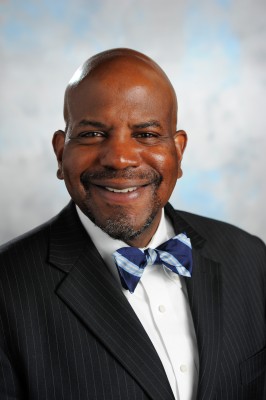
Dr. Cato T. Laurencin
Dr. Cato T. Laurencin (Peter Morenus/UConn Health)

The Connecticut Institute for Clinical and Translational Science (CICATS) announces the Cato T. Laurencin, M.D., Ph.D. Travel Fellowship.

Created by the Society For Biomaterials, this fellowship will support underrepresented minorities in the field of biomaterials, by providing an undergraduate student the resources needed to attend the annual meeting of the Society For Biomaterials and to become a member of the Society. The goal of this initiative is to stimulate/encourage recipients to pursue a career in biomaterials.

The Cato T. Laurencin, M.D., Ph.D. Travel Fellowship includes registration, airfare, hotels, transfers, and meals. Awardees also will receive complimentary membership in the Society For Biomaterials and assigned a graduate student mentor to guide them through the annual meeting and to help them pursue their advanced degree and career goals.

The fellowship is named for Dr. Cato T. Laurencin, founding director of the Institute for Regenerative Engineering; founding director of the Raymond and Beverly Sackler Center for Biomedical, Biological, Physical, and Engineering Sciences; and CICATS director. He is also the Albert and Wilda Van Dusen Distinguished Endowed Professor of Orthopaedic Surgery; professor of chemical engineering, materials science and engineering, and biomedical engineering; and the eighth designated University Professor in UConn’s History.

Laurencin is well known for his commitment to mentoring. He is the recipient of the American Association for the Advancement of Science Mentor Award, the Beckman Award for Mentoring, the Alvin F. Crawford Award for Mentoring, and received the Presidential Award for Excellence in Science, Engineering and Math Mentoring from President Barack Obama in ceremonies at the White House.

An elected member of the National Academy of Medicine and the National Academy of Engineering, Laurencin is the recipient of the NIH Director’s Pioneer Award. In the Society For Biomaterials,  Laurencin has served as a meeting opening keynote speaker, chair of the Special Interest Group Committee, and has received both the Clemson Award for Contributions to the Literature and the Technology Innovation and Development Award from the Society. He is an International Fellow in Biomaterials Science and Engineering.

Additional information about the Cato T. Laurencin, M.D., Ph.D. Travel Fellowship and the application is available at http://bit.ly/CTLtf.


(From) Under the Microscope: Newest UConn Health Art Exhibit

Art in Nanochemistry Exhibit
Top: “Star Wars” depicts computer animation of the uptake of fluorescent protein nanoparticles (green objects) by cancer cells. Left: “Crystal Rose” is a scanning electron microscope (SEM) image of a 50 micrometer high self-assembled micro-flower made from barium carbonate and silica. Right: “‘Enzyme’ Stained Glass is an SEM eimage showing the random pattern of panes formed by lysozyme/DNA complex, with colors added to enhance the image. (Images courtesy of the Kumar Research Group)
Challa Kumar, professor of Chemistry, in his lab working with a CO2 Sequestering Machine he and some of his graduate students constructed.
Challa Kumar

The newest art exhibit on display in the lobby and mezzanine in the UConn Health main building is native to the University.

Challa Vijaya Kumar, a professor of chemistry at UConn with joint appointments in the Department of Molecular and Cell Biology and the Institute of Materials Science, is also an amateur water colorist. His office showcases several of his paintings.

“Art in Nanonchemistry,” an exhibit by Kumar and two of his graduate students, will be on display through Dec. 10.

About the Artists

Caterina Riccardi
Caterina Riccardi

Kumar says he’s interested in promoting the intersection of art and science. He, along with students Caterina Riccardi and Bobbi Stromer, used high-powered electron or optical microscopes to capture nature at the nano level and create images otherwise not visible to the naked eye.

Riccardi is working for a Ph.D. in chemistry, wrapping enzymes in polymers. As an undergraduate at Wheaton College, she took classes in the studio arts in addition to chemistry and Italian studies. She says she enjoys bridging the gap between art and chemistry.

Stromer, also pursing a Ph.D. in chemistry, is investigating protein chemical modification synthesis to more stable proteins for use in sensing, industrial catalysis and imaging.

The UConn Health Art Advisory Committee invites viewings from 8 a.m. to 9 p.m. daily.

Bobbi Stromer
Bobbi Stromer

UConn Health’s collection of fine art serves to enhance the environment and promote the sense of a caring community for patients, visitors, staff and students. Art is selected, acquired and exhibited by the UConn Health Art Advisory Committee. To view a selection of the permanent collection visit: http://auxiliary.uchc.edu/art/exhibit.html.

Donation to Help Pay for UConn Health Mammograms

September 30, 2015

Dozens of women to benefit from gift to UConn Foundation

Dr. Bruce Liang, Dean of the UConn Health School of Medicine, Wanita Thorpe, academic administrative manager of the Neag Comprehensive Cancer Center, Sue Tenore and Adam Clemens of the Linda Clemens Breast Cancer Foundation, Richard Carbray Jr. of the Linda Clemens Breast Cancer Foundation, the UConn Health Board of Directors and UConn Board of Trustees, and Dr. Andrew Agwunobi, executive vice president for health affairs at UConn Health. (Photo by UConn Provost Mun Choi).

Up to 60 women who are either uninsured or underinsured will receive free and potentially life-saving mammograms this year at UConn Health, thanks to a recent $6,000 donation from the Linda Clemens Breast Cancer Foundation.

“Many of these women would not go for mammograms otherwise because they have no coverage,” says Richard Carbray Jr., a member of the UConn Health’s board of directors who helped facilitate the gift.

The gift, to be paid in two $3,000 installments, was presented to the UConn Foundation’s Linda Clemens Fund at a recent UConn Health board of directors meeting. The funds will help support the mammogram program.

“We’re trying to reach out to as many as we can in the community, really the Hartford-based community. It’s about trying to get out there and work together to eradicate the disease,” says Carbray, who also sits on the board of directors of the Linda Clemens Breast Cancer Foundation and recently was elected to his second term as a member of UConn’s Board of Trustees.

This is the second year the Linda Clemens Breast Cancer Foundation has made the generous donation to the Carole and Ray Neag Comprehensive Cancer Center at UConn Health. The program has already provided 35 free mammogram screenings.

“That means a whole lot to us, just the fact that there were 35 women out there who really couldn’t have afforded it and we helped them,” says Adam Clemens, one of the founders of the Linda Clemens Breast Cancer Foundation.

“Breast cancer survival rates increase exponentially the earlier you catch it,” Clemens says.

Breast cancer survivor Rosanne Palazzolo started the foundation in 2011 with Clemens, who lost his own mother, Linda, to breast cancer when he was 7 years old. Their first fundraiser, the Pink Glove Gala, was so popular it has become an annual event.

About a year ago, with Carbray’s help, the Linda Clemens Foundation asked to meet with leaders of UConn Health’s breast program to inquire about how they could partner together. They decided to focus on early detection through annual screenings for underserved and uninsured women.

“Our comprehensive breast team educates women at various community outreach events throughout the year on 3D mammography and early detection,’’ says Wanita Thorpe, academic administrative manager for the Neag Comprehensive Cancer Center. “But to tell a woman with no insurance we can offer her a free mammogram can be life changing.’’

In addition to funding the mammograms, the Linda Clemens Foundation provides “chemo care bags” for UConn patients that consist of games, lotion, nail care items, hats, and candy.

The foundation has also donated 30 $50 Stop & Shop cards for patients who sometimes fall on hard times during their cancer treatments, Thorpe says.

–Jack Cramer, UConn Foundation


Raising Sickle Cell Disease Awareness

September 28, 2015

buffalosoldiers2
The Buffalo Soldiers Motorcycle Club of Hartford and New England Sickle Cell Institute faculty and staff pose for a photo at the First Annual Ride for Sickle Cell Research. (Wanita Thorpe/UConn Health)

Sickle cell disease (SCD) is an inherited blood disorder that can cause severe pain and permanent damage to the brain, heart, lungs, kidneys, liver, bones and spleen. SCD is most common in Africans and African-Americans, however, it is also found in other ethnic and racial groups, including people from South and Central America, the Caribbean, Mediterranean countries, and India.

Individuals who have SCD need multidisciplinary care throughout their lives to treat and prevent complications from the disease and manage their pain. Most institutions provide only pediatric sickle cell treatment. At UConn Health, Dr. Biree Andemariam, assistant professor of medicine, is among a small number of physician-scientists nationally who specialize in caring for adults living with SCD. She leads the only comprehensive adult sickle cell program in northern Connecticut. The team-based approach includes a multidisciplinary team of doctors, nurses, social workers, and community-based patient navigators working together.

Mary Samson in infusion room #0037
The New England Sickle Cell Institute welcomes its newest staff member, nurse practitioner Mary Samson. (Janine Gelineau/UConn Health)

The New England Sickle Cell Institute (NESCI) attracts patients and families from across Connecticut and beyond. NESCI is also home to basic, translational, and clinical research aimed at elucidating basic mechanisms of the disease and developing novel therapeutic options for this orphan disease. NESCI’s success rests in its unique, heartfelt dedication of it’s staff: nurse coordinator Nayre Greene, social worker Teresa Works, infusion nurse Ruby Faye Noviasky, medical assistant Iris Reyes, clinical research assistant Sasia Jones, in addition to its newest member, nurse practitioner Mary Samson.

“The New England Sickle Cell Institute provides a full range of comprehensive care that focuses on prevention as well as acute care,” says Andemariam. “We are the only site in the region to offer erythrocytapheresis, a procedure commonly used to remove red blood cells in patients experiencing sickle cell crisis,” added Andemariam. “The support of the Neag Comprehensive Cancer Center, John Dempsey Hospital and UConn School of Medicine has been instrumental in our ability to provide desperately needed care for a long-neglected subset of our community. This is evidenced by newly designated space to provide dedicated acute and chronic disease management. With this support, the future of adults living with sickle cell disease is bright.”

For more information or to schedule an appointment, call 860-679-2100.

Commissioner Visits UConn Center on Aging

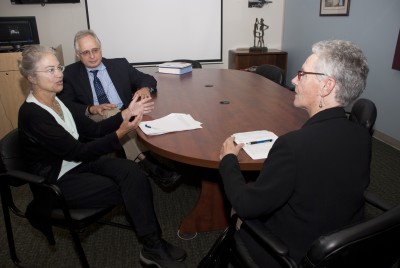
From left: Drs. Gail Sullivan and George Kuchel from the UConn Center on Aging discuss geriatric research, education and clinical care with Connecticut Department on Aging Commissioner Elizabeth Ritter. (Janine Gelineau/UConn Health)
From left: Drs. Gail Sullivan and George Kuchel from the UConn Center on Aging discuss UConn Health’s geriatric research, education and clinical care with Connecticut Department on Aging Commissioner Elizabeth Ritter. (Janine Gelineau/UConn Health)

The exact numbers may vary by projection, but all point to a critical shortage of geriatricians as the U.S. elderly population continues to grow.

It’s what was on the mind of Elizabeth Ritter, commissioner of the Connecticut Department on Aging, on her recent visit to UConn Health.

Ritter met with faculty at the UConn Center on Aging to get a sense of what the University is doing to produce more physicians and other providers who can meet the growing needs.

“It was an opportunity for me to see one of the country’s foremost centers,” Ritter says. “I was interested in learning about geriatrics and where we’re going with it, particularly the projected shortages of people who will be caring for us as we age.”

Dr. George Kuchel, director of the UConn Center on Aging, says while people have been aging since the beginning of time, aging as a field of endeavor for clinical care is relatively young.

“We have major shortages of providers in geriatric medicine and geriatric psychiatry, and not just doctors, but all levels of clinical care,” Kuchel says. “Connecticut does much better, but we’re still facing a shortage.”

According to American Geriatrics Society data from 2014, Connecticut had a shortfall of 113 geriatricians, and has a projected shortfall of more than 200 by 2030.

“In the 30 years the UConn Center on Aging has been here, it has produced research and educated those who will care for the most quickly growing part of our population,” Ritter says. “It was incredibly far-sighted of the founders more than 30 years ago to create this, and now, even more so.”

Her visit included a conversation with Dr. Suzanne Rose, the UConn School of Medicine’s senior associate dean for education.

“We discussed the importance of continuing to integrate geriatrics in all levels of the medical education program,” Ritter says. “There’s no way geriatrics is not going to be integrated in everything we do in medicine.”

Ritter also had lunch with geriatric fellows and got a tour of the UConn Health campus.


New National Center for Bio-NMR at UConn Health

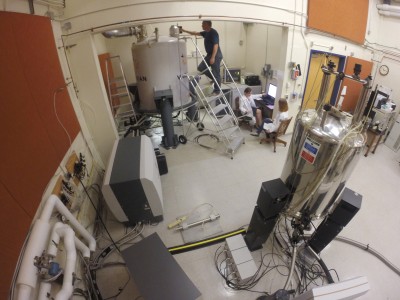
The National Center for Bio-NMR Data Processing and Analysis will open at UConn Health in December. (Janine Gelineau/UConn Health)

UConn Health is establishing a national data processing and analysis center for a powerful research tool, nuclear magnetic resonance spectroscopy (NMR). NMR technology allows researchers to analyze biological molecules at the atomic level, and is used in scientific research, medicine, and industry.

“UConn Health is ideally suited for this type of prestigious national center,” says UConn Vice President for Research Jeffrey Seemann. “It builds on substantial investments made by the University in network infrastructure, and allows investigators from UConn and across the U.S. access to high performance tools to drive technology development and research breakthroughs.”

NMR spectroscopy is used by chemists and biochemists to investigate the properties of organic molecules. It has biomedical applications in structural biology, diagnostics, drug discovery and metabolomics, which is the study of the unique chemical fingerprints that specific cellular processes leave behind.

An abundance of powerful computer programs for rapid data collection, sensitive and high-resolution signal processing, and analyzing complex spectra have advanced NMR capabilities in recent years. However, these advances present new challenges.

“Due to the complexity of data processing needed for bio-NMR, dozens of separate software packages from different sources are sometimes necessary. We’re building the ‘app store’ for bio-NMR software – and all that software is free,” says Jeffrey Hoch, director of the Gregory P. Mullen NMR Structural Biology Facility at UConn Health and head of the new National Bio-NMR Center. “The Center ensures that different packages function correctly together and that software remains viable long after development.”

The new Center and its main feature, “NMRbox,” provide software support for hundreds of NMR programs used in biomedical research, such as drug discovery and structural biology. Supporting software from hundreds of academic and commercial developers ensures that current research studies can be completed and reproduced in the future.

Awarded $6.4 million in grant funding from the National Institute for General Medical Sciences within the National Institutes of Health (NIH), the Center will provide U.S. investigators access to a single, downloadable package through a cloud-based platform. UConn Health and University of Wisconsin investigators will collaborate to operate the national center.

The National Center for Bio-NMR Data Processing and Analysis is set to launch in December and will be housed at UConn Health’s Farmington campus. UConn Health is home to the School of Medicine, School of Dental Medicine and John Dempsey Hospital, as well as a thriving research enterprise.

 -Jessica McBride

UConn Health Celebrates Opening of East Hartford Office

September 25, 2015

Ribbon Cutting East Htfd UConn Partners JGelineau #188
Dr. Denis Lafreniere, along with local lawmakers and UConn Health faculty and staff, cutting the ribbon at the opening celebration. (Janine Gelineau/UConn Health)

UConn Health held a ribbon-cutting ceremony to celebrate the opening of its new medical office suite at 800 Connecticut Boulevard in East Hartford on Thursday.

“The relocation of our offices will expand access to quality health care for the citizens of East Hartford and the surrounding towns,” said Dr. Denis Lafreniere, medical director of outpatient services and associate dean for clinical affairs. “UConn Health is proud to offer world-class health care to the East Hartford community.”

Formerly located at 99 Ash Street, the new office opened earlier this year and consists of approximately 12,000 square feet and employs 29 full- and part-time employees. Services offered at the new location include primary care, cardiology, nephrology, obstetrics and gynecology, pediatrics, rheumatology, diabetes education, and a blood draw station.

Ribbon Cutting East Htfd UConn Partners JGelineau #160
East Hartford faculty and staff attend ribbon-cutting ceremony. (Janine Gelineau/UConn Health)

Several local lawmakers attended the ceremony including East Hartford Mayor Marcia Leclerc who said she is pleased UConn Health remained in the city. State Representative Henry Genga also thanked UConn Health for “providing much needed medical services to the East Hartford community.”