Have you signed up for myHealthONE, our new patient portal, yet? This is a convenient and empowering tool for our patients to manage their health, likely in ways they might not realize, including:
Viewing test results faster and easier than ever.
Messaging the office and avoiding telephone hold times.
What better way for our patients to learn about the benefits of myHealthONE than from the providers and staff with whom they come into contact every day? As faculty and staff, the more familiar we are with the portal’s features and advantages, the better equipped we are to share them with our patients. And if you already have signed up, please send your questions and feedback to healthoneupdates@uchc.edu; perhaps you’ll help identify ways to improve myHealthONE and make it more useful for everyone. When our patients use myHealthONE, we all win!
If you’ve had any interaction with emergency medical services or the emergency department, chances are you’ve met Peter Canning. Peter is a registered nurse, a paramedic, and the EMS coordinator for UConn John Dempsey Hospital. Last month the Connecticut Department of Public Health presented Peter with the Public Health Commissioner’s Award in recognition of his impact on pre-hospital care, his leadership, and his promotion of the EMS system. Peter joined UConn Health in 2008 and his position is part time. He lives in West Hartford with his wife and three daughters.
What is an EMS coordinator?
I provide EMS education and quality assurance. My job is to see that area ambulance services bring patients to our hospital and provide them with great care, and that as a hospital, we treat EMS as a valued partner.
Peter Canning, Paramedic, R.N., EMS Coordinator at UConn Health.
Peter Canning
Favorite musician:
Bruce Springsteen
Favorite literary work: Homer’s The Odyssey
Favorite vacation spot:
Misquamicut, Rhode Island
Favorite delicacy:
Ackee and saltfish with breadfruit (My wife is Jamaican.)
Favorite sports team:
Boston Red Sox
What are the most challenging/rewarding aspects of your job?
Care for many of our patients begins when EMS arrives on scene of a 911 call. When someone is having a heart attack or stroke, EMS can diagnose the problem and provide us with advance alerts that speed the life-saving interventions such as cardiac catheterization and thrombectomy that UConn JDH provides. Every month in our EMS newsletter we highlight these cases where our care partnership has made a difference in our patient’s lives.
What’s something a lot of us don’t realize about EMS?
People are often unaware of the high degree of training and the advanced capabilities of paramedics. They are highly trained professionals who can administer more than 30 different emergency medications and perform skills such as endotracheal intubation, surgical airway and needle decompression. They are also skilled in crisis intervention as nearly every day they deal with people in emotional and psychiatric distress.
How has EMS/emergency medicine evolved since the start of your career?
When I began in EMS in 1989, we were known as ambulance drivers who often had to call the hospital for permission to give medicine. Today, we are valued partners who do most all of our work on standing orders.
Additionally, EMS recognizes UConn John Dempsey as a peer to the two large Hartford hospitals when it comes to our ability to treat critical medical patients. That has not always been the case prior to the expansion of our emergency department.
What was your reaction to being honored with the Public Health Commissioner’s Award?
You never do the work with the intention of winning an award, but to be recognized for almost thirty years of work to improve prehospital care in the state was gratifying. I am also a big fan of Commissioner Pino’s commitment to public health so it was special to get the award from him.
What do you like to do when you’re not at work?
I am still a full-time paramedic in Hartford. I have published two nonfiction books and two novels about EMS. I love playing sports with my daughters and swimming competitively in US Masters meets.
In preparation for go-live, we identified 29 clinical trials to be built in to HealthONE. As of early June, we’ve nearly doubled that goal, with 57 already built. What does HealthONE have to do with UConn Health’s research mission?
It enables streamlined billing for research trials. Previously there was no widely-used/established method to electronically track what expenses should be billed to the study vs. those that should be filed under the patient’s insurance. This efficiency allows for streamlined generation of revenue!
It helps study coordinators track patient status and progress within the trial electronically.
It saves time by replacing manual tracking in spreadsheets with a single click.
It can generate research statements electronically allowing for easier and quicker payment of ancillary research charges.
HealthONE is indicated for any/all studies that have an order to place in the system or involve an investigational agent, drug or device.
‘Concierge’ Training: Get the most out of HealthONE. Look for trainers making rounds in your area, or request one at healthonetrainingregistration@uchc.edu.
Provider Go-Live Updates
Clinical References
This week we reported some early research success, which led to a question about integrated digital resources. One of them is UpToDate, a tool that gives access to more than 10,500 topics in 25 specialties at the point of care. This has been associated with improved quality and patient care and reduced length of stay, adverse complications, and mortality. Find UpToDate in the “Clinical References” section by way of the patient “toolbar.” Other clinical references include Pharmacy, Antiobiogram, Elsevier Discharge Instructions, Elsevier Patient Education, Dynamed Plus, SI Report, and UConn Policies.
myHealthONE Update
Getting Patients to the Portal
What better way for our patients to learn about the benefits of myHealthONE than from the providers and staff with whom they come into contact every day? As faculty and staff, the more familiar we are with the portal’s features and advantages, the better equipped we are to share them with our patients. Learn more here. Have you signed up yet?.
Service Advisory
Server updates are taking place this weekend, scheduled for Sunday from 1 a.m. to 5 a.m. No downtime is expected, but users will receive messages asking them to temporarily log out of the system about 15 minutes ahead of the scheduled maintenance. More details are available here.
Targeted Updates Start Friday: This is the last HealthONE e-update we’re distributing to the universe of faculty, staff and students. Starting Friday, these regular updates will go to a more targeted audience. Registered HealthONE users will continue to receive them by default, plus anyone else who opts in. And of course we’re continuing the flow of information through other channels, including the HealthONE page on UConn Health Express, the weekly Pulse e-newsletter, the daily Lifeline messages, and the HealthONE Twitter feed.
NEW: HealthONE and Research
In preparation for go-live, we identified 29 clinical trials to be built in to HealthONE. Today we’ve nearly doubled that goal, with 57 already built. What does HealthONE have to do with UConn Health’s research mission?
It enables streamlined billing for research trials. Previously there was no widely-used/established method to electronically track what expenses should be billed to the study vs. those that should be filed under the patient’s insurance. This efficiency allows for streamlined generation of revenue!
It helps study coordinators track patient status and progress within the trial electronically.
It saves time by replacing manual tracking in spreadsheets with a single click.
It can generate research statements electronically allowing for easier and quicker payment of ancillary research charges.
HealthONE is indicated for any/all studies that have an order to place in the system or involve an investigational agent, drug or device.
Provider Go-Live Updates
Trainers Coming to You
Having gone live doesn’t mean training has gone away. Now in our seventh week, training resources are still available and offering “concierge service” for optimization. Our trainers are here to help, offering at-the-elbow support in your area, and available to round with you to assist with:
Personalization
Admission/discharge workflows
Tips for efficient charting
Other matters to help you—and your patients—get the most out of HealthONE
If you don’t catch a trainer making rounds and would like one to come to your area, Julio is waiting to hear from you at healthonetrainingregistration@uchc.edu.
Provider Reminder
External Orders
When ordering a test for your patient, be sure to indicate when the patient is going outside of UConn Health by choosing “External” in the Order Class field (see example here). This saves the step of calling patients to try to schedule the tests, thus sparing them of unwanted calls.
Walgreens ePrescribe outage Sunday: Superscripts has issued a notification of scheduled maintenance of Walgreens’ prescription system from 1 a.m. to noon Sunday, June 10. Refill request messages may not transmit. New prescriptions and responses to refill requests may be routed by fax via Surescripts fax Service. Prescriptions for this pharmacy can be printed for those patients in the ED, being discharged for hospital or being evaluated in urgent care during this outage.
Coming soon: These regular HealthONE e-updates, which we’ve been sending to all faculty, staff, students since March 8, will be going to a more targeted audience in the near future. If you stop getting these and still want to receive them, we’ll gladly re-subscribe you. And of course we’re continuing the flow of information through other channels, including the HealthONE page on UConn Health Express, the weekly Pulse e-newsletter, the daily Lifeline messages, and the HealthONE Twitter feed.
Provider Go-Live Updates
Trainers Making Rounds Next Week
As we move from go-live to optimization, training opportunities continue, shifting the focus to the operational knowledge our users need to make the most of HealthONE. We still have trainers on site who will make rounds and offer at-the-elbow support. Watch for a schedule on that soon, refer to the HealthONE training page for the latest updates, and don’t forget, training coordinators are available at healthonetrainingregistration@uchc.edu.
myHealthONE Update
Starting Monday, our patients will be able to use myHealthONE to exchange secure messages with not just their primary care physician, but any and all of their UConn Health providers. Remember to encourage patients to take advantage of this powerful and convenient patient portal and register for myHealthONE today! Direct them to look for the ACCESS myHealthONEicon on health.uconn.edu, toward the right of the page.
HealthONE Success Stories
From Dr. Ben Ristau, urologic oncologist:
Prior to go-live, it was not uncommon to have three or four different programs open in order to provide proper care to patients. Now only one is required. HealthONE has vastly improved patient continuity of care and efficiency of documentation.
Got a HealthONE success story? Please reply to this email so we can feature it in upcoming HealthONE communications.
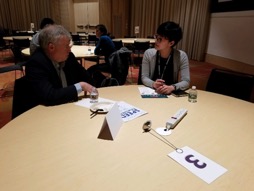
Barry Schweitzer, Elm Street Ventures, meeting with grad student Menghan Du.
By Brittany Knight, graduate student at UConn Health
You’ve heard of speed dating? Well, how about speed networking? An inaugural event was held this spring at UConn Health’s academic rotunda with positive reviews. Graduate students and post-doctoral fellows met one-on-one with industry representatives who included start-up CEOs, venture capitalists, patent agents, technology transfer professionals, and scientists.
“I loved the energy and the curiosity of the students and post-docs I met. They all seemed excited about their science, but wanted to learn more about the business of biotech,” said Barry Schweitzer Ph.D., partner at Elm Street Ventures and entrepreneur-in-residence at UConn. “Their number one question was ‘How do I get my first job at a biotech company?’ Unfortunately, there is no easy answer – it’s really hard to get that job. Nevertheless, my advice is to network, network, network. Most often, getting a position in industry (like in academia) comes about through personal connections and recommendations. It takes time to build that network, so start now.”
Marcia Fournier, CEO of Bioarray Genetics, meeting with students.
Marcia Fournier, Ph.D., CEO of Bioarray Genetics, said, “It was refreshing talking to UConn Health graduate students and to share my experiences with them.”
One of the students that attended said, “It was really great to have several professionals together in one room just to talk to us. I really appreciated how friendly and open they all were, and they provided some great career advice.”
In a survey conducted among the student attendees after the event, 71 percent of the respondents found the event informative and 86 percent said they are likely to recommend it to others.
“These types of events are incredibly insightful and productive for students and the business community,” said Carrie White, senior investment associate at Connecticut Innovations. “As the innovation ecosystem continues to grow in Connecticut, we look forward to seeing more of these vibrant events at UConn and at other universities around the state.”
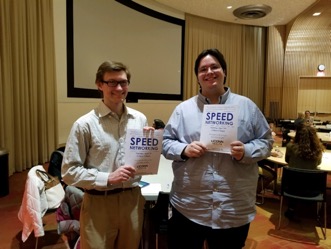
Coordinators Cory Brunson and Robert Pijewski
Biomedical scientists and biotechnology companies have been collaborating since 2003 through the Technology Incubator Program (TIP) at UConn. The program has sponsored 96 independent start-up biotechnology companies.
Robert Pijewski, president of the Graduate Student Organization, and Cory Brunson, Ph.D., president of the UConn Health and Jackson Laboratory Post-Doctoral Association, coordinated the inaugural speed networking event. Robert and Cory received encouragement and mentorship from Vaibhav Saini, Ph.D., who is the licensing director for Life Sciences, Office of the Vice President for Research.
Now in our sixth week of HealthONE, we are nearing the point at which our regular updates will go to a narrower audience, primarily registered end users and anyone who opts in to receiving the updates. More information on that is coming soon.
Provider Go-Live Updates
External Orders
When ordering a test for your patient, be sure to indicate when the patient is going outside of UConn Health by choosing “External” in the Order Class field (see example here). This saves the step of calling patients to try to schedule the tests, thus sparing them of unwanted calls.
HealthONE Success Stories
From Aretha Floyd, inpatient phlebotomist:
“Really happy about ‘No more writing and no more paper’ in the Phlebotomy Team Department! All work is accounted for individually.”
Got a HealthONE success story? Please reply to this email so we can feature it in upcoming HealthONE communications.
HealthONE Facts
As of noon Tuesday we’ve resolved 11,754 of 14,511 support tickets since go-live, or 81 percent—a new high. We surpassed the 80 percent mark for the first time Monday at noon.
Now, as we are five weeks post-go-live and moving toward stabilization, we are revamping our training with a focus on the operational knowledge our users need to make the most of HealthONE. Refer to the HealthONE training page for the latest updates, and remember, training coordinators are still available via healthonetrainingregistration@uchc.edu.
We continue to see encouraging data on support tickets, reflecting a “steady state,” or a leveling off in the volume of issues. We’re trending toward closing the command center by the end of next week. With that will come a reconfiguration of the HealthONE Call Center accordingly to ensure end-user support needs are met.
Provider Go-Live Updates
Drop-in Personalization Labs
This month, Personalization Labs are available for providers to get assistance in creating Smartphrases, saving favorite order sets and other ways to personalize. These are available Mondays, Wednesdays and Fridays on the fourth floor of the Connecticut Tower:
Mondays and Fridays, 7 a.m. to noon: June 4, June 8, June 11, June 15, June 18, June 22, June 25, June 29
Wednesdays, noon to 5 p.m.: June 6, June 13, June 20, June 27.
HealthONE Success Stories
From Dr. Heiko Schmitt, Calhoun Cardiology Center:
“It’s been great, especially for billing. We’re able to capture so much more now.”
Got a HealthONE success story? Please reply to this email so we can feature it in upcoming HealthONE communications.
HealthONE Facts
This week, the average duration of support calls to the HeathONE call center broke the five-minute mark, a new low. Data from Wednesday showed calls from physicians averaging 5:07, and calls from other staff averaging 4:44. Collectively that’s an average call time of 4:54.
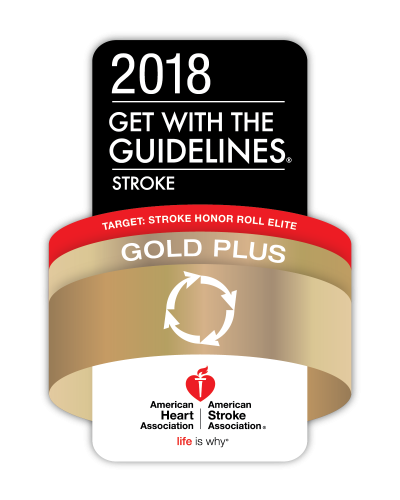
UConn Health/John Dempsey Hospital has received the American Heart Association/American Stroke Association’s Get With The Guidelines®-Stroke Gold Plus Quality Achievement Award. The award recognizes the hospital’s commitment to ensuring stroke patients receive the most appropriate treatment according to nationally recognized, research-based guidelines based on the latest scientific evidence.
UConn Health earned the award by meeting specific quality achievement measures for the diagnosis and treatment of stroke patients at a set level for a designated period. These measures include evaluation of the proper use of medications and other stroke treatments aligned with the most up-to-date, evidence-based guidelines with the goal of speeding recovery and reducing death and disability for stroke patients. Before discharge, patients should also receive education on managing their health, get a follow-up visit scheduled, as well as other care transition interventions.
“UConn Health is dedicated to improving the quality of care for our stroke patients by implementing the American Heart Association’s Get With The Guidelines-Stroke initiative,” said Dr. Sanjay Mittal, director of the stroke program. “The tools and resources provided help us track and measure our success in meeting evidenced-based clinical guidelines developed to improve patient outcomes.”
UConn Health additionally received the association’s Target: StrokeSM Honor Roll Elite award. To qualify for this recognition, hospitals must meet quality measures developed to reduce the time between the patient’s arrival at the hospital and treatment with the clot-buster tissue plasminogen activator, or tPA, the only drug approved by the U.S. Food and Drug Administration to treat ischemic stroke.
“We are pleased to recognize UConn Health for their commitment to stroke care,” said Eric E. Smith, M.D., national chairman of the Get With The Guidelines Steering Committee and an associate professor of neurology at the University of Calgary in Alberta, Canada. “Research has shown that hospitals adhering to clinical measures through the Get With The Guidelines quality improvement initiative can often see fewer readmissions and lower mortality rates.”
According to the American Heart Association/American Stroke Association, stroke is the No. 5 cause of death and a leading cause of adult disability in the United States. On average, someone in the U.S. suffers a stroke every 40 seconds and nearly 795,000 people suffer a new or recurrent stroke each year.
 Have you signed up for myHealthONE, our new patient portal, yet? This is a convenient and empowering tool for our patients to manage their health, likely in ways they might not realize, including:







 HealthONE Facts

 HealthONE Facts
 UConn Health/John Dempsey Hospital has received the American Heart Association/American Stroke Association’s Get With The Guidelines®-Stroke Gold Plus Quality Achievement Award. The award recognizes the hospital’s commitment to ensuring stroke patients receive the most appropriate treatment according to nationally recognized, research-based guidelines based on the latest scientific evidence.