UConn Health October 2018 Programs, Events

October 2, 2018

Here is a list of UConn Health programs scheduled for October and early November 2018. This information will be updated with any additions or other schedule changes. (Last updated 10/15)

Living Well With Epilepsy: A Support Group for Young Adults
Saturday, Oct. 6, noon to 1:30 p.m.
, UConn Health Outpatient Pavilion, 2nd floor large conference room S2010

The Epilepsy Foundation of Connecticut, in partnership with the UConn Health Department of Neurology, offers a support group for young adults who live with epilepsy. This group is open to those aged 18 to 30 who would like to join others to share experience, gain peer support, and learn together about epilepsy and overcoming its challenges to live well. The group generally meets on the first Saturday of the month. Please call 860-346-1924 or email manzelone.efct@sbcglobal.net for more information.

Bladder Cancer Support Group
Saturday, Oct. 6, 2 to 3 p.m.
, UConn Health, Onyiuke Dining Room
Patients, family members and caregivers (not limited to UConn Health patients) are invited to join others whose lives have been touched by bladder cancer. This month, UConn Health’s oncology dietitian joins as a guest speaker. This support group, established in partnership with the Bladder Cancer Advocacy Network, usually meets on the first Saturday of the month and is the only group of its kind in New England. Call 888-901-BCAN for more information.

Free Hospital Maternity Tours
Saturday, Oct. 6, 2 p.m.
, UConn Health, University Tower lobby
A representative will guide you through labor and delivery, postpartum, and the nursery at the UConn John Dempsey Hospital. Children and grandparents are welcome. Call 800-535-6232 to register or for more information.

Breastfeeding Class
Wednesday, Oct. 10, 6 to 8 p.m.
, UConn Health Outpatient Pavilion, 3rd floor large conference room S3301
A certified lactation consultant leads a discussion of topics including the benefits of breastfeeding, how to get started, and how the rest of the family can help the breastfeeding mother as well as how to continue breastfeeding and working. Fee is $25 per couple. Call 800-535-6232 to register or for more information.

Childbirth Preparation Class
Wednesday, Oct. 17, 6 to 10 p.m.
, UConn Health Outpatient Pavilion, 3rd floor large conference room S3301
This one-day class covers anatomy and physiology of pregnancy and labor, emotions of pregnancy, nutrition, fetal growth and development, comfort measures for labor, working with unexpected events in labor, cesarean delivery, and practice of relaxation and breathing techniques for labor. Class size is limited to eight couples. Remember to bring two pillows and wear comfortable clothing. Light snack is provided. Fee is $100. Call 800-535-6232 or 860-679-7692 to register or for more information.

(Corrected 10/15)
Living With Heart Disease Meeting
Thursday, Oct. 18, 11 a.m. to noon
, UConn Health, University Tower, 2nd floor conference room

Men and women affected by heart disease meet on the third Thursday of every other month to discuss post-diagnosis topics such as prevention and wellness, social and emotional support, heart-healthy recipes, coping strategies and resources. Significant others and caregivers are also welcome to attend. Please call Sue at 860-679-3633 for more information.

Breast Cancer Support Group
Thursday, Oct. 18, 7 to 8 p.m.
, UConn Health, Onyiuke Dining Room
This is a support group intended for women under the age of 45 who’ve been diagnosed with non-metastatic breast cancer. Women at any point in their cancer survivorship journey are welcome. Meetings are the third Thursday of the month. To register or more information, call 860-679-7820 or email tillinghast@uchc.edu.

Infertility Peer Support Group
Thursday, Oct. 18, 7 to 8:30 p.m.
, Center for Advanced Reproductive Services, 2 Batterson Park Road, Farmington.

The Greater Hartford chapter of RESOLVE, a national nonprofit resource for those facing the challenges of infertility, offers support, information and confidential, informal, peer-led discussions on the third Thursday of the month. To learn more or to check for weather-related cancellation, call 860-523-8337.

Free Hospital Maternity Tours
Saturday, Oct. 20, 2 p.m.
, UConn Health, University Tower lobby
A representative will guide you through labor and delivery, postpartum, and the nursery at the UConn John Dempsey Hospital. Children and grandparents are welcome. Call 800-535-6232 to register or for more information.

Free Cosmetology Services for Cancer Survivors
Monday, Oct. 22, 1 to 3 p.m.
, UConn Health Outpatient Pavilion, 4th floor

“Look Good…Feel Better” is a free program to help improve the self-image and self-esteem of women experiencing appearance-related side effects from cancer treatment. During this hands-on workshop, a trained volunteer certified cosmetologist will teach women how to cope with skin changes and hair loss using cosmetic and skin care products donated by the cosmetic industry. Classes are offered every other month and are not limited to UConn Health patients. Please call 860-679-7820 to register (required).

Stroke Survivor Group
Wednesday, Oct. 24, noon to 1 p.m.
, UConn Health Outpatient Pavilion, 3rd floor
The UConn Health Stroke Center invites stroke survivors, families and caregivers to a monthly group meeting to discuss topics such as prevention, coping methods, support systems, rehabilitation tips, resources, and promoting independence. The Stroke Survivor Group generally meets on the fourth Wednesday of the month. Call 860-679-4846 for more information.

Free Workshop: “Things to Consider Before Joining a Research Study”
Monday, Oct. 29, 5 p.m.
, UConn Health, Onyiuke Dining Room

The UConn Health Human Subjects Protection Office offers an educational session about the rights and responsibilities of participants in research projects on the last Monday of the month. Registration is required: 860-679-8802 or cagganello@uchc.edu.

Living Well With Epilepsy: A Support Group for Young Adults
Saturday, Nov. 3, noon to 1:30 p.m.
, UConn Health Outpatient Pavilion, 2nd floor large conference room S2010
The Epilepsy Foundation of Connecticut, in partnership with the UConn Health Department of Neurology, offers a support group for young adults who live with epilepsy. This group is open to those aged 18 to 30 who would like to join others to share experience, gain peer support, and learn together about epilepsy and overcoming its challenges to live well. The group generally meets on the first Saturday of the month. Please call 860-346-1924 or email manzelone.efct@sbcglobal.net for more information.

Bladder Cancer Support Group
Saturday, Nov. 3, 2 to 3 p.m.
, UConn Health, Onyiuke Dining Room
Patients, family members and caregivers (not limited to UConn Health patients) are invited to join others whose lives have been touched by bladder cancer. This support group, established in partnership with the Bladder Cancer Advocacy Network, usually meets on the first Saturday of the month and is the only group of its kind in New England. Call 888-901-BCAN for more information.

Free Hospital Maternity Tours
Saturday, Nov. 3, 2 p.m.
, UConn Health, University Tower lobby
A representative will guide you through labor and delivery, postpartum, and the nursery at the UConn John Dempsey Hospital. Children and grandparents are welcome. Call 800-535-6232 to register or for more information.

Breastfeeding Class
Wednesday, Nov. 14, 6 to 8 p.m.
, UConn Health Outpatient Pavilion, 3rd floor large conference room S3301
A certified lactation consultant leads a discussion of topics including the benefits of breastfeeding, how to get started, and how the rest of the family can help the breastfeeding mother as well as how to continue breastfeeding and working. Fee is $25 per couple. Call 800-535-6232 to register or for more information.

(Corrected 10/15)
Living With Heart Disease Meeting
Thursday, Nov. 15, 11 a.m. to noon
, UConn Health, University Tower, 2nd floor conference room

Men and women affected by heart disease meet on the third Thursday of every other month to discuss post-diagnosis topics such as prevention and wellness, social and emotional support, heart-healthy recipes, coping strategies and resources. Significant others and caregivers are also welcome to attend. Please call Sue at 860-679-3633 for more information.

Free Hospital Maternity Tours
Saturday, Nov. 17, 2 p.m.
, UConn Health, University Tower lobby
A representative will guide you through labor and delivery, postpartum, and the nursery at the UConn John Dempsey Hospital. Children and grandparents are welcome. Call 800-535-6232 to register or for more information.

Directions to UConn Health are available at health.uconn.edu/locations.

Looking at Us: Ellen ‘Bleeds Blue’ Benson, OR Nurse Manager

September 20, 2018

More than 11,000 surgeries are performed here every year from foot surgery to brain surgery which takes a lot of coordination and planning to make sure patients get the best care possible. A key reason our ORs run smoothly and efficiently is the dedication and tireless work of nurse manager Ellen Benson. She’s worked at UConn Health for the last 28 years. Ellen lives in Harwinton with her husband of 36 years. She has three grown children.


Ellen Benson, screen shot from video by Frank Barton and Ethan GiorgettiEllen Benson

Favorite book:
I was never much of a reader, but I fell in love with Edgar Allan Poe when I was a kid, weird little short stories, they were great for my attention span at the time

Favorite movie:
I love Harry Potter and Indiana Jones movies.

Favorite time of year:
I love the fall. The cool crisp air, the colors, the smells and the comfort foods (like apple crisp and ice cream). Halloween is one of my favorite “holidays.”

Favorite place to visit:
This is a toss- up. I love the beach and I also love to hike in the woods, no particular location. As long as my family is with me, I’m happy anywhere.

Famous person you’d most like to meet:
Colin Powell. I read his autobiography and was amazed at his life story, the places he has traveled, the work he did, the people that he knew. I would also have loved to have met and worked with Florence Nightingale – she is my hero!

Something about you today that your younger self would never believe:
That I would love my job even more today than I did when I first started and that I would be the manager of the OR.

Why did you become a nurse?
I went to a career fair when I was 18 years old and was introduced to the surgical technology profession. I grew up butchering chickens with my grandfather, so I thought – I can do that job! I worked for about a year full time and then realized I could do more, so my husband encouraged me to go to nursing school.

How did you end up being the OR nurse manager?
I worked for nearly 19 years from 3 to 11 p.m. as a staff nurse. That was an extraordinary opportunity because I learned so much. I worked with a small group who really helped each other and it was an awesome environment. Working evenings also gave me the opportunity to be home during the day with my children. It was the perfect work/life balance for us. When my youngest daughter was in high school, my husband said it was time to switch shifts. It just so happened that the assistant nurse manager position opened up. I had never thought about going into management but I thought that it might be a good move for me. I got the position and learned many new skills. When the manager position became available, a few people encouraged me to apply. Much to my surprise, I was hired for the position and have been the manager for almost five years now.

What has been a major milestone in your career?
I earned my bachelor’s degree about a year ago. That was a huge personal achievement! I was highly encouraged to complete my degree by nursing administration and they really supported me through the process. I enjoyed taking classes with the younger students who were fresh out of their associate degree programs. I have worked in the OR my whole life so it was great looking at nursing through their eyes. I ended up being a mentor to quite a few of them and I still stay in touch with them, so that was really a wonderful experience. My husband and children also helped me achieve this milestone, if it weren’t for their support, it would have never happened.

Why do you like working at UConn Health?
It’s just a wonderful place to work. We have this beautiful new hospital and we have great nurses, physicians and support staff to help us fulfill our mission of teaching and caring for the people of the state of Connecticut.

I love coming to work every day. I am proud to be a part of the UConn family.

I really do bleed blue!

Faculty Appointments and Promotions Fall 2018

September 12, 2018

The Academic Affairs Subcommittee of the Board of Directors during its September meeting approved the following School of Medicine and Dental Medicine faculty promotions and appointments:

School of Dental Medicine Promotions

Professor (Continuing Tenure)
Dr. Efthimia Ioannidou, Division of Periodontology
Dr. Rajesh Lalla, Division of Oral and Maxillofacial Diagnostic Sciences

Professor (In-Residence)
Dr. Yu-Hsiung Wang, Division of Pediatric Dentistry

Associate Professor (In-Residence)
Dr. Bina Katechia, Division of Pediatric Dentistry

School of Medicine Appointments

Professor – Affiliated
Dr. Mark D. Adams – (The Jackson Laboratory) – Genetics and Developmental Biology
Dr. Mark J. Alberts – (Hartford Hospital) – Neurology
Dr. Glenn Flores – (Connecticut Children’s Medical Center) – Pediatrics
Dr. Daniel Grow – (Center for Advanced Reproductive Services) – Obstetrics and Gynecology

Associate Professor – Tenure Track
Dr. William S. Shaw – Medicine

Associate Professor – Affiliated
Dr. Beth C. Natt – (Connecticut Children’s Medical Center)

School of Medicine Promotions

Professor – with Award of Academic Tenure
Dr. Royce Mohan – Neuroscience

Professor – In-Residence
Dr. Qian Wu – Pathology and Laboratory Medicine

Professor – Affiliated Institution
Dr. Karan M. Emerick – (Connecticut Children’s Medical Center) – Pediatrics

Clinical Professor – Community Faculty
Dr. Anthony G. Alessi – Neurology

Award of Academic Tenure
Dr. Annabelle Rodriguez-Oquendo – Cell Biology

Associate Professor – In-Residence
Dr. David B. Banach – Medicine
Dr. Stacey L. Brown – Community Medicine and Health Care
Dr. Ramaswamy M. Chidambaram – Genetics and Genome Sciences
Dr. Jessica M. Clement – Medicine
Dr. Thomas J. Devers – Medicine
Dr. Katalin Ferenczi – Dermatology
Dr. Alise Frallicciardi – Emergency Medicine
Dr. Karen M. Hook – Medicine
Dr. Juyong Lee – Medicine
Dr. Faryal S. Mirza – Medicine
Dr. Karen L. Steinberg – Psychiatry
Dr. Haleh Vaziri – Medicine
Dr. Siu-Pok Yee – Cell Biology

Associate Professor – with Award of Academic Tenure
Dr. Dmitry M. Korzhnev – Molecular Biology and Biophysics
Dr. Yi I. Wu – Genetics and Genome Sciences

Associate Professor – Affiliated Institution
Dr. Thyde Dumont-Mathieu – (Connecticut Children’s Medical Center) – Pediatrics
Dr. Alex B. Golden – (Connecticut Children’s Medical Center) – Pediatrics
Dr. Katherine R. Kavanagh – (Connecticut Children’s Medical Center) – Surgery
Dr. Kristan A. Pierz – (Connecticut Children’s Medical Center) – Orthopaedic Surgery
Dr. Wael N. Sayej – (Connecticut Children’s Medical Center) – Pediatrics
Dr. Adam M. Silverman – (Connecticut Children’s Medical Center) – Pediatrics
Dr. Christine M. Skurkis – (Connecticut Children’s Medical Center) – Pediatrics
Dr. Michael J. Soltis – (Connecticut Children’s Medical Center) – Pediatrics
Dr. Adam C. Steinberg – (Hartford Hospital) – Obstetrics and Gynecology

Associate Clinical Professor – Community Faculty
Dr. Seth M. Brown – Surgery
Dr. Jeffry L. Nestler – Medicine
Dr. Belachew Tessema – Surgery

UConn Health September 2018 Programs and Classes

August 30, 2018

Here is a list of UConn Health programs scheduled for September and early October 2018. This information will be updated with any additions or other schedule changes.

Living Well With Epilepsy: A Support Group for Young Adults
Saturday, Sept. 1, noon to 1:30 p.m.
, UConn Health Outpatient Pavilion, 2nd floor large conference room S2010

The Epilepsy Foundation of Connecticut, in partnership with the UConn Health Department of Neurology, offers a support group for young adults who live with epilepsy. This group is open to those aged 18 to 30 who would like to join others to share experience, gain peer support, and learn together about epilepsy and overcoming its challenges to live well. The group generally meets on the first Saturday of the month. Please call 860-346-1924 or email manzelone.efct@sbcglobal.net for more information.

Bladder Cancer Support Group
Saturday, Sept. 1, 2 to 3 p.m.
, UConn Health, Onyiuke Dining Room
Patients, family members and caregivers (not limited to UConn Health patients) are invited to join others whose lives have been touched by bladder cancer. This support group, established in partnership with the Bladder Cancer Advocacy Network, usually meets on the first Saturday of the month and is the only group of its kind in New England. Call 888-901-BCAN for more information.

Free Hospital Maternity Tours
Saturday, Sept. 8, 2 p.m.
, UConn Health, University Tower lobby
A representative will guide you through labor and delivery, postpartum, and the nursery at the UConn John Dempsey Hospital. Children and grandparents are welcome. Call 800-535-6232 to register or for more information.

Breastfeeding Class
Thursday, Sept. 20, 6 to 8 p.m.
, UConn Health Outpatient Pavilion, 3rd floor large conference room S3301
A certified lactation consultant leads a discussion of topics including the benefits of breastfeeding, how to get started, and how the rest of the family can help the breastfeeding mother as well as how to continue breastfeeding and working. Fee is $25 per couple. Call 800-535-6232 to register or for more information.

Breast Cancer Support Group
Thursday, Sept. 20, 7 to 8 p.m.
, UConn Health, Onyiuke Dining Room
This is a support group intended for women under the age of 45 who’ve been diagnosed with non-metastatic breast cancer. Women at any point in their cancer survivorship journey are welcome. Meetings are the third Thursday of the month. To register or more information, call 860-679-7820 or email tillinghast@uchc.edu.

Infertility Peer Support Group
Thursday, Sept. 20, 7 to 8:30 p.m.
, Center for Advanced Reproductive Services, 2 Batterson Park Road, Farmington.

The Greater Hartford chapter of RESOLVE, a national nonprofit resource for those facing the challenges of infertility, offers support, information and confidential, informal, peer-led discussions on the third Thursday of the month. To learn more or to check for weather-related cancellation, call 860-523-8337.

Free Hospital Maternity Tours
Saturday, Sept. 22, 2 p.m.
, UConn Health, University Tower lobby
A representative will guide you through labor and delivery, postpartum, and the nursery at the UConn John Dempsey Hospital. Children and grandparents are welcome. Call 800-535-6232 to register or for more information.

Free Workshop: “Things to Consider Before Joining a Research Study”
Monday, Sept. 24, 5 p.m.
, UConn Health, Onyiuke Dining Room

The UConn Health Human Subjects Protection Office offers an educational session about the rights and responsibilities of participants in research projects on the last Monday of the month. Registration is required: 860-679-8802 or cagganello@uchc.edu.

Stroke Survivor Group
Wednesday, Sept. 26, noon to 1 p.m.
, UConn Health Outpatient Pavilion, 3rd floor
The UConn Health Stroke Center invites stroke survivors, families and caregivers to a monthly group meeting to discuss topics such as prevention, coping methods, support systems, rehabilitation tips, resources, and promoting independence. The Stroke Survivor Group generally meets on the fourth Wednesday of the month. Call 860-679-4846 for more information.

Living Well With Epilepsy: A Support Group for Young Adults
Saturday, Oct. 6, noon to 1:30 p.m.
, UConn Health Outpatient Pavilion, 2nd floor large conference room S2010
The Epilepsy Foundation of Connecticut, in partnership with the UConn Health Department of Neurology, offers a support group for young adults who live with epilepsy. This group is open to those aged 18 to 30 who would like to join others to share experience, gain peer support, and learn together about epilepsy and overcoming its challenges to live well. The group generally meets on the first Saturday of the month. Please call 860-346-1924 or email manzelone.efct@sbcglobal.net for more information.

Bladder Cancer Support Group
Saturday, Oct. 6, 2 to 3 p.m.
, UConn Health, Onyiuke Dining Room
Patients, family members and caregivers (not limited to UConn Health patients) are invited to join others whose lives have been touched by bladder cancer. This month, UConn Health’s oncology dietitian joins as a guest speaker. This support group, established in partnership with the Bladder Cancer Advocacy Network, usually meets on the first Saturday of the month and is the only group of its kind in New England. Call 888-901-BCAN for more information.

Free Hospital Maternity Tours
Saturday, Oct. 6, 2 p.m.
, UConn Health, University Tower lobby
A representative will guide you through labor and delivery, postpartum, and the nursery at the UConn John Dempsey Hospital. Children and grandparents are welcome. Call 800-535-6232 to register or for more information.

Breastfeeding Class
Wednesday, Oct. 10, 6 to 8 p.m.
, UConn Health Outpatient Pavilion, 3rd floor large conference room S3301
A certified lactation consultant leads a discussion of topics including the benefits of breastfeeding, how to get started, and how the rest of the family can help the breastfeeding mother as well as how to continue breastfeeding and working. Fee is $25 per couple. Call 800-535-6232 to register or for more information.

Childbirth Preparation Class
Wednesday, Oct. 17, 6 to 10 p.m.
, UConn Health Outpatient Pavilion, 3rd floor large conference room S3301
This one-day class covers anatomy and physiology of pregnancy and labor, emotions of pregnancy, nutrition, fetal growth and development, comfort measures for labor, working with unexpected events in labor, cesarean delivery, and practice of relaxation and breathing techniques for labor. Class size is limited to eight couples. Remember to bring two pillows and wear comfortable clothing. Light snack is provided. Fee is $100. Call 800-535-6232 or 860-679-7692 to register or for more information.

Living With Heart Disease Meeting
Thursday, Oct. 18, 11 a.m. to noon
, UConn Health, University Tower, 2nd floor conference room
Men and women affected by heart disease meet on the third Thursday of every other month to discuss post-diagnosis topics such as prevention and wellness, social and emotional support, heart-healthy recipes, coping strategies and resources. Significant others and caregivers are also welcome to attend. Please call Sue at 860-679-3633 for more information.

Directions to UConn Health are available at health.uconn.edu/locations.

UConn Health Researchers Brief National MS Society

August 21, 2018

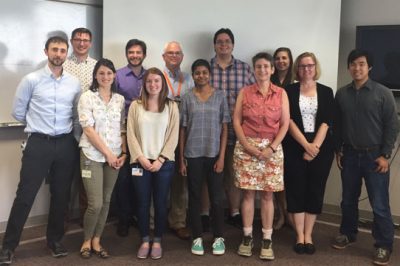
Students and faculty studying multiple sclerosis at UConn Health recently shared their findings with representatives from the National MS Society. (Photo provided by Brittany Knight)
Students and faculty studying multiple sclerosis at UConn Health recently shared their findings with representatives from the National MS Society, from left: David Martinelli, Cory Willis, Nickolas Wasko, Stephen Crocker, Robert Pijewski, Laura Hoch (NMSS Connecticut chapter), Alexandra Nicaise, Madeleine Youngstrom, Joyshree Biswas, Dina Berlyn (patient advocate), Laura Roberts (patient advocate), and Andrew Tang. (Photo provided by Brittany Knight)

The National Multiple Sclerosis Society is up to date on UConn Health’s MS research following a recent visit with biomedical students and faculty. One of the students, Brittany Knight, shares her account of the meeting.

Graduate students and postdoctoral fellows in the Neuroscience and Immunology departments used a variety of models and techniques to identify molecules that can improve myelination and ultimately provide therapies for those diagnosed with MS.

Myelination is when cells in the nervous system called oligodendrocytes produce myelin, a fatty substance that coats neurons and enables the fast transmission of electrical signals throughout the nervous system. Myelin is extremely important for everyday function including motor coordination (i.e. walking), sensory perception (i.e. eyesight), and thinking (i.e. remembering where you left your keys). MS causes myelin loss, which increase fall risk, impair vision, and lead to physical disability requiring a wheelchair.

One student shared is using induced pluripotent stem cells (iPS cells) derived from patient-specific brain cells to screen potential drugs. Another student is harnessing the power of the body’s microorganisms to preserve myelin using an animal model of MS.

Backed by a recent National Multiple Sclerosis Society grant, UConn Health neuroscience faculty members David Martinelli and Stephen Crocker are studying the myelin-producing cells.

“We are studying whether a signaling protein expressed by oligodendrocyte progenitor cells initiates a previously unappreciated signaling pathway that can lead to the maturation of oligodendrocytes,” Dr. Martinelli said. “This could potentially lead to a therapy for MS patients to replace lost oligodendrocytes.”

Another NMSS grant is funding a research collaboration between the Neuroscience Department and UConn Center on Aging, led by Dr. Crocker and assistant professor Rosaria Guzzo. They are examining the effect of aging on the “regenerative capacity of the brain in MS using iPS cells that were generated from progressive MS patients,” Dr. Crocker said.

The Crocker lab previously has shown that cellular aging, or cellular senescence, is an active process in MS that may open new therapeutic opportunities to stimulate brain regeneration.

(Tischner et al., 2015)
This graph (click image for larger view) from a 2015 article in the journal Neurology shows the annual costs from average wholesale prices of the MS treatment IFN 5 interfon over 20 years. (Citation: “The cost of multiple sclerosis drugs in the US and the pharmaceutical industry: Too big to fail?” John R. Tischner, Daniel M. Hartung, Brian E. Rittenhouse, Daniel M. Hartung, Dennis N. Bourdette, Ruth H. Whitham, Dennis N. Bourdette, Sharia Ahmed, Ruth H. Whitham. Neurology Nov 2015, 85 (19) 1727-1728; DOI: 10.1212/WNL.0000000000002095)

Although MS is a debilitating disease, most people who have it do not develop severe disabilities and can appear unaffected. One of the discussions during the visit was about the challenges of living with MS.

It was stressed that MS, unlike other conditions, is not an obvious condition from an individual’s mere physical appearance. This can create discord between the public perceptions of a person diagnosed with MS and the reality of the disease. For example, myelin loss can cause people to have poor control over their gait or body, which can appear similiar to being under the influence of alcohol.

Current treatments for MS are a tale of the good, the bad, and the ugly.

The good news is, treatments for MS have change drastically over the past 10 years. There are now at least 12 disease-modifying therapies approved by the U.S. Food and Drug Administration.

The bad news is, identifying which medication is best for each individual is a challenge and requires a trial-and-error period.

The ugly part: Although MS treatments have been shown to improve the quality of life, they are very expensive and are increasing in cost every year. In 2004 the average annual coast of MS treatments was between $8,000 and $11,000, but now that same medication can cost upwards of $60,000. Adding to the challenge is the fact that newer MS treatments are starting at 25 percent to 60 percent higher in cost than the pre-existing medications, and these costs in the U.S. alone are higher than other countries. One reason for the inflation of MS treatment costs is the current status of the U.S. health care system, which doesn’t place limitations on drug prices. A national health care system that can negotiate directly with pharmaceutical companies would impact the future of MS treatments, as well as the treatments of other medical conditions.

–Brittany Knight

Spotlight on Services: Sports Cardiology

August 16, 2018

(Getty images)

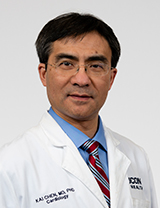
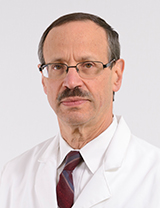
Sports cardiology is an emerging subspecialty with a focus on highly active people. It’s now available at the Pat and Jim Calhoun Cardiology Center, where Drs. Kai Chen and Peter Schulman are among those trained in this discipline, supporting not only UConn athletics but also the Connecticut Sun professional women’s basketball team and the New England Black Wolves professional lacrosse team.

What is sports cardiology?

Dr. Kai Chen, Calhoun Cardiology Center

Chen: Sports cardiology is cardiology related to sports and exercise, an entity incorporating all ages, from childhood to the senior population, and all forms of exercise activity, including professional, recreational, and occupational. Starting with the care of competitive athletes, sports cardiology has expanded to include the general population in the prevention and management of cardiac conditions during exercise.

Who is a candidate to see a sports cardiologist?

Chen: Sports cardiology takes care of athletes and anyone who exercises. Candidates for a sports cardiology evaluation include:

  • Healthy people with a family history of cardiac condition before participation in sports or exercise.
  • Anyone with new symptoms during exercise or sports participation such as lightheadedness, palpitation, shortness of breath, chest discomfort, or unexplained drop in exercise tolerance.
  • Patients with known cardiovascular disease who want to return to exercise and stay active.

How does this discipline fit in with the service as team physicians to the UConn athletic programs?

Schulman: UConn Health physicians serve as the team physicians for UConn athletes, and this is part of sports cardiology. For example, we screen the UConn athletes as they prepare for the upcoming season. Sports injuries and other medical conditions are handled by the UConn infirmary and UConn Health providers in Storrs. Between these two services, UConn athletes have all of their health needs served.

What’s the difference between athletic heart syndrome and hypertrophic cardiomyopathy?

Dr. Peter Schulman, Calhoun Cardiology Center

Schulman: Due to increased metabolic demands of athletic performance, the athlete’s heart adapts to the enhanced metabolic needs by undergoing structural changes to increase the ability of the heart to pump blood. These changes include “bulking up” or hypertrophy of the heart muscle and increasing the size of the heart chambers to handle the increased blood flow. These changes are part of the “athletic heart syndrome.”  On the other hand, there are some diseases of the heart muscle such as hypertrophic cardiomyopathy (HCM) that can cause adverse structural changes of the heart. HCM can appear superficially similar to the normal adaptation of the heart from athletics. Fortunately, in most instances, testing can distinguish most patients with HCM from the athletic heart.

What steps can be taken to reduce the likelihood of a problem on the practice field?

Schulman: There is a screening process that can distinguish many, but not all, conditions that could be dangerous to athletic participation. The athlete (or the parent) must be vigilant and report any untoward symptom promptly that could signal a cardiac problem. The symptoms may include untoward weakness, dizziness, loss of consciousness or chest pain around the time of sports participation. A family history of premature death or sudden cardiac death may also be a warning sign.

More information about the sports cardiology program at UConn Health is available at health.uconn.edu/cardiology/clinical-services/sports-cardiology.

Biomedical Sciences Ph.D. Graduate Takes Alternative Career Path

August 14, 2018

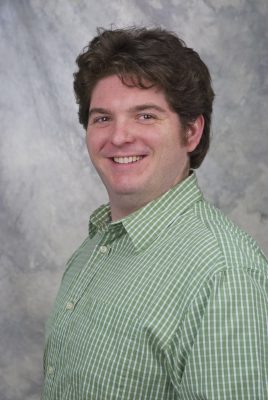
John Wizeman, Ph.D.

UConn graduates in biomedical sciences are thinking outside of the academic/tenure track box and considering alternative career paths. Ph.D.s are finding unique ways to apply their scientific skills in government, pharma, industry, business, as well as law. Brittany Knight, Biomedical Sciences graduate student, interviewed recent graduate John Wizeman, Ph.D., about his choice to pursue intellectual property law.

Patent law is an area of the greater field of intellectual property law (IP), which also includes trademarks, copyrights, and trade secrets. Patents provide exclusivity for inventors which can allow individuals to earn recognition or financial benefit from what they invent or create while encouraging creativity and innovation for public interest. In the last few years, patents in the biomedical sciences have earned a lot of attention. One example is the long-standing dispute over the IP rights to the revolutionary gene-editing technology known as CRISPR.

Wizeman initially learned about careers in intellectual property during a seminar coordinated by the graduate school. Cambria Alpha-Cobb, a technical specialist from Dilworth IP in Trumbull,  came to UConn and discussed the field. Wizemen says he would not have known about this potential career avenue without UConn setting up the seminars.

Anthony Sabatelli (Yale Ph.D. 1984, chemistry) a firm partner at Dilworth IP, created the internship program in 2014 to provide “meaningful real-world experiences” for Ph.D. students considering non-academic careers. The position at the firm is referred to as a Technology Specialist which allows interns to research the technical and legal aspects of IP-related cases, as well as publish articles on Dilworth’s IP online blog. Under the supervision of Sabatelli,  Wizeman published two articles on Dilworth IP’s blog, one of which was picked up by “Patent Docs” – a patent law weblog for attorneys.

Since 2014, several Yale alumni have utilized the internship to pursue law degrees, technology specialist positions in law firms in the Boston-area, as well as to attend law school in New York City.  One student even used the position to eventually transition to a career in scientific publishing.

“Based on connections with graduate students at both UConn and Yale, we decided to run an experiment at Dilworth IP to bring in a graduate student in the latter phase of their Ph.D. program – either in chemistry or one of the life sciences – to give them an opportunity to see what a career in patent law entails,” said Sabetelli.  “In structuring the program, we realized for it to be mutually beneficial for both the student and Dilworth IP, it would have to be more than just a mere shadowing opportunity. We would have to provide the student with actual projects and provide them with opportunities to interact with other colleagues in the firm and even, as appropriate, with clients. The opportunity that we came up with is one of Technology Specialist where the student can research both the technical and legal aspects of various intellectual property-related projects in our law firm.  As seen from the track record of the students coming through our program, it has given them a meaningful leg up making them highly competitive in the job market.”

In the Biomedical Sciences program, Wizeman completed his doctoral work in the lab of Royce Mohan in the Department of Neuroscience. He studied a form of vision loss that is prevalent in older individuals, called age-related macular degeneration (AMD).  “UConn was helpful in not only exposing me to this path, but to prepare me as well,” said Wizeman. “The training I received in the neuroscience department helped keep me knowledgeable about a wide range of scientific disciplines, as well as the newest and most groundbreaking research. I’m excited to bring this training to my new position.”

Students in graduate programs, such as those in the biomedical sciences, develop a broad skill set including comprehensive understanding of subject matter, oral and written communication, time management, project management, data analysis, and critical thinking. These skills, apart from wet lab or bench science techniques, are organic products of intellectual rigor and scientific discovery.

Wizeman adds, “This internship has given me an opportunity to work on my writing as well as introduce me to the IP field. Under Anthony Sabatelli’s guidance, I have been able to write several articles for the Dilworth blog. This experience helped me understand the field and find a position as a Technical Specialist for Lathrop and Gage, where I will begin an IP career in the coming weeks.”

“The program has truly been a win-win for both the students and Dilworth IP,” said Sabatelli. “The students have had a great learning experience while we have benefited from their help on numerous projects. Students like John that are taking the opportunity to learn about patent law, as well as other fields, are helping to strengthen the collaboration across universities and businesses such as UConn, Yale University, and Dilworth IP, which has been shown to be mutually beneficial.”

Looking at Us: Aretha ‘the Friendly Phlebotomist’ Floyd

August 9, 2018

If you’ve ever encountered Aretha Floyd, you may have found her so pleasant that you almost could forget she was sticking you with a needle. Aretha is an inpatient phlebotomist who draws blood throughout the University Tower. She’s worked in health care for 23 years, including the last three at UConn Health, where patients and coworkers know her to be friendly, upbeat, and always smiling. Aretha is a mother of five and grandmother of four. She and her husband live in Bristol.

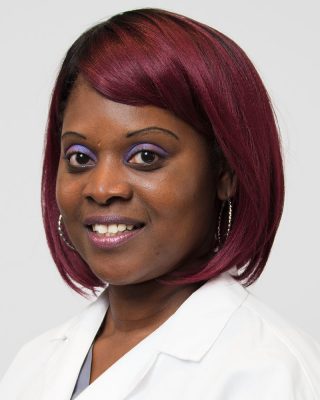
Aretha Floyd, inpatient phlebotomist (Photo by Kristin Wallace)

Aretha Floyd

Favorite book:
Are You There God, It’s Me, Margaret by Judy Blume

Favorite time of year:
New Year’s

Favorite place to visit:
Japan

Famous person you’d most like to meet:
Aretha Franklin, because I was named after her!

Something about you today that your younger self would never believe:
I will become a nurse. I’m starting school in January and I’m really excited about it!

What is the most challenging or rewarding aspect of your job?

The most challenging and rewarding thing that I can say that I have here is drawing patients’ blood. Everybody’s scared, they’re nervous, and they’re upset, they don’t know what’s going on with them, and some of them just don’t want to be bothered. But when I come in I just come in with enthusiasm, showing them that I care and that I want them to get their results so they can be well. It’s one of my favorite aspects of things that I need to do to help them get along.

What do most people not know about phlebotomists?

Phlebotomists are nervous too! When we’re drawing their blood, the patient is saying, “Oh my gosh, you’re going to stick me with a needle,” but I’m saying, “Oh my God, I’m going to stick you but I hope I get it on the first try.” Being phlebotomist is a hard job. It’s not as easy as people think it is. When you are really drawing someone’s blood, you have to deal with people from all different races, different thoughts, how they think, you have to try to compromise and have sympathy and empathy for everyone, because everyone doesn’t like needles.

You have a reputation as a very positive and pleasant person. What drives that?

I love my family, friends, and coworkers, and most of all I love people! I love giving respect to people. I don’t care where you come from, who you are, I feel like everyone is my family. I think it’s important that we respect one another, always greet, and say something nice. It doesn’t cost that much. Say something nice.

What would you do to make UConn Health better place?

I would love to have a group of volunteers go into each and every patient’s room and sing. I would love that.

What do you like to do when you’re not at work?

I like to sing with my band, I’m in a five-piece band, we’re called Five Straight. I like to rehearse with them and learn new songs so we can show our talent. We’re not on Facebook yet, but if you need to know where we’re playing, you can come to me, I’ll let you know, I’ll text you, I’ll do whatever I need to do to let you know that we’re playing somewhere.

UConn Health Auxiliary: A 50-year Legacy

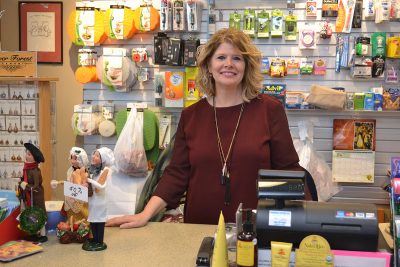
Debbie Baril manages the Connucopia Gift Shop at UConn Health, which is run by the UConn Health Auxiliary. (Photo by Tina Encarnacion)

The UConn Health Auxiliary is in its 50th year of existence. Over that time, “The Good Deed People” have contributed more than $9 million to UConn Health.

The Auxiliary runs the Connucopia Gift Shop, both the main store in the University Tower (main level next to Starbucks) and the kiosk on the first floor of the Outpatient Pavilion, as well as the UConn Health Auxiliary Thrift Shop on Park Road in West Hartford. Whenever you patronize those shops, or any of the vendors who visit UConn Health during the year, or any of the vendors who come to the Spring Market or the Festival of Trees and Winter Faire (look for more details in the weeks to come), you’re supporting UConn Health by supporting the Auxiliary.

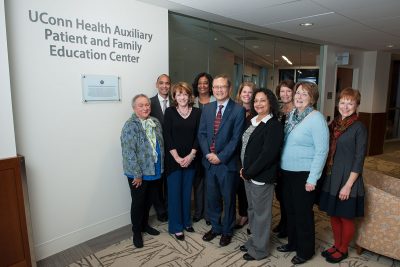
The UConn Health Auxiliary Patient and Family Education Center in the Outpatient Pavilion was dedicated in November 2015. Pictured, from left, are Irene Engel, Dr. Andy Agwunobi, Mary Louise Wadsworth, Margo Granger, Dr. Bruce Liang, Debbie Baril, Swapna Das, Ellen Cartun, and Ann Lazarek. (Photo by Defining Studios/Roger Castonguay)

Historic contributions include:

More recent contributions include:

  • Scholarships and student travel funding
  • Cancer survivors’ program
  • Patient assistance program
  • Web cams in the NICU (with the Farmington Rotary)
  • The UConn Health Auxiliary Patient and Family Education Center in the Outpatient Pavilion, including two interactive kiosks
  • Providing notebooks for patient education in both the Outpatient Pavilion and the UConn John Dempsey Hospital

New members and volunteers are always welcome!